Yuwono's monitor (Varanus yuwonoi)
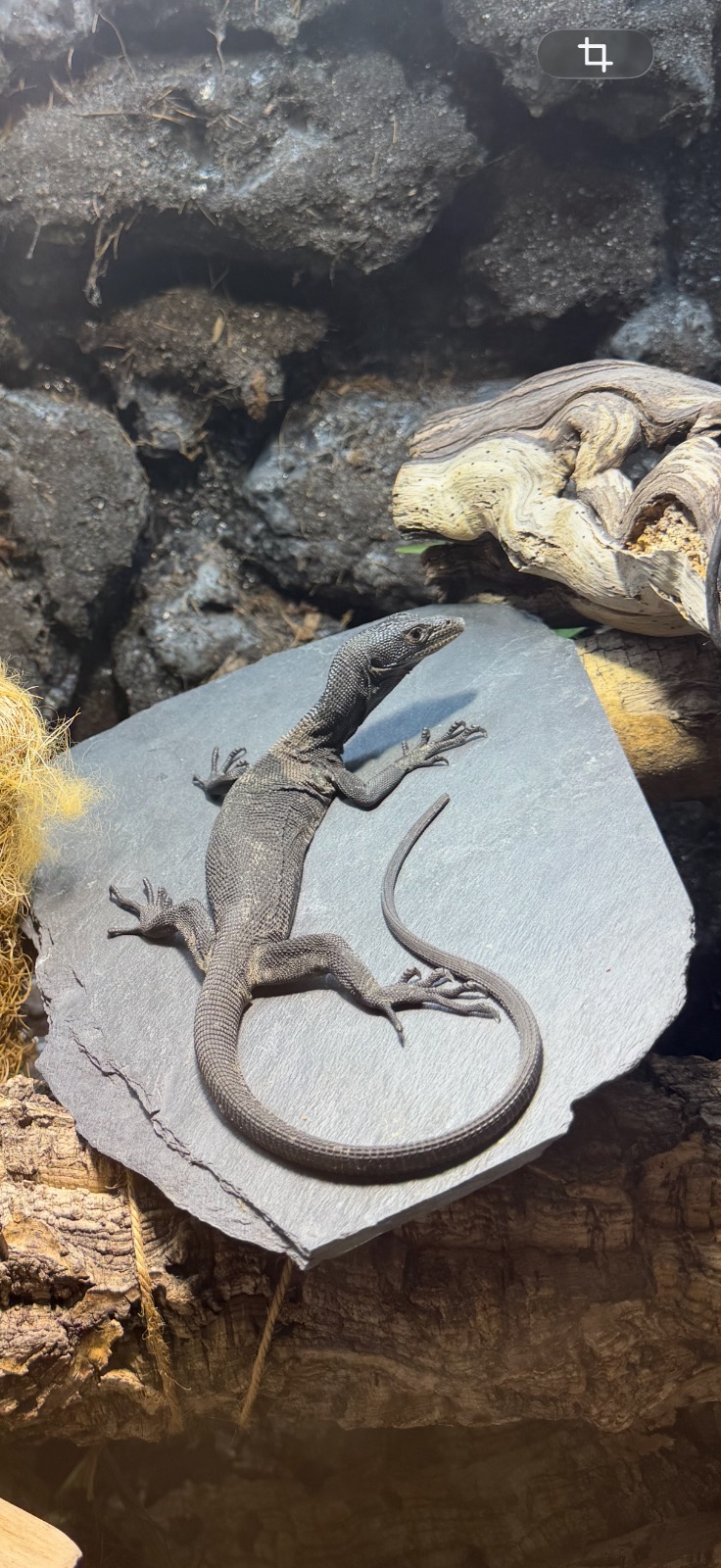
Monitors & tegus · Difficulty: Expert
Key facts and care guidance for Yuwono's monitor (Varanus yuwonoi) (origin: Halmahera, the Moluccas (Indonesia) – endemic and very rare). Adult size around approx. 120–140 cm including the tail (the final size is not firmly documented). Life expectancy 15–20 years (in captivity, uncertain). The values below are carefully researched guidance.
Short answers
Yuwono's monitor: How big does the enclosure need to be?
200×100×150 cm (with a large water basin).
Yuwono's monitor: What temperature does it need?
Daytime 28–32 °C, basking spot 40–50 °C, at night 23–25 °C.
Yuwono's monitor: Does it need UVB lighting?
UVB: UVB recommended (Ferguson zone 2–3, UV index 3–5).
Yuwono's monitor: How long do they live?
Life expectancy: 15–20 years (in captivity, uncertain).
Yuwono's monitor: Is it suitable for beginners?
No – better suited to experienced keepers (difficulty: Expert).
Climate
- Daytime temperature
- 28–32 °C
- Night temperature
- 23–25 °C
- Basking spot
- 40–50 °C
- Humidity
- 70–90 %
- UVB
- UVB recommended (Ferguson zone 2–3, UV index 3–5)
Enclosure
- Minimum size
- 200×100×150 cm (with a large water basin)
- Substrate
- Damp soil or leaf litter, climbing branches, a large water basin
Feeding
- Food
- Insects, mice or rats, fish, eggs
- Feeding interval
- adults 2–3×/week, juveniles more often
Key facts
- Adult size
- approx. 120–140 cm including the tail (the final size is not firmly documented)
- Life expectancy
- 15–20 years (in captivity, uncertain)
- Origin
- Halmahera, the Moluccas (Indonesia) – endemic and very rare
- Protection status
- CITES Appendix II / EU Annex B – proof of origin required
- Brumation
- None
- Cohabitation
- Single housing – territorial and aggressive over food; never males together. The reason is territory: two animals will not voluntarily share a basking spot or a hiding place. They fight until one is seriously injured or permanently confined to a corner — and that second animal then eats worse, without showing any visible wound.
Notes
The three-coloured monitor (the indicus group), very rare and little studied; the husbandry data come mainly by analogy from the indicus group – and are therefore uncertain. Often nervous and shy during initial acclimatisation.
Do you keep this species?
Add your animal to Reptoria – Reptoria reminds you about feeding and shedding. Add your animal for free →
Look for Yuwono's monitor (Varanus yuwonoi) in the marketplace →
Related species
- Argus monitor (Varanus panoptes) – Expert
- Bengal monitor (Varanus bengalensis) – Expert
- Blue tree monitor (Varanus macraei) – Expert
- Blue-tailed monitor (Varanus doreanus) – Intermediate to expert
- Finsch's monitor (Varanus doreanus finschi) – Expert
- Boatsi tree monitor (Varanus boatsi) – Expert
- Bogert's tree monitor (Varanus bogerti) – Expert
- Lace monitor (Varanus varius) – Expert
What you need to start
To keep Yuwono's monitor (Varanus yuwonoi) you typically need: a suitable enclosure (200×100×150 cm (with a large water basin)), substrate (Damp soil or leaf litter, climbing branches, a large water basin), a heat source with a thermostat, UVB lighting, thermometer and hygrometer, a water dish and hides. You will find equipment in the Reptoria marketplace.
The complete, interactive care database is in the Reptoria app.
Last updated: 25 September 2026 · Editor: Reptoria editorial team · Sources include: https://en.wikipedia.org/wiki/Varanus_yuwonoi, https://reptile-database.reptarium.cz/species?genus=Varanus&species=yuwonoi
All values are non-binding guidance and do not replace expert advice. Research thoroughly from several sources before acquiring and keeping an animal, and observe the applicable law (species and animal protection in particular).