African bullfrog (Pyxicephalus adspersus)
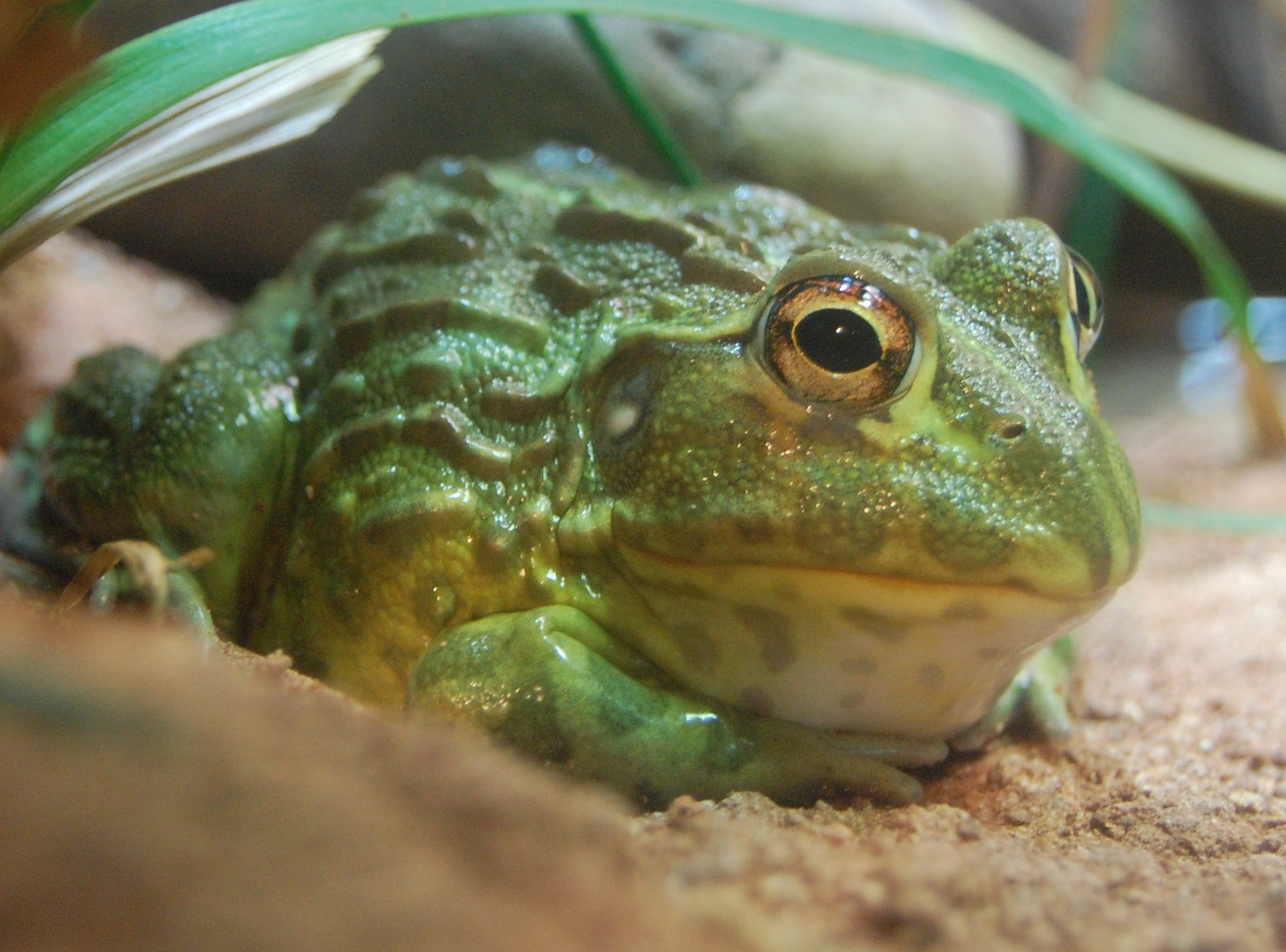
Amphibians · Difficulty: Beginner to intermediate
Key facts and care guidance for African bullfrog (Pyxicephalus adspersus) (origin: Southern and eastern Africa, savannah (a dry-season cocoon)). Adult size around ♂ up to ~23–25 cm, ♀ ~12–15 cm. Life expectancy 15–25 years, individual animals over 40. The values below are carefully researched guidance.
Short answers
African bullfrog: How big does the enclosure need to be?
♂ 120 × 60 × 60 cm; ♀ smaller.
African bullfrog: What temperature does it need?
Daytime 26–30 °C, basking spot — (optional local floor hot spot), at night 19–22 °C.
African bullfrog: Does it need UVB lighting?
UVB: Recommended (UVB 2–5 %).
African bullfrog: How long do they live?
Life expectancy: 15–25 years, individual animals over 40.
African bullfrog: Is it suitable for beginners?
Partly – manageable with some prior knowledge (difficulty: Beginner to intermediate).
Climate
- Daytime temperature
- 26–30 °C
- Night temperature
- 19–22 °C
- Basking spot
- — (optional local floor hot spot)
- Humidity
- 60–80 %
- UVB
- Recommended (UVB 2–5 %)
Enclosure
- Minimum size
- ♂ 120 × 60 × 60 cm; ♀ smaller
- Substrate
- A soil, coco or leaf mix they can dig in, at least 10 cm, a shallow water basin
Feeding
- Food
- Insects, earthworms, and for adults occasionally rodents; do not overfeed
- Feeding interval
- juveniles often; adults 1–2× a week (avoid obesity)
Key facts
- Adult size
- ♂ up to ~23–25 cm, ♀ ~12–15 cm
- Life expectancy
- 15–25 years, individual animals over 40
- Origin
- Southern and eastern Africa, savannah (a dry-season cocoon)
- Protection status
- —
- Brumation
- A dry rest or aestivation (in a cocoon) is possible for several weeks
- Cohabitation
- Keep singly (cannibalistic). The reason is not fighting but eating: these animals take anything that fits in their mouth, and a second animal in the tank counts. Some keepers house females of equal size together; the drawback is that even a difference in size is enough for one animal to eat the other, and males must never be kept together.
Notes
Bitey and cannibalistic – never house them together. A powerful bite; overfeeding quickly leads to obesity.
Do you keep this species?
Add your animal to Reptoria – Reptoria reminds you about feeding and shedding. Add your animal for free →
Look for African bullfrog (Pyxicephalus adspersus) in the marketplace →
Related species
- Edible bullfrog (Pyxicephalus edulis) – Beginner
- Amazonian horned frog (Ceratophrys cornuta) – Intermediate
- Brazilian horned frog (Ceratophrys aurita) – Intermediate
- Budgett's frog (Lepidobatrachus laevis) – Intermediate
- Caatinga horned frog (Ceratophrys joazeirensis) – Intermediate
- Chaco dwarf frog (Chacophrys pierottii) – Intermediate
- Cranwell's horned frog (Ceratophrys cranwelli) – Beginner
- Llanos frog (Lepidobatrachus llanensis) – Intermediate
What you need to start
To keep African bullfrog (Pyxicephalus adspersus) you typically need: a suitable enclosure (♂ 120 × 60 × 60 cm; ♀ smaller), substrate (A soil, coco or leaf mix they can dig in, at least 10 cm, a shallow water basin), a heat source with a thermostat, UVB lighting, thermometer and hygrometer, a water dish and hides. You will find equipment in the Reptoria marketplace.
The complete, interactive care database is in the Reptoria app.
Last updated: 2 November 2026 · Editor: Reptoria editorial team · Sources include: einrichtungsbeispiele.de, interaquaristik.de, Wikipedia DE, drta-archiv.de, eu_annex.txt (lokal)
All values are non-binding guidance and do not replace expert advice. Research thoroughly from several sources before acquiring and keeping an animal, and observe the applicable law (species and animal protection in particular).