Amazonian giant centipede (Scolopendra gigantea)
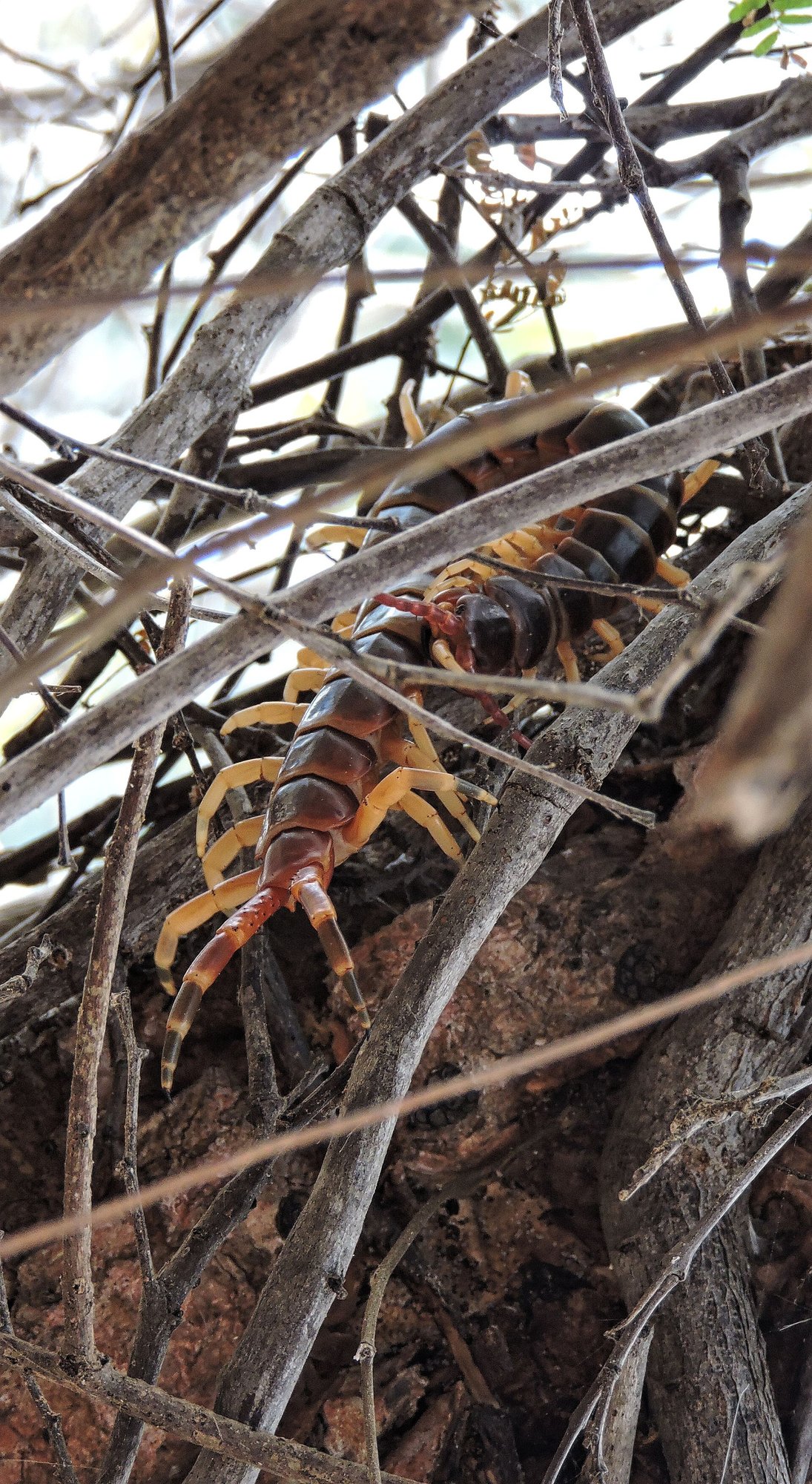
Invertebrates · Difficulty: Intermediate to expert
Key facts and care guidance for Amazonian giant centipede (Scolopendra gigantea) (origin: Northern South America / the Caribbean (Venezuela, Trinidad among others)). Adult size around 25–35 cm, individual animals over 35 cm (keeper reports up to 40 cm). Life expectancy over 10 years. The values below are carefully researched guidance.
Short answers
Amazonian giant centipede: How big does the enclosure need to be?
At least 80 × 50 × 50 cm for an adult animal, absolutely escape-proof (a lockable lid or top opening, no sliding doors).
Amazonian giant centipede: What temperature does it need?
Daytime 24–30 °C, at night 22–24 °C.
Amazonian giant centipede: Does it need UVB lighting?
UVB: No.
Amazonian giant centipede: How long do they live?
Life expectancy: over 10 years.
Amazonian giant centipede: Is it suitable for beginners?
No – better suited to experienced keepers (difficulty: Intermediate to expert).
Climate
- Daytime temperature
- 24–30 °C
- Night temperature
- 22–24 °C
- Basking spot
- —
- Humidity
- 70–90 %
- UVB
- No
Enclosure
- Minimum size
- at least 80 × 50 × 50 cm for an adult animal, absolutely escape-proof (a lockable lid or top opening, no sliding doors)
- Substrate
- A mix of unfertilised terrarium soil/peat, sand and forest soil, 15–20 cm deep and lightly compacted so that stable burrows hold their shape; moss and cork bark as hides, a shallow water dish
Feeding
- Food
- Insects (roaches, crickets, locusts), occasionally small vertebrates
- Feeding interval
- approx. 1× every 1–2 weeks
Key facts
- Adult size
- 25–35 cm, individual animals over 35 cm (keeper reports up to 40 cm)
- Life expectancy
- over 10 years
- Origin
- Northern South America / the Caribbean (Venezuela, Trinidad among others)
- Protection status
- —
- Brumation
- None
- Cohabitation
- Keep them strictly singly (cannibalistic). The reason is not fighting but feeding: these animals take anything that fits in the mouth, and a second animal in the enclosure counts.
Notes
VENOMOUS and extremely defensive – a painful bite. No handling with bare hands (use forceps or a driving method, and gloves). Make the terrarium extremely escape-proof; for experienced keepers only.
Do you keep this species?
Add your animal to Reptoria – Reptoria reminds you about feeding and shedding. Add your animal for free →
Look for Amazonian giant centipede (Scolopendra gigantea) in the marketplace →
Related species
- Chinese red-headed centipede (Scolopendra subspinipes) – Expert
- Chinese red-headed centipede (Scolopendra mutilans) – Expert
- Tanzanian blue ringleg centipede (Scolopendra morsitans) – Intermediate
- Indian tiger centipede (Scolopendra hardwickei) – Expert
- Caribbean giant centipede (Scolopendra alternans) – Expert
- Mediterranean banded centipede (Scolopendra cingulata) – Intermediate
- Giant desert centipede (Scolopendra heros) – Expert
- Tiger centipede (Scolopendra polymorpha) – Intermediate
What you need to start
To keep Amazonian giant centipede (Scolopendra gigantea) you typically need: a suitable enclosure (at least 80 × 50 × 50 cm for an adult animal, absolutely escape-proof (a lockable lid or top opening, no sliding doors)), substrate (A mix of unfertilised terrarium soil/peat, sand and forest soil, 15–20 cm deep and lightly compacted so that stable burrows hold their shape; moss and cork bark as hides, a shallow water dish), a heat source with a thermostat, thermometer and hygrometer, a water dish and hides. You will find equipment in the Reptoria marketplace.
The complete, interactive care database is in the Reptoria app.
Last updated: 30 October 2026 · Editor: Reptoria editorial team · Sources include: EUR-Lex VO (EU) 2026/1383, Wikipedia EN, animaldiversity.org, eu_annex.txt (lokal), scolohub.com
All values are non-binding guidance and do not replace expert advice. Research thoroughly from several sources before acquiring and keeping an animal, and observe the applicable law (species and animal protection in particular).