Chinese red-headed centipede (Scolopendra subspinipes)
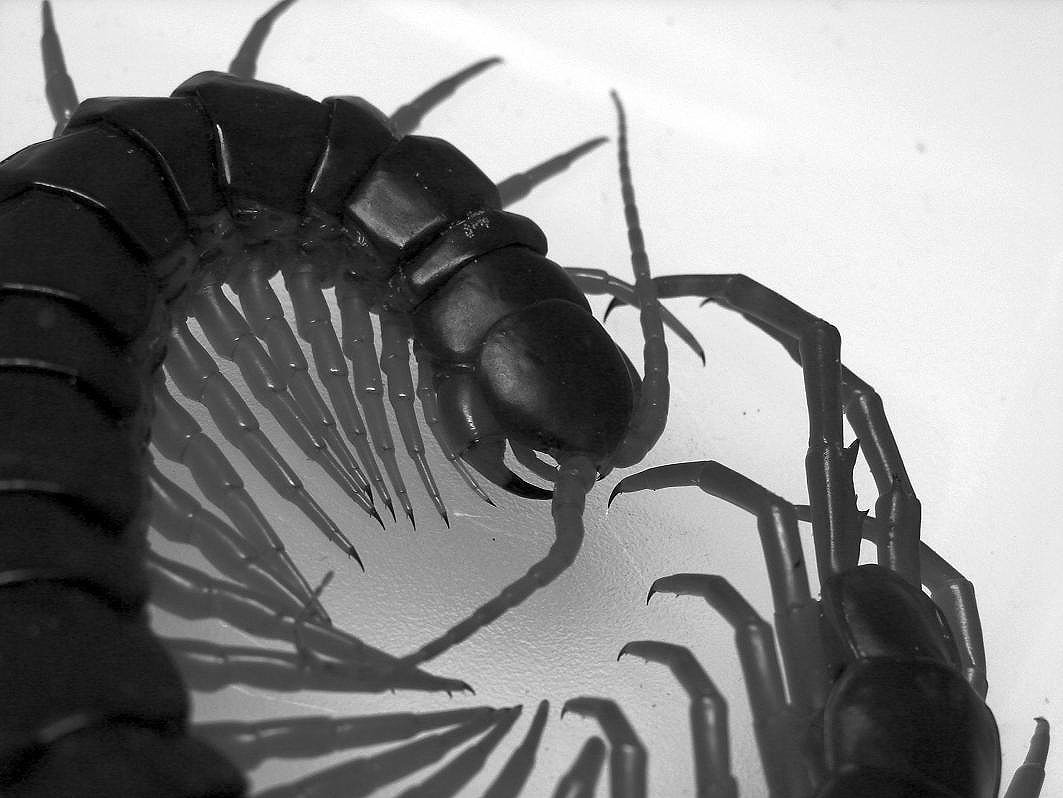
Invertebrates · Difficulty: Expert
Key facts and care guidance for Chinese red-headed centipede (Scolopendra subspinipes) (origin: South and South-East Asia (tropical)). Adult size around approx. 20 cm (some of the dehaani complex are larger). Life expectancy approx. 5–10 years, individual animals longer; not sexually mature until 3–4 years. The values below are carefully researched guidance.
Short answers
Chinese red-headed centipede: How big does the enclosure need to be?
From 40×30×30 cm for an adult animal (floor area at least three times body length), horizontal, with a lockable lid and metal ventilation.
Chinese red-headed centipede: What temperature does it need?
Daytime 24–28 °C, at night ~22 °C (room temperature is sufficient).
Chinese red-headed centipede: Does it need UVB lighting?
UVB: No UVB needed.
Chinese red-headed centipede: How long do they live?
Life expectancy: approx. 5–10 years, individual animals longer; not sexually mature until 3–4 years.
Chinese red-headed centipede: Is it suitable for beginners?
No – better suited to experienced keepers (difficulty: Expert).
Climate
- Daytime temperature
- 24–28 °C
- Night temperature
- ~22 °C (room temperature is sufficient)
- Basking spot
- —
- Humidity
- 75–85 % (humidity gradient)
- UVB
- No UVB needed
Enclosure
- Minimum size
- from 40×30×30 cm for an adult animal (floor area at least three times body length), horizontal, with a lockable lid and metal ventilation
- Substrate
- 10–15 cm or more of damp diggable coco humus or soil, plus leaf litter and cork bark as a hide
Feeding
- Food
- Insects (house crickets, roaches), occasionally larger prey
- Feeding interval
- Adults every 7–14 days, juveniles every 3–5 days; remove leftovers after 24 hours.
Key facts
- Adult size
- approx. 20 cm (some of the dehaani complex are larger)
- Life expectancy
- approx. 5–10 years, individual animals longer; not sexually mature until 3–4 years
- Origin
- South and South-East Asia (tropical)
- Protection status
- No protected status
- Brumation
- None (a tropical species)
- Cohabitation
- Keep them strictly singly. Solitary, territorial and strongly cannibalistic. The reason is not fighting but feeding: these animals take anything that fits in the mouth, and a second animal in the enclosure counts.
Notes
Very venomous – a painful, medically significant bite; no handling. An extreme escape artist: a tightly closing, ventilated lid is essential. Provide a water dish; its water balance and humidity are critical.
Do you keep this species?
Add your animal to Reptoria – Reptoria reminds you about feeding and shedding. Add your animal for free →
Look for Chinese red-headed centipede (Scolopendra subspinipes) in the marketplace →
Related species
- Amazonian giant centipede (Scolopendra gigantea) – Intermediate to expert
- Chinese red-headed centipede (Scolopendra mutilans) – Expert
- Tanzanian blue ringleg centipede (Scolopendra morsitans) – Intermediate
- Indian tiger centipede (Scolopendra hardwickei) – Expert
- Caribbean giant centipede (Scolopendra alternans) – Expert
- Mediterranean banded centipede (Scolopendra cingulata) – Intermediate
- Giant desert centipede (Scolopendra heros) – Expert
- Tiger centipede (Scolopendra polymorpha) – Intermediate
What you need to start
To keep Chinese red-headed centipede (Scolopendra subspinipes) you typically need: a suitable enclosure (from 40×30×30 cm for an adult animal (floor area at least three times body length), horizontal, with a lockable lid and metal ventilation), substrate (10–15 cm or more of damp diggable coco humus or soil, plus leaf litter and cork bark as a hide), a heat source with a thermostat, UVB lighting, thermometer and hygrometer, a water dish and hides. You will find equipment in the Reptoria marketplace.
The complete, interactive care database is in the Reptoria app.
Last updated: 9 October 2026 · Editor: Reptoria editorial team · Sources include: Wikipedia EN, eu_annex.txt (lokal, VO (EU) 2026/1383), exotische-tierwelt.de, geckonia.eu, interaquaristik.de
All values are non-binding guidance and do not replace expert advice. Research thoroughly from several sources before acquiring and keeping an animal, and observe the applicable law (species and animal protection in particular).