Arched jumping spider (Evarcha arcuata)
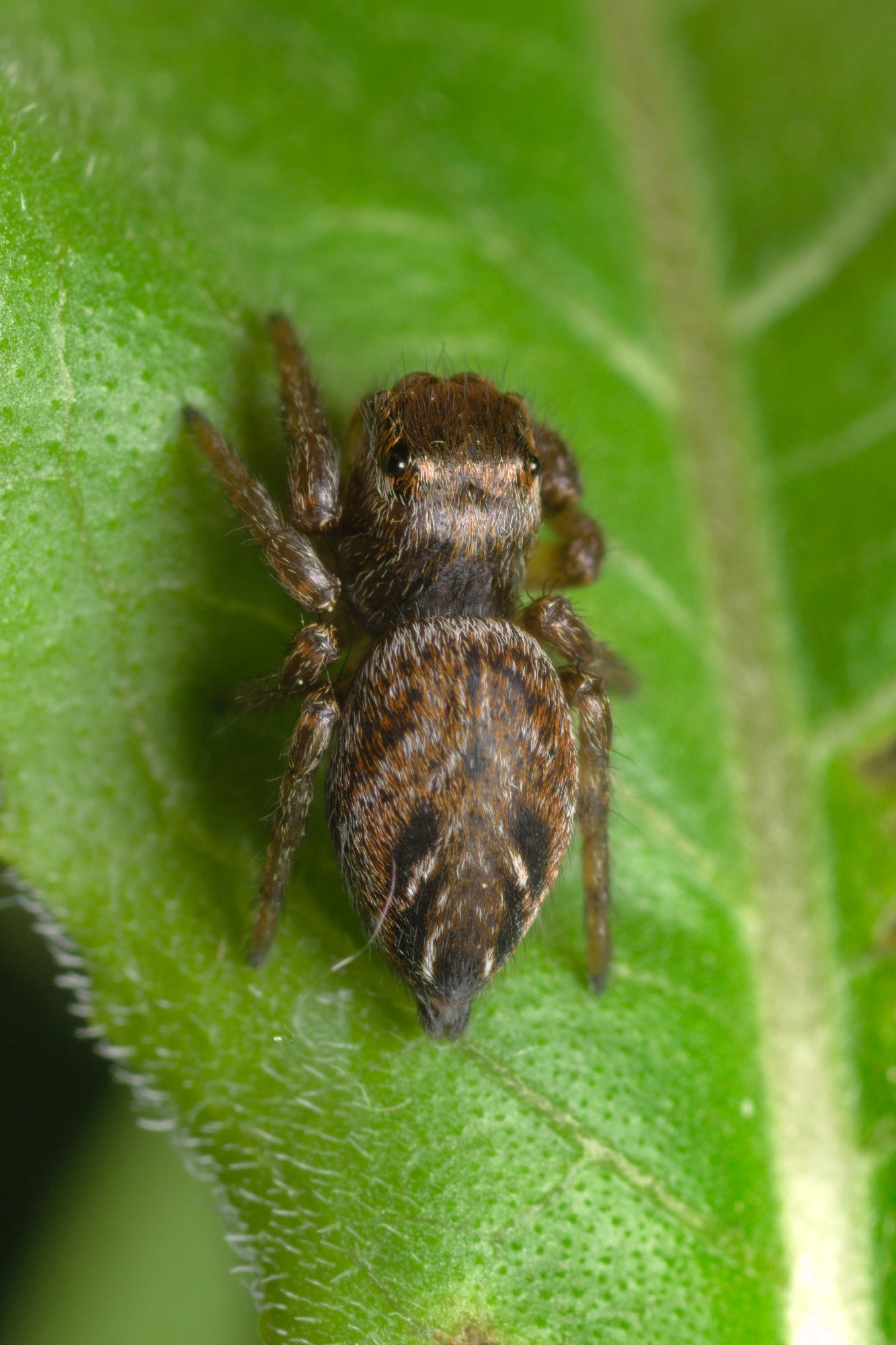
Invertebrates · Difficulty: Intermediate
Key facts and care guidance for Arched jumping spider (Evarcha arcuata) (origin: The Palaearctic: Europe through the Caucasus and Russia to China and Japan; widespread in Germany). Adult size around females 6–8 mm, males 5–6 mm (body length). Life expectancy approx. 1 year (females up to ~1.5 years). The values below are carefully researched guidance.
Short answers
Arched jumping spider: How big does the enclosure need to be?
15×15×20 cm (tall format, low vegetation, climbing branches).
Arched jumping spider: What temperature does it need?
Daytime 22–26 °C (room temperature is sufficient), at night 15–18 °C.
Arched jumping spider: How long do they live?
Life expectancy: approx. 1 year (females up to ~1.5 years).
Arched jumping spider: Is it suitable for beginners?
Rather not – it is considered an intermediate species (difficulty: Intermediate).
Arched jumping spider: Can several be kept together?
Keeping them singly is essential – territorial, solitary and cannibalistic; NEVER keep males together.
Climate
- Daytime temperature
- 22–26 °C (room temperature is sufficient)
- Night temperature
- 15–18 °C
- Basking spot
- —
- Humidity
- 60–70 %
Enclosure
- Minimum size
- 15×15×20 cm (tall format, low vegetation, climbing branches)
- Substrate
- Coco humus or terrarium soil, moss, a little leaf litter; moderately damp
Feeding
- Food
- Fruit flies (Drosophila), small flies, silverfish, small house crickets
- Feeding interval
- adults 2–3×/week, juveniles every 1–2 days
Key facts
- Adult size
- females 6–8 mm, males 5–6 mm (body length)
- Life expectancy
- approx. 1 year (females up to ~1.5 years)
- Origin
- The Palaearctic: Europe through the Caucasus and Russia to China and Japan; widespread in Germany
- Protection status
- Not listed under CITES or the German Federal Species Protection Ordinance; native wildlife – general species protection applies to wild-caught animals (§39 of the Federal Nature Conservation Act, no taking without good reason)
- Brumation
- Yes – this native species overwinters (as a subadult) in a retreat web; in the terrarium a cool overwintering (~5–12 °C for a few weeks) makes sense, especially for wild-caught animals and breeding
- Cohabitation
- Keeping them singly is essential – territorial, solitary and cannibalistic; NEVER keep males together. Mate them only briefly and under supervision, then separate the male.
Notes
A small native meadow and heath species; it occupies low vegetation at both damp and dry sites. Barely established as a pet → the husbandry figures are derived from general salticid practice, while the distribution and size are well documented. Short-lived, usually with a one-year cycle.
Do you keep this species?
Add your animal to Reptoria – Reptoria reminds you about feeding and shedding. Add your animal for free →
Look for Arched jumping spider (Evarcha arcuata) in the marketplace →
Related species
- Algerian jumping spider (Cyrba algerina) – Intermediate
- Bronze jumping spider (Hyllus semicupreus) – Beginner
- Peacock jumping spider (Saitis barbipes) – Intermediate
- Diard's jumping spider (Hyllus diardi) – Beginner
- Three-spotted jumping spider (Pellenes tripunctatus) – Intermediate
- Canopy jumping spider (Phidippus otiosus) – Beginner
- Fringed jumping spider (Portia fimbriata) – Expert
- Golden-eyed jumping spider (Heliophanus flavipes) – Intermediate
What you need to start
To keep Arched jumping spider (Evarcha arcuata) you typically need: a suitable enclosure (15×15×20 cm (tall format, low vegetation, climbing branches)), substrate (Coco humus or terrarium soil, moss, a little leaf litter; moderately damp), a heat source with a thermostat, thermometer and hygrometer, a water dish and hides. You will find equipment in the Reptoria marketplace.
The complete, interactive care database is in the Reptoria app.
Last updated: 9 October 2026 · Editor: Reptoria editorial team · Sources include: https://de.wikipedia.org/wiki/Evarcha_arcuata, https://en.wikipedia.org/wiki/Evarcha_arcuata
All values are non-binding guidance and do not replace expert advice. Research thoroughly from several sources before acquiring and keeping an animal, and observe the applicable law (species and animal protection in particular).