Asian glass lizard (Dopasia gracilis)
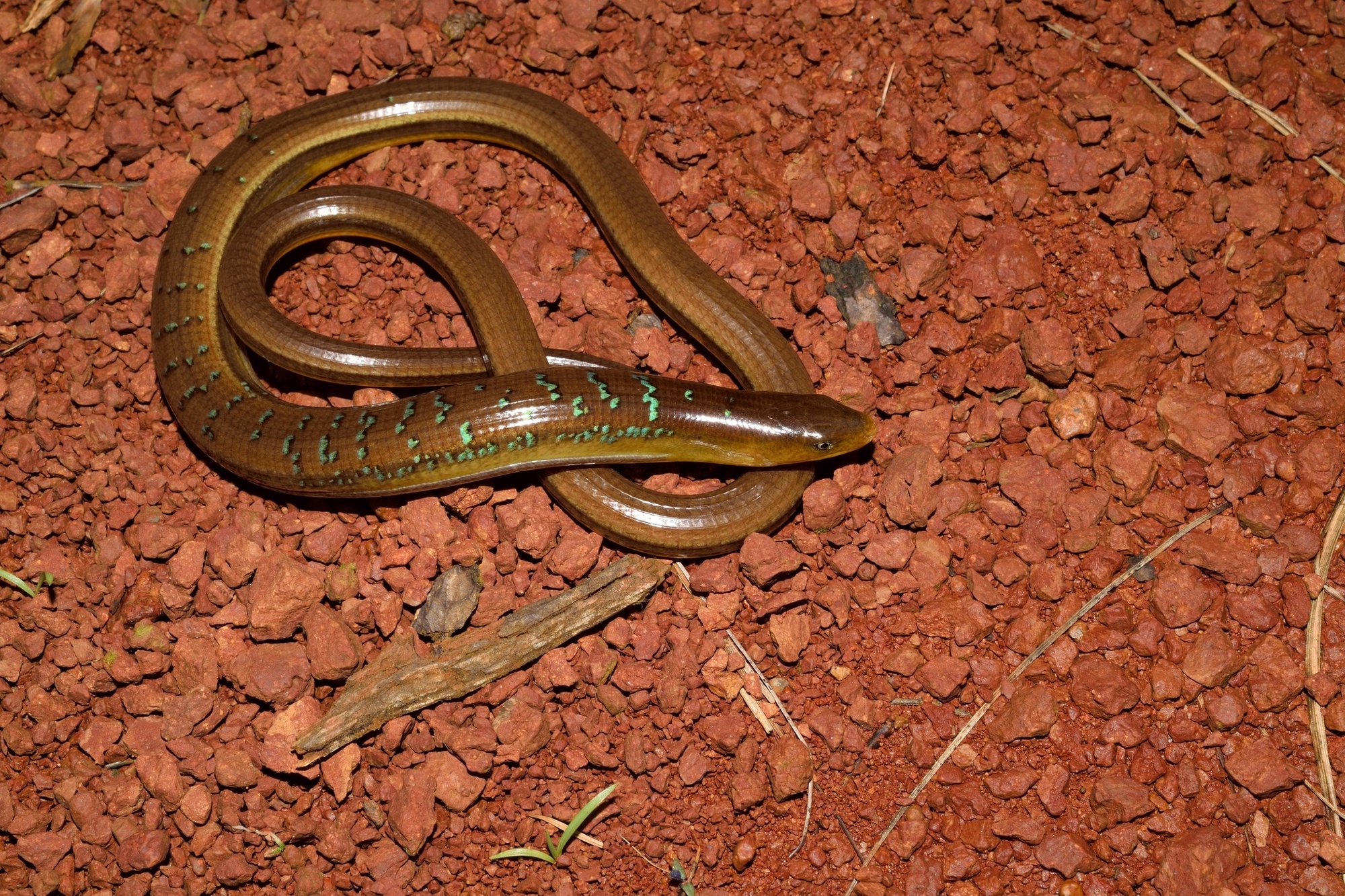
Lizards · Difficulty: Intermediate
Key facts and care guidance for Asian glass lizard (Dopasia gracilis) (origin: The subtropical mountain regions of southern China, northern India, Myanmar, Nepal, Thailand, Vietnam). Adult size around 40–60 cm. Life expectancy 10–20 years. The values below are carefully researched guidance.
Short answers
Asian glass lizard: How big does the enclosure need to be?
120×60×40 cm for one animal (1997 expert report: Anguidae, Ophisaurus — 6 × 3 × 2 times snout–vent length).
Asian glass lizard: What temperature does it need?
Daytime 24–28 °C, basking spot ~30 °C (small), at night 18–20 °C.
Asian glass lizard: Does it need UVB lighting?
UVB: Optional – low (ground-living).
Asian glass lizard: How long do they live?
Life expectancy: 10–20 years.
Asian glass lizard: Is it suitable for beginners?
Rather not – it is considered an intermediate species (difficulty: Intermediate).
Climate
- Daytime temperature
- 24–28 °C
- Night temperature
- 18–20 °C
- Basking spot
- ~30 °C (small)
- Humidity
- 50–70 %
- UVB
- Optional – low (ground-living)
Enclosure
- Minimum size
- 120×60×40 cm for one animal (1997 expert report: Anguidae, Ophisaurus — 6 × 3 × 2 times snout–vent length)
- Substrate
- Deep substrate they can dig in, with leaf litter and ground-level hides
Feeding
- Food
- Insects (crickets, roaches, worms), snails
- Feeding interval
- 2–3×/week
Key facts
- Adult size
- 40–60 cm
- Life expectancy
- 10–20 years
- Origin
- The subtropical mountain regions of southern China, northern India, Myanmar, Nepal, Thailand, Vietnam
- Protection status
- —
- Brumation
- A cooler winter rest is recommended (subtropical)
- Cohabitation
- Keeping singly is best. The species is largely peaceful towards its own kind; a pair or a small group is possible with plenty of floor space and several separate hides. Company is not essential — in the wild the animals live hidden and on their own. Feed separately if there are size differences so that no animal goes without.
Notes
A burrowing, shy legless lizard; barely handleable. Robust and long-lived with good care. It can shed its tail.
Do you keep this species?
Add your animal to Reptoria – Reptoria reminds you about feeding and shedding. Add your animal for free →
Look for Asian glass lizard (Dopasia gracilis) in the marketplace →
Related species
- Hart's glass lizard (Dopasia harti) – Intermediate
- Madrean alligator lizard (Elgaria kingii) – Intermediate
- Slow worm (Anguis fragilis) – Intermediate
- Italian slow worm (Anguis veronensis) – Intermediate
- California legless lizard (Anniella pulchra) – Intermediate
- Moroccan glass lizard (Ophisaurus koellikeri) – Intermediate
- Imbricate alligator lizard (Barisia imbricata) – Intermediate
- Eastern slow worm (Anguis colchica) – Intermediate
What you need to start
To keep Asian glass lizard (Dopasia gracilis) you typically need: a suitable enclosure (120×60×40 cm for one animal (1997 expert report: Anguidae, Ophisaurus — 6 × 3 × 2 times snout–vent length)), substrate (Deep substrate they can dig in, with leaf litter and ground-level hides), a heat source with a thermostat, UVB lighting, thermometer and hygrometer, a water dish and hides. You will find equipment in the Reptoria marketplace.
The complete, interactive care database is in the Reptoria app.
Last updated: 9 October 2026 · Editor: Reptoria editorial team · Sources include: grokipedia.com, Wikipedia DE, Wikipedia EN, eu_annex.txt (VO (EU) 2026/1383, lokal), gutachten.txt (BML 1997, lokal)
All values are non-binding guidance and do not replace expert advice. Research thoroughly from several sources before acquiring and keeping an animal, and observe the applicable law (species and animal protection in particular).