Hart's glass lizard (Dopasia harti)
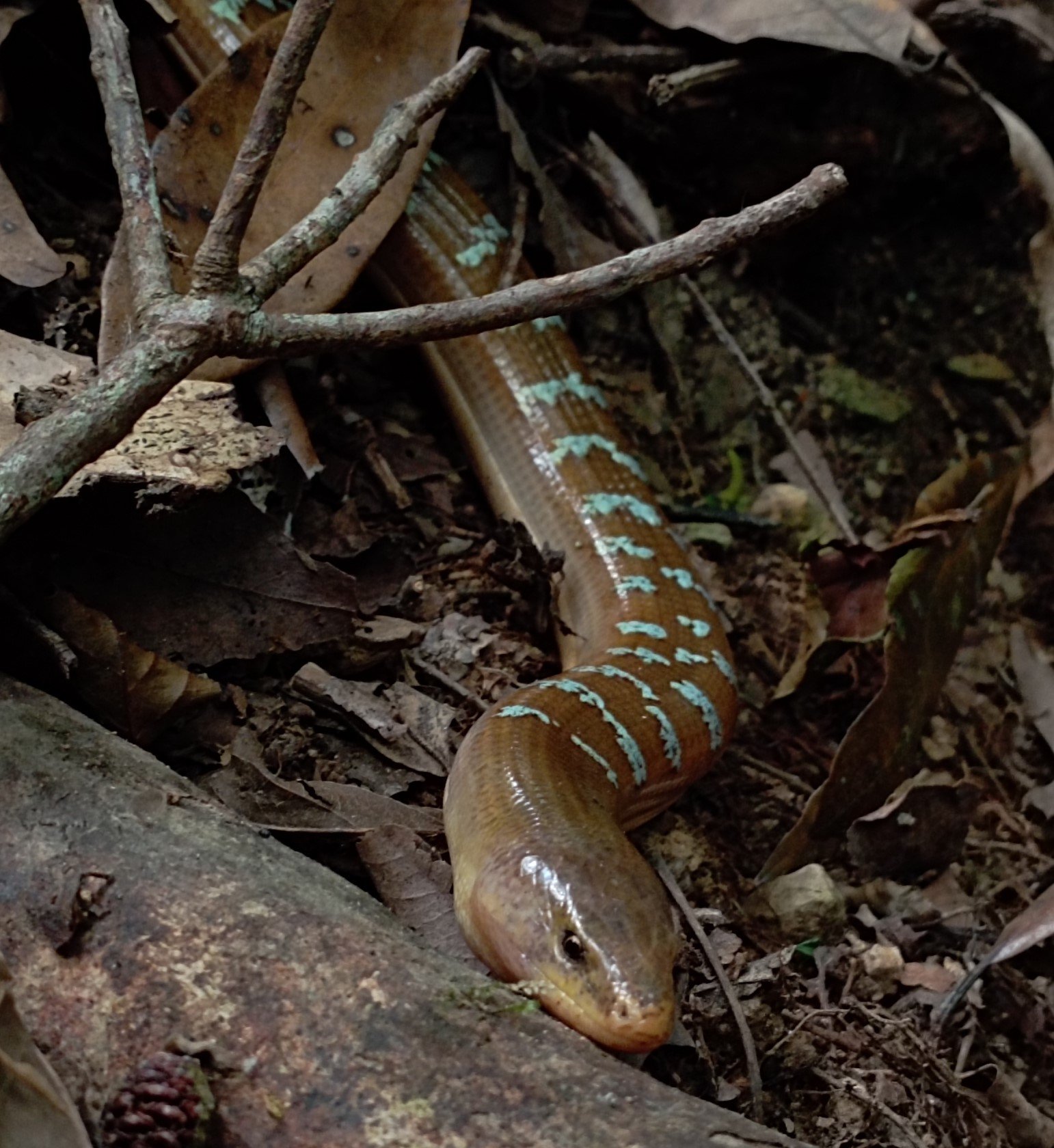
Lizards · Difficulty: Intermediate
Key facts and care guidance for Hart's glass lizard (Dopasia harti) (origin: Southern China, Taiwan, northern Vietnam; montane forest at 400–2,600 m, also farmland). Adult size around approx. 40–50 cm total length (a long tail portion), legless. Life expectancy probably 10–20 years (barely documented in captivity). The values below are carefully researched guidance.
Short answers
Hart's glass lizard: How big does the enclosure need to be?
100×50×50 cm (woodland-like, deep substrate).
Hart's glass lizard: What temperature does it need?
Daytime 20–26 °C, basking spot 28–30 °C (small warm spot), at night 16–20 °C.
Hart's glass lizard: Does it need UVB lighting?
UVB: UVB not essential (forest-dwelling and burrowing), weak UVB (Ferguson zone 1) recommended.
Hart's glass lizard: How long do they live?
Life expectancy: probably 10–20 years (barely documented in captivity).
Hart's glass lizard: Is it suitable for beginners?
Rather not – it is considered an intermediate species (difficulty: Intermediate).
Climate
- Daytime temperature
- 20–26 °C
- Night temperature
- 16–20 °C
- Basking spot
- 28–30 °C (small warm spot)
- Humidity
- 70–85 %
- UVB
- UVB not essential (forest-dwelling and burrowing), weak UVB (Ferguson zone 1) recommended
Enclosure
- Minimum size
- 100×50×50 cm (woodland-like, deep substrate)
- Substrate
- A deep, loose forest floor of humus, sand and leaf litter with moss and leaf mould (diggable, slightly damp)
Feeding
- Food
- Earthworms, slugs, insects, spiders and other soft-bodied invertebrates
- Feeding interval
- adults 2–3×/week, juveniles more often, almost daily
Key facts
- Adult size
- approx. 40–50 cm total length (a long tail portion), legless
- Life expectancy
- probably 10–20 years (barely documented in captivity)
- Origin
- Southern China, Taiwan, northern Vietnam; montane forest at 400–2,600 m, also farmland
- Protection status
- Not in CITES; no special protection requirements in Germany, though proof of origin is still advisable. Rarely legally in the trade
- Brumation
- A cooler rest period (several weeks at about 12–16 °C) is recommended, matching the montane forest climate
- Cohabitation
- Keep them singly. Poorly documented; egg-laying (the female guards the clutch) – to be safe, keep them singly or put them together only for breeding
Notes
A very rarely kept East Asian glass lizard; husbandry data are barely published – the figures are derived from field ecology and its relatives (uncertain). Fossorial and secretive, needing plenty of hiding options and digging substrate. One of the few egg-laying anguids.
Do you keep this species?
Add your animal to Reptoria – Reptoria reminds you about feeding and shedding. Add your animal for free →
Look for Hart's glass lizard (Dopasia harti) in the marketplace →
Related species
- Asian glass lizard (Dopasia gracilis) – Intermediate
- Madrean alligator lizard (Elgaria kingii) – Intermediate
- Slow worm (Anguis fragilis) – Intermediate
- Italian slow worm (Anguis veronensis) – Intermediate
- California legless lizard (Anniella pulchra) – Intermediate
- Moroccan glass lizard (Ophisaurus koellikeri) – Intermediate
- Imbricate alligator lizard (Barisia imbricata) – Intermediate
- Eastern slow worm (Anguis colchica) – Intermediate
What you need to start
To keep Hart's glass lizard (Dopasia harti) you typically need: a suitable enclosure (100×50×50 cm (woodland-like, deep substrate)), substrate (A deep, loose forest floor of humus, sand and leaf litter with moss and leaf mould (diggable, slightly damp)), a heat source with a thermostat, UVB lighting, thermometer and hygrometer, a water dish and hides. You will find equipment in the Reptoria marketplace.
The complete, interactive care database is in the Reptoria app.
Last updated: 9 October 2026 · Editor: Reptoria editorial team · Sources include: https://en.wikipedia.org/wiki/Dopasia_harti, https://reptile-database.reptarium.cz/species?genus=Dopasia&species=harti
All values are non-binding guidance and do not replace expert advice. Research thoroughly from several sources before acquiring and keeping an animal, and observe the applicable law (species and animal protection in particular).