Bedriaga's rock lizard (Archaeolacerta bedriagae)
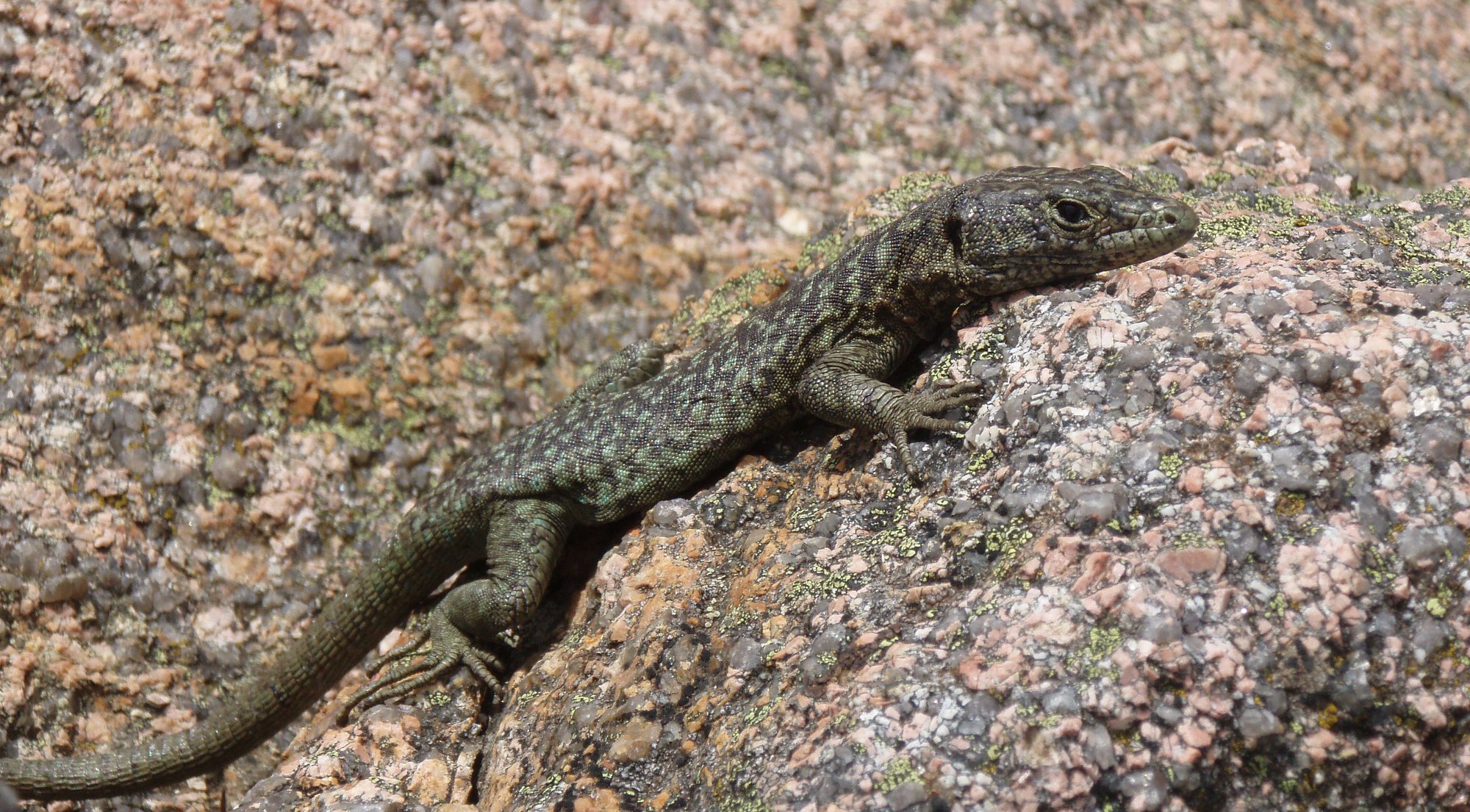
Lizards · Difficulty: Expert
Key facts and care guidance for Bedriaga's rock lizard (Archaeolacerta bedriagae) (origin: Endemic to Corsica and Sardinia, usually in mountains at 600–1,800 m, also on coastal rocks by streams). Adult size around 20-28 cm total length (snout-vent length approx. 6-8 cm). Life expectancy approx. 8–12 years in captivity (a mountain species, long-lived). The values below are carefully researched guidance.
Short answers
Bedriaga's rock lizard: How big does the enclosure need to be?
80×50×80 cm, rocky and vertical with plenty of crevices and climbing walls (height matters).
Bedriaga's rock lizard: What temperature does it need?
Daytime 22–28 °C, basking spot 30–35 °C, at night 12–18 °C.
Bedriaga's rock lizard: Does it need UVB lighting?
UVB: UVB needed (Ferguson zone 3, UV index 3–4).
Bedriaga's rock lizard: How long do they live?
Life expectancy: approx. 8–12 years in captivity (a mountain species, long-lived).
Bedriaga's rock lizard: Is it suitable for beginners?
No – better suited to experienced keepers (difficulty: Expert).
Climate
- Daytime temperature
- 22–28 °C
- Night temperature
- 12–18 °C
- Basking spot
- 30–35 °C
- Humidity
- 50–70 % (higher at rock crevices and near streams)
- UVB
- UVB needed (Ferguson zone 3, UV index 3–4)
Enclosure
- Minimum size
- 80×50×80 cm, rocky and vertical with plenty of crevices and climbing walls (height matters)
- Substrate
- A stony floor, rock and slate structures, little sand-loam, damp in places
Feeding
- Food
- Insects and small invertebrates; it often catches prey in mid-air
- Feeding interval
- adults 2–3×/week, juveniles daily
Key facts
- Adult size
- 20-28 cm total length (snout-vent length approx. 6-8 cm)
- Life expectancy
- approx. 8–12 years in captivity (a mountain species, long-lived)
- Origin
- Endemic to Corsica and Sardinia, usually in mountains at 600–1,800 m, also on coastal rocks by streams
- Protection status
- Strictly protected (Habitats Directive Annex IV, Bern Convention); only documented captive-bred animals. Note: some lay sources mention "CITES" – this is not documented and is uncertain
- Brumation
- A winter rest is needed: about 3 months at 8–10 °C (a mountain species; cooler nights matter generally)
- Cohabitation
- Keep them singly, or at most one male plus one female in a large rock enclosure with plenty of crevices; the males are territorial and NEVER kept together
Notes
A demanding montane rock species needing cooler temperatures and a strong night drop – do not keep it at Mediterranean heat. The care figures are derived from its natural habitat and related rock lizards (little direct husbandry literature), hence medium confidence.
Do you keep this species?
Add your animal to Reptoria – Reptoria reminds you about feeding and shedding. Add your animal for free →
Look for Bedriaga's rock lizard (Archaeolacerta bedriagae) in the marketplace →
Related species
- Erhard's wall lizard (Podarcis erhardii) – Beginner to intermediate
- Large psammodromus (Psammodromus algirus) – Intermediate
- Pamphylian green lizard (Lacerta pamphylica) – Intermediate
- Lilford's wall lizard (Podarcis lilfordi) – Expert
- Balkan green lizard (Lacerta trilineata) – Intermediate
- Sawtail lizard (Holaspis guentheri) – Intermediate
- Bosk's fringe-fingered lizard (Acanthodactylus boskianus) – Intermediate
- Spiny-footed lizard (Acanthodactylus erythrurus) – Intermediate
What you need to start
To keep Bedriaga's rock lizard (Archaeolacerta bedriagae) you typically need: a suitable enclosure (80×50×80 cm, rocky and vertical with plenty of crevices and climbing walls (height matters)), substrate (A stony floor, rock and slate structures, little sand-loam, damp in places), a heat source with a thermostat, UVB lighting, thermometer and hygrometer, a water dish and hides. You will find equipment in the Reptoria marketplace.
The complete, interactive care database is in the Reptoria app.
Last updated: 7 November 2026 · Editor: Reptoria editorial team · Sources include: Wikipedia: Bedriaga's rock lizard - allgemeine Biologie, eierlegend – https://en.wikipedia.org/wiki/Bedriaga%27s_rock_lizard, Verwandte Felsbewohner-Gattung Podarcis: 25-28°C, 6-10 Wochen – https://herpetofauna.at/index.php/mauereidechse, https://de.wikipedia.org/wiki/Archaeolacerta_bedriagae, https://en.wikipedia.org/wiki/Archaeolacerta_bedriagae, https://reptile-database.reptarium.cz/species?genus=Archaeolacerta&species=bedriagae
All values are non-binding guidance and do not replace expert advice. Research thoroughly from several sources before acquiring and keeping an animal, and observe the applicable law (species and animal protection in particular).