Cape dwarf chameleon (Bradypodion pumilum)
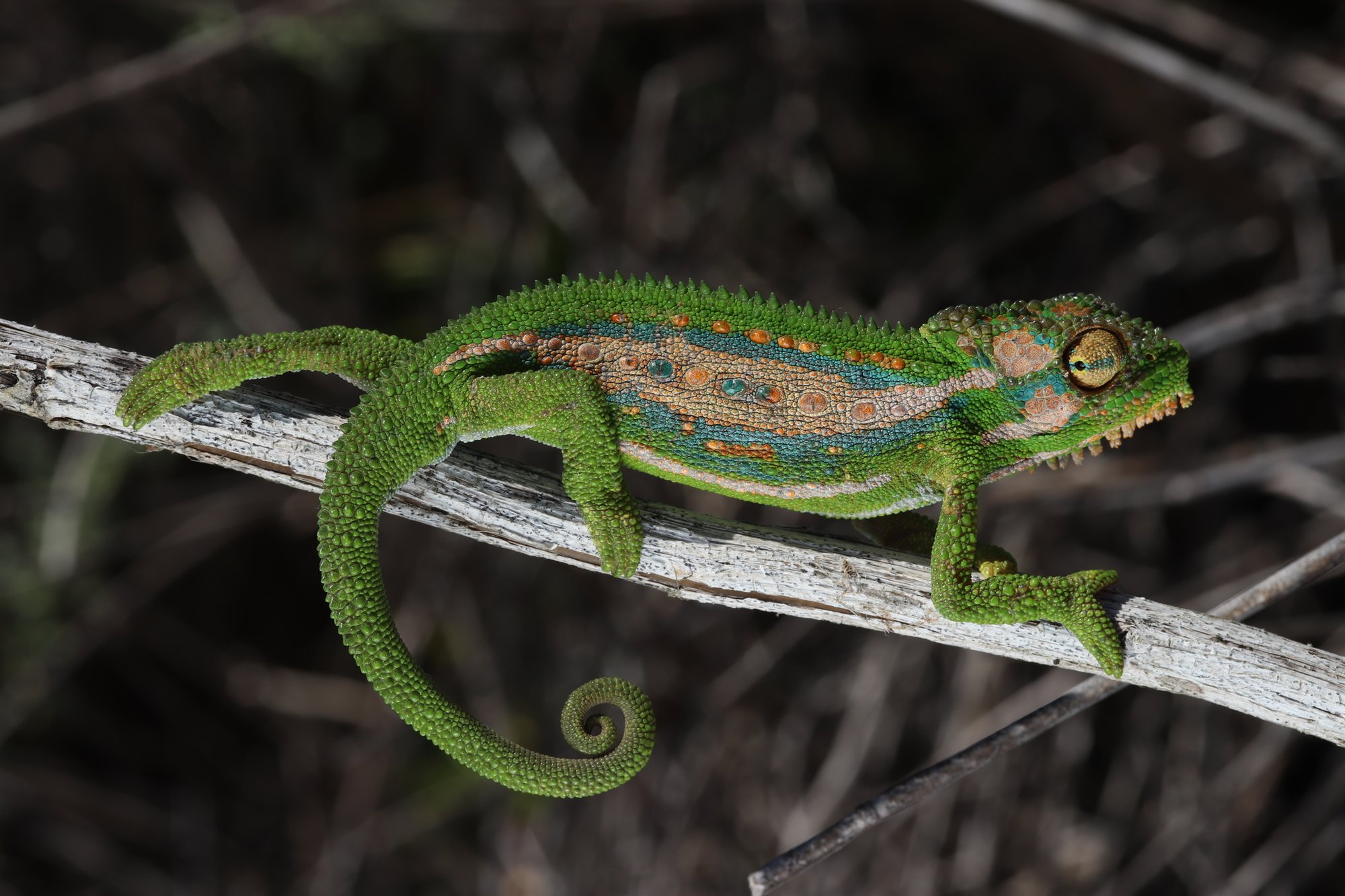
Chameleons · Difficulty: Intermediate
Key facts and care guidance for Cape dwarf chameleon (Bradypodion pumilum) (origin: The Western Cape, South Africa (a Mediterranean climate)). Adult size around 12–18 cm. Life expectancy 3–5 years. The values below are carefully researched guidance.
Short answers
Cape dwarf chameleon: How big does the enclosure need to be?
50×50×80 cm (W×D×H) for a pair.
Cape dwarf chameleon: What temperature does it need?
Daytime 24–30 °C (summer briefly up to 35 °C with a retreat available), basking spot ~28–30 °C (small basking spot), at night 10–15 °C.
Cape dwarf chameleon: Does it need UVB lighting?
UVB: Essential.
Cape dwarf chameleon: How long do they live?
Life expectancy: 3–5 years.
Cape dwarf chameleon: Is it suitable for beginners?
Rather not – it is considered an intermediate species (difficulty: Intermediate).
Climate
- Daytime temperature
- 24–30 °C (summer briefly up to 35 °C with a retreat available)
- Night temperature
- 10–15 °C
- Basking spot
- ~28–30 °C (small basking spot)
- Humidity
- 60–80 %, higher at night
- UVB
- Essential
Enclosure
- Minimum size
- 50×50×80 cm (W×D×H) for a pair
- Substrate
- Forest floor or coco humus, densely planted
Feeding
- Food
- Small insects (flies, small crickets, house crickets)
- Feeding interval
- Adults every 2 days, juveniles daily
Key facts
- Adult size
- 12–18 cm
- Life expectancy
- 3–5 years
- Origin
- The Western Cape, South Africa (a Mediterranean climate)
- Protection status
- CITES Appendix II; South Africa: an export ban (only captive-bred animals in the trade)
- Brumation
- A cool winter spell (~15 °C, Mediterranean)
- Cohabitation
- Keep singly as a rule: dwarf chameleons too are solitary; larger males can cannibalise smaller conspecifics, and fights between males cause serious bite injuries. Putting animals together is only acceptable briefly for mating in a large, densely planted enclosure — not as permanent pair housing.
Notes
A clear day-night drop matters; live-bearing. Wild-caught animals are not available (South Africa bans export).
Do you keep this species?
Add your animal to Reptoria – Reptoria reminds you about feeding and shedding. Add your animal for free →
Look for Cape dwarf chameleon (Bradypodion pumilum) in the marketplace →
Related species
- Drakensberg dwarf chameleon (Bradypodion dracomontanum) – Intermediate
- Karoo dwarf chameleon (Bradypodion karrooicum) – Intermediate
- Robertson dwarf chameleon (Bradypodion gutturale) – Intermediate
- Knysna dwarf chameleon (Bradypodion damaranum) – Intermediate
- Natal Midlands dwarf chameleon (Bradypodion thamnobates) – Expert
- Black-headed dwarf chameleon (Bradypodion melanocephalum) – Intermediate
- Setaro's dwarf chameleon (Bradypodion setaroi) – Intermediate
- Smith's dwarf chameleon (Bradypodion taeniabronchum) – Intermediate
What you need to start
To keep Cape dwarf chameleon (Bradypodion pumilum) you typically need: a suitable enclosure (50×50×80 cm (W×D×H) for a pair), substrate (Forest floor or coco humus, densely planted), a heat source with a thermostat, UVB lighting, thermometer and hygrometer, a water dish and hides. You will find equipment in the Reptoria marketplace.
The complete, interactive care database is in the Reptoria app.
Last updated: 9 October 2026 · Editor: Reptoria editorial team · Sources include: https://en.wikipedia.org/wiki/Cape_dwarf_chameleon, https://www.tyroneping.co.za/chameleons/bradypodion-pumilum/
All values are non-binding guidance and do not replace expert advice. Research thoroughly from several sources before acquiring and keeping an animal, and observe the applicable law (species and animal protection in particular).