Cuban pale anole (Anolis angusticeps)
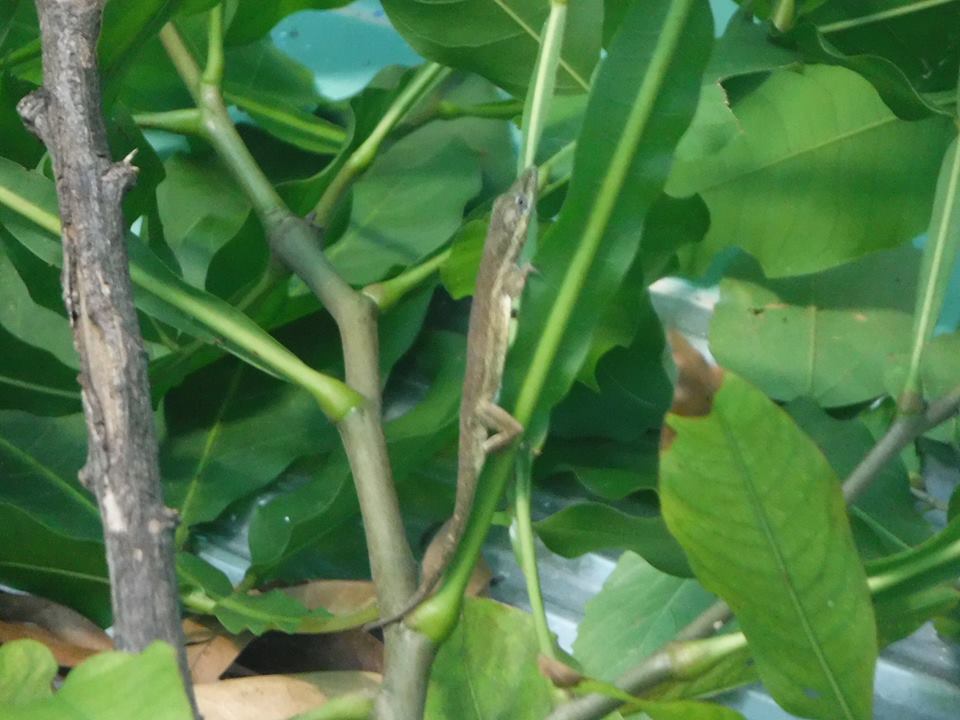
Iguanas · Difficulty: Beginner with some knowledge
Key facts and care guidance for Cuban pale anole (Anolis angusticeps) (origin: Cuba, Isla de la Juventud and the Archipielago de Sabana-Camaguey; represented on the Bahamas by its own subspecies. Inhabits twigs and thin branches in forests and scrubland). Adult size around 11–14 cm. Life expectancy 4–8 years. The values below are carefully researched guidance.
Short answers
Cuban pale anole: How big does the enclosure need to be?
50×50×80 cm for a pair — what matters is structure: branches, vertical surfaces and dense foliage. Whether a species needs more height or more floor area depends on which forest layer it lives in — anoles range from the canopy down to the leaf litter on the ground.
Cuban pale anole: What temperature does it need?
Daytime 25–30 °C, basking spot Local warm spot up to 35 °C, at night 19–22 °C.
Cuban pale anole: Does it need UVB lighting?
UVB: Essential (UVB 5.0).
Cuban pale anole: How long do they live?
Life expectancy: 4–8 years.
Cuban pale anole: Is it suitable for beginners?
Partly – manageable with some prior knowledge (difficulty: Beginner with some knowledge).
Climate
- Daytime temperature
- 25–30 °C
- Night temperature
- 19–22 °C
- Basking spot
- Local warm spot up to 35 °C
- Humidity
- 65–85 %, mist in the morning
- UVB
- Essential (UVB 5.0)
Enclosure
- Minimum size
- 50×50×80 cm for a pair — what matters is structure: branches, vertical surfaces and dense foliage. Whether a species needs more height or more floor area depends on which forest layer it lives in — anoles range from the canopy down to the leaf litter on the ground
- Substrate
- Forest-floor substrate with live plants, plus thin branches and bamboo at all heights
Feeding
- Food
- The smallest feeder insects: Drosophila, micro-crickets, small firebrats, aphids and springtails, dusted with calcium and vitamins at every other feeding
- Feeding interval
- adults 3–4×/week
Key facts
- Adult size
- 11–14 cm
- Life expectancy
- 4–8 years
- Origin
- Cuba, Isla de la Juventud and the Archipielago de Sabana-Camaguey; represented on the Bahamas by its own subspecies. Inhabits twigs and thin branches in forests and scrubland
- Protection status
- Not listed under CITES
- Brumation
- No winter rest; somewhat cooler in winter with a shorter photoperiod
- Cohabitation
- Pairs (1.1) are the safest option; never keep males together — they fight until seriously injured. Females also defend their own, smaller territories: a second female is often harassed so much by the dominant one that she eats less and hides. One male with two females only works, if at all, in a considerably larger, densely structured enclosure and only with a spare enclosure ready.
Notes
A twig dweller with a very slender body. It needs thin, branching twigs.
Do you keep this species?
Add your animal to Reptoria – Reptoria reminds you about feeding and shedding. Add your animal for free →
Look for Cuban pale anole (Anolis angusticeps) in the marketplace →
Related species
- Ghost anole (Anolis lemurinus) – Intermediate
- Ahl's anole (Anolis ahli) – Intermediate
- Aliniger anole (Anolis aliniger) – Beginner with some knowledge
- Allogus anole (Anolis allogus) – Beginner with some knowledge
- Bahaman green anole (Anolis smaragdinus) – Beginner
- Bahoruco anole (Anolis bahorucoensis) – Beginner with some knowledge
- Baleatus giant anole (Anolis baleatus) – Intermediate
- Baracoa giant anole (Anolis baracoae) – Intermediate
What you need to start
To keep Cuban pale anole (Anolis angusticeps) you typically need: a suitable enclosure (50×50×80 cm for a pair — what matters is structure: branches, vertical surfaces and dense foliage. Whether a species needs more height or more floor area depends on which forest layer it lives in — anoles range from the canopy down to the leaf litter on the ground), substrate (Forest-floor substrate with live plants, plus thin branches and bamboo at all heights), a heat source with a thermostat, UVB lighting, thermometer and hygrometer, a water dish and hides. You will find equipment in the Reptoria marketplace.
The complete, interactive care database is in the Reptoria app.
Last updated: 9 October 2026 · Editor: Reptoria editorial team · Sources include: anthonyherrel.fr (Huyghe et al. 2007), anolesatoz.weebly.com, royal-anolis.com, reptile-database.reptarium.cz, EUR-Lex VO (EU) 2026/1383
All values are non-binding guidance and do not replace expert advice. Research thoroughly from several sources before acquiring and keeping an animal, and observe the applicable law (species and animal protection in particular).