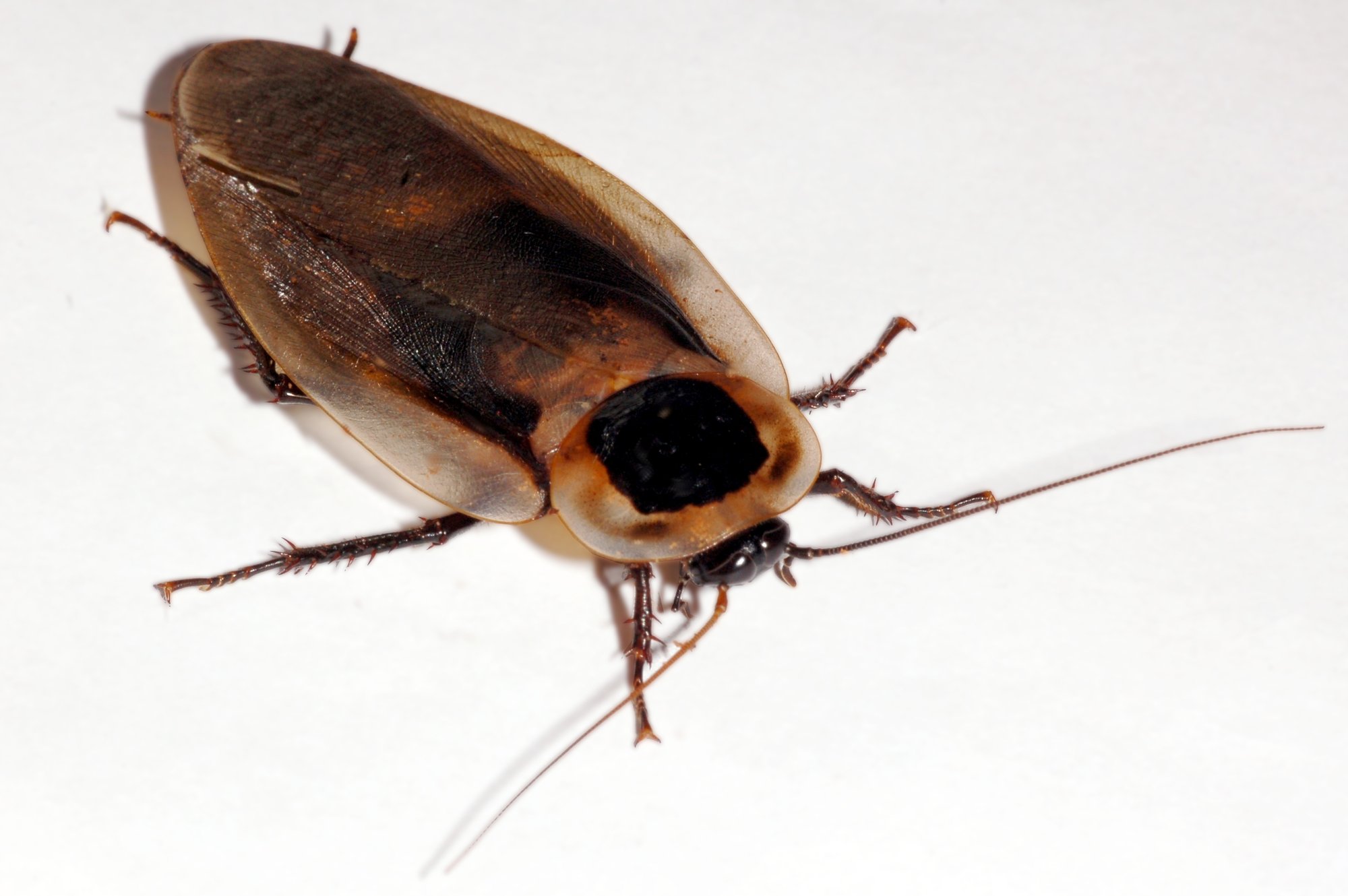
Discoid cockroach (Blaberus craniifer)
Invertebrates · Difficulty: Beginner
Key facts and care guidance for Discoid cockroach (Blaberus craniifer) (origin: Central America, the southern USA, the Caribbean). Adult size around approx. 6–7 cm. Life expectancy approx. 1–1.5 years. The values below are carefully researched guidance.
Short answers
Discoid cockroach: How big does the enclosure need to be?
Approx. 50×40×40 cm for a breeding group (at least 40×30×30 cm); a smooth rim is enough (they hardly climb).
Discoid cockroach: What temperature does it need?
Daytime 24–28 °C (ideal for breeding 25–26 °C), at night 20–24 °C.
Discoid cockroach: Does it need UVB lighting?
UVB: No UVB needed.
Discoid cockroach: How long do they live?
Life expectancy: approx. 1–1.5 years.
Discoid cockroach: Is it suitable for beginners?
Yes – it is considered suitable for beginners (difficulty: Beginner).
Climate
- Daytime temperature
- 24–28 °C (ideal for breeding 25–26 °C)
- Night temperature
- 20–24 °C
- Basking spot
- —
- Humidity
- 50–70 %
- UVB
- No UVB needed
Enclosure
- Minimum size
- approx. 50×40×40 cm for a breeding group (at least 40×30×30 cm); a smooth rim is enough (they hardly climb)
- Substrate
- A mix of forest soil, coco humus and leaf litter, 5–8 cm deep; cork bark or egg cartons as hides
Feeding
- Food
- Vegetables (carrot, pumpkin), fruit, dry food or flakes, a little protein (fish flakes or cat food)
- Feeding interval
- fresh food 2–3×/week, dry food always available
Key facts
- Adult size
- approx. 6–7 cm
- Life expectancy
- approx. 1–1.5 years
- Origin
- Central America, the southern USA, the Caribbean
- Protection status
- Not protected. Do not release it.
- Brumation
- None
- Cohabitation
- Colony or group keeping (sociable, with no appreciable cannibalism when there is enough food).
Notes
A large, imposing display and feeder cockroach with a death's-head-like marking on the pronotum (colour forms "Black Wing" and "White Wing"). Winged, but it barely flies and does not climb smooth walls. Ovoviviparous; the rate of increase is easy to control.
Do you keep this species?
Add your animal to Reptoria – Reptoria reminds you about feeding and shedding. Add your animal for free →
Look for Discoid cockroach (Blaberus craniifer) in the marketplace →
Related species
- Giant cave cockroach (Blaberus giganteus) – Beginner
- Discoid cockroach (Blaberus discoidalis) – Beginner
- Dubia roach (Blaptica dubia) – Beginner
- Domino cockroach (Therea bernhardti) – Beginner
- Peppered cockroach (Archimandrita tesselata) – Beginner
- Green banana cockroach (Panchlora nivea) – Beginner
- Halloween hissing cockroach (Elliptorhina javanica) – Beginner
- Domino cockroach (Therea petiveriana) – Beginner
What you need to start
To keep Discoid cockroach (Blaberus craniifer) you typically need: a suitable enclosure (approx. 50×40×40 cm for a breeding group (at least 40×30×30 cm); a smooth rim is enough (they hardly climb)), substrate (A mix of forest soil, coco humus and leaf litter, 5–8 cm deep; cork bark or egg cartons as hides), a heat source with a thermostat, UVB lighting, thermometer and hygrometer, a water dish and hides. You will find equipment in the Reptoria marketplace.
The complete, interactive care database is in the Reptoria app.
Last updated: 2 November 2026 · Editor: Reptoria editorial team · Sources include: https://de.wikipedia.org/wiki/Totenkopfschabe, https://en.wikipedia.org/wiki/Blaberus_craniifer, https://www.werinsect.com/wirbellose-im-terrarium/totenkopfschabe
All values are non-binding guidance and do not replace expert advice. Research thoroughly from several sources before acquiring and keeping an animal, and observe the applicable law (species and animal protection in particular).