Eastern bearded dragon (Pogona barbata)
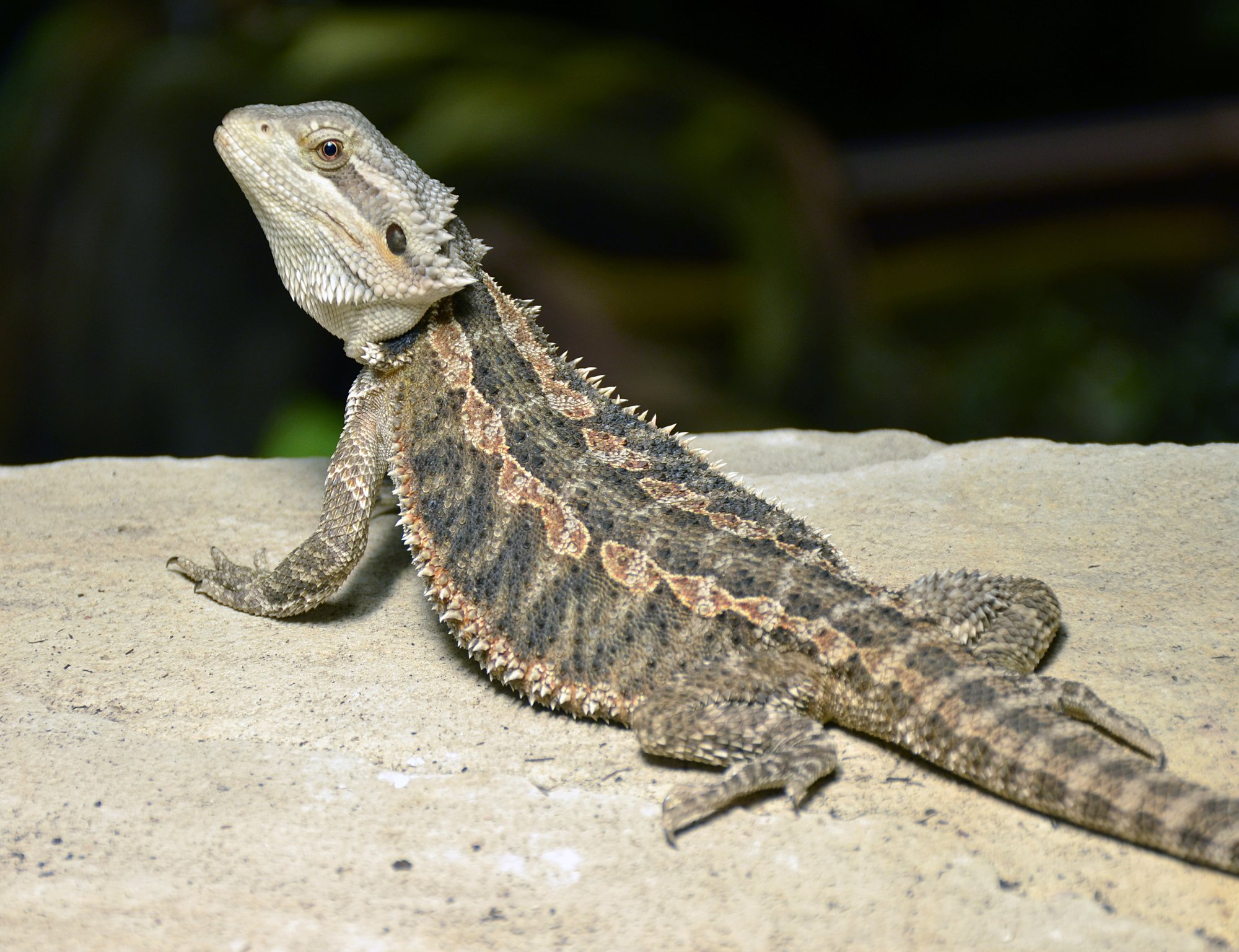
Agamas · Difficulty: Intermediate
Key facts and care guidance for Eastern bearded dragon (Pogona barbata) (origin: Eastern and southeastern Australia: open woodland and scrub as well as dry sclerophyll forest, from Cairns in Queensland to the Eyre Peninsula in South Australia). Adult size around up to ~50–60 cm total length (the largest Pogona). Life expectancy 10–15 years. The values below are carefully researched guidance.
Short answers
Eastern bearded dragon: How big does the enclosure need to be?
150 × 100 × 80 cm (larger than P. vitticeps).
Eastern bearded dragon: What temperature does it need?
Daytime 28–33 °C, basking spot ~40 °C, at night 20–23 °C.
Eastern bearded dragon: Does it need UVB lighting?
UVB: Essential (10–12 %).
Eastern bearded dragon: How long do they live?
Life expectancy: 10–15 years.
Eastern bearded dragon: Is it suitable for beginners?
Rather not – it is considered an intermediate species (difficulty: Intermediate).
Climate
- Daytime temperature
- 28–33 °C
- Night temperature
- 20–23 °C
- Basking spot
- ~40 °C
- Humidity
- 40–50 %
- UVB
- Essential (10–12 %)
Enclosure
- Minimum size
- 150 × 100 × 80 cm (larger than P. vitticeps)
- Substrate
- A sand-loam mix they can dig in
Feeding
- Food
- Insects plus plant food (wild herbs, flowers, vegetables)
- Feeding interval
- juveniles daily, adults insects 2–3×/week plus green food daily
Key facts
- Adult size
- up to ~50–60 cm total length (the largest Pogona)
- Life expectancy
- 10–15 years
- Origin
- Eastern and southeastern Australia: open woodland and scrub as well as dry sclerophyll forest, from Cairns in Queensland to the Eyre Peninsula in South Australia
- Protection status
- — (no CITES; an Australian export ban, captive-bred animals)
- Brumation
- Winter rest recommended: 2–3 months (December to February) at 14–18 °C; ramp down light and food beforehand over about two weeks
- Cohabitation
- Singly or as a pair with one male; the males do not get on. The reason: several males fight over territory and the warm spot until one is injured or spends its life in a corner. Females usually get on, but each needs its own warm spot and hide; feed them separately once they differ in size.
Notes
A larger, good-climbing bearded dragon; otherwise care as for Pogona vitticeps with a desert climate, a high basking spot and UVB. A winter rest matters for health and breeding.
Do you keep this species?
Add your animal to Reptoria – Reptoria reminds you about feeding and shedding. Add your animal for free →
Look for Eastern bearded dragon (Pogona barbata) in the marketplace →
Related species
- Central bearded dragon (Pogona vitticeps) – Beginner to intermediate
- Kimberley bearded dragon (Pogona microlepidota) – Intermediate
- Mitchell's bearded dragon (Pogona mitchelli) – Intermediate
- Nullarbor bearded dragon (Pogona nullarbor) – Intermediate
- Rankin's bearded dragon (Pogona rankini) – Beginner
- Western bearded dragon (Pogona minor) – Intermediate
- Rankin's dragon (Pogona henrylawsoni) – Beginner to intermediate
- Gippsland water dragon (Intellagama lesueurii howittii) – Intermediate
What you need to start
To keep Eastern bearded dragon (Pogona barbata) you typically need: a suitable enclosure (150 × 100 × 80 cm (larger than P. vitticeps)), substrate (A sand-loam mix they can dig in), a heat source with a thermostat, UVB lighting, thermometer and hygrometer, a water dish and hides. You will find equipment in the Reptoria marketplace.
The complete, interactive care database is in the Reptoria app.
Last updated: 2 November 2026 · Editor: Reptoria editorial team · Sources include: Wikipedia DE, prpw.com.au, Wikipedia EN, bartagame-info.de, coolcompanions.com.au
All values are non-binding guidance and do not replace expert advice. Research thoroughly from several sources before acquiring and keeping an animal, and observe the applicable law (species and animal protection in particular).