Rankin's bearded dragon (Pogona rankini)
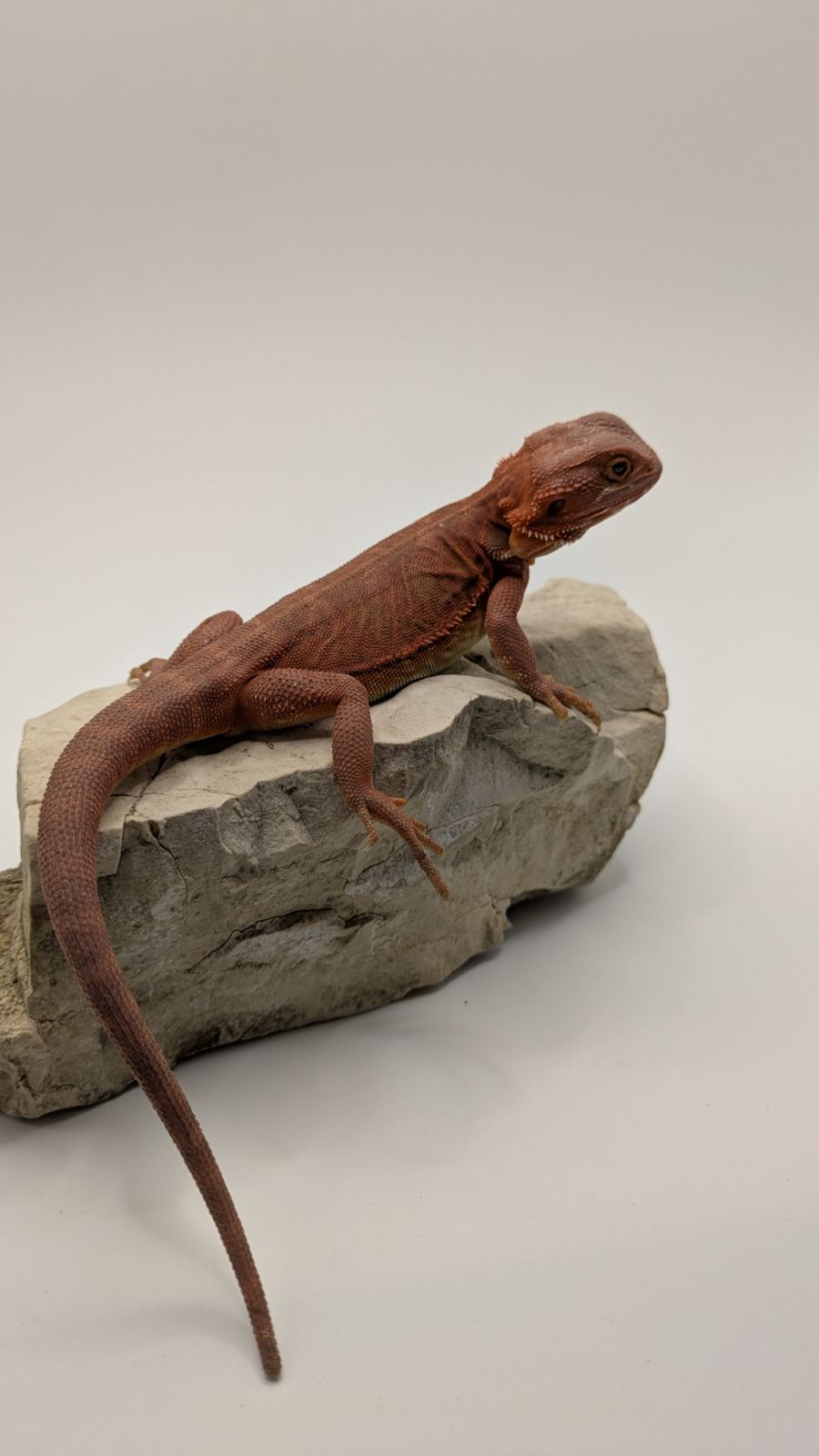
Agamas · Difficulty: Beginner
Key facts and care guidance for Rankin's bearded dragon (Pogona rankini) (origin: Central Queensland (Australia), dry steppe and clay soils; syn. Pogona henrylawsoni). Adult size around approx. 25–30 cm total length (the smallest bearded dragon). Life expectancy approx. 8–12 years. The values below are carefully researched guidance.
Short answers
Rankin's bearded dragon: How big does the enclosure need to be?
100×50×50 cm for one animal (from 120×60×60 cm for a group).
Rankin's bearded dragon: What temperature does it need?
Daytime 28–32 °C, basking spot 40–45 °C, at night 20–22 °C.
Rankin's bearded dragon: Does it need UVB lighting?
UVB: UVB needed (Ferguson zone 3–4, UV index 4–6).
Rankin's bearded dragon: How long do they live?
Life expectancy: approx. 8–12 years.
Rankin's bearded dragon: Is it suitable for beginners?
Yes – it is considered suitable for beginners (difficulty: Beginner).
Climate
- Daytime temperature
- 28–32 °C
- Night temperature
- 20–22 °C
- Basking spot
- 40–45 °C
- Humidity
- 40–50 %
- UVB
- UVB needed (Ferguson zone 3–4, UV index 4–6)
Enclosure
- Minimum size
- 100×50×50 cm for one animal (from 120×60×60 cm for a group)
- Substrate
- A loam and sand mix, a firm floor they can dig in; not pure sand
Feeding
- Food
- Insects (house crickets, crickets, roaches) plus wild herbs and vegetables; about 50 % plant food as adults
- Feeding interval
- adults 2–3×/week, juveniles daily
Key facts
- Adult size
- approx. 25–30 cm total length (the smallest bearded dragon)
- Life expectancy
- approx. 8–12 years
- Origin
- Central Queensland (Australia), dry steppe and clay soils; syn. Pogona henrylawsoni
- Protection status
- Not listed under CITES; well-established captive-bred stock in the trade
- Brumation
- An optional slight winter rest of 4–8 weeks at about 15–18 °C (it encourages breeding)
- Cohabitation
- Keeping them singly always works; since Rankin's dragons are considered noticeably more sociable than other bearded dragons, a harem of one male with several females or an all-female group can also succeed in a correspondingly larger enclosure with visual barriers and several basking spots. Drawback of a group: rank order is settled through head-bobbing and occasional pushing away from food, and biting can occur if space is short. Never keep two males together, they will not tolerate each other.
Notes
Pogona rankini = the trade name for P. henrylawsoni (Rankin's dragon). Suitable for beginners, robust and diurnal. Avoid pure sand. A common mistake is too little space or UV.
Do you keep this species?
Add your animal to Reptoria – Reptoria reminds you about feeding and shedding. Add your animal for free →
Look for Rankin's bearded dragon (Pogona rankini) in the marketplace →
Related species
- Eastern bearded dragon (Pogona barbata) – Intermediate
- Central bearded dragon (Pogona vitticeps) – Beginner to intermediate
- Kimberley bearded dragon (Pogona microlepidota) – Intermediate
- Mitchell's bearded dragon (Pogona mitchelli) – Intermediate
- Nullarbor bearded dragon (Pogona nullarbor) – Intermediate
- Western bearded dragon (Pogona minor) – Intermediate
- Rankin's dragon (Pogona henrylawsoni) – Beginner to intermediate
- Egyptian spiny-tailed lizard (Uromastyx aegyptia) – Intermediate to expert
What you need to start
To keep Rankin's bearded dragon (Pogona rankini) you typically need: a suitable enclosure (100×50×50 cm for one animal (from 120×60×60 cm for a group)), substrate (A loam and sand mix, a firm floor they can dig in; not pure sand), a heat source with a thermostat, UVB lighting, thermometer and hygrometer, a water dish and hides. You will find equipment in the Reptoria marketplace.
The complete, interactive care database is in the Reptoria app.
Last updated: 25 September 2026 · Editor: Reptoria editorial team · Sources include: https://dubiaroaches.com/blogs/lizard-care/rankins-dragon-care-sheet, https://en.wikipedia.org/wiki/Rankin%27s_dragon, https://reptiledirect.com/rankins-dragon/, https://thetyedyediguana.com/care-sheets/rankins-dragon-pogona-henrylawsoni/
All values are non-binding guidance and do not replace expert advice. Research thoroughly from several sources before acquiring and keeping an animal, and observe the applicable law (species and animal protection in particular).