Eastern sandfish skink (Scincus mitranus)
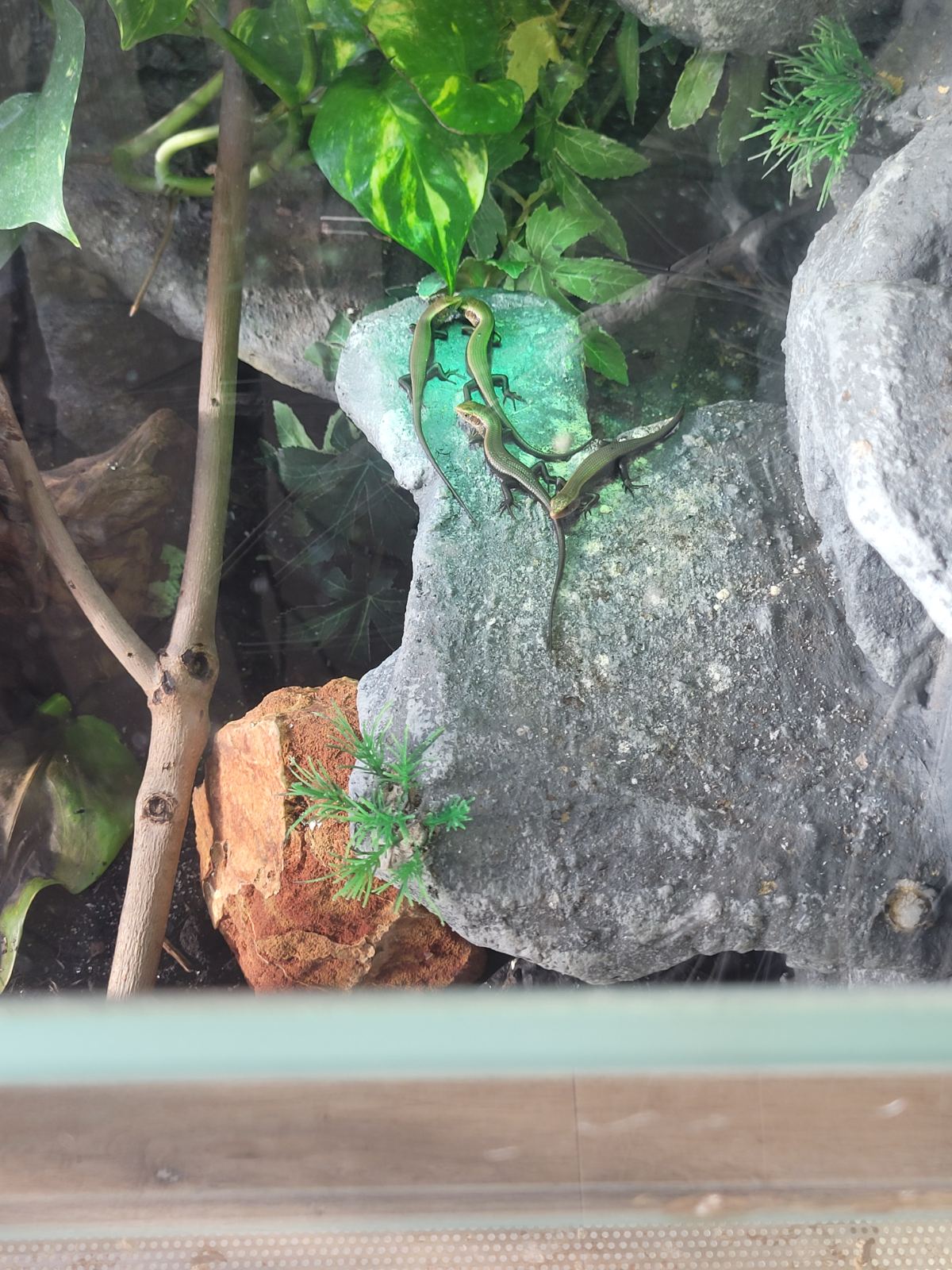
Skinks · Difficulty: Intermediate
Key facts and care guidance for Eastern sandfish skink (Scincus mitranus) (origin: The Arabian Peninsula (Kuwait, Oman, Qatar, Saudi Arabia, Bahrain, the UAE) north to western Iran; fine aeolian dune sand). Adult size around 18–20 cm total length (SVL ~10 cm). Life expectancy 8–10 years. The values below are carefully researched guidance.
Short answers
Eastern sandfish skink: How big does the enclosure need to be?
At least ~80×40×40 cm for one animal (floor area matters more than height).
Eastern sandfish skink: What temperature does it need?
Daytime 28–32 °C (warm side), cool side ~25–27 °C, basking spot 42–45 °C basking spot; the sand surface right at the spot reaches ~50–55 °C in places (surface, not air – the animal lies buried), at night 18–22 °C (heating off at night).
Eastern sandfish skink: Does it need UVB lighting?
UVB: UVB recommended (~10–12 %; Ferguson zone 3, UV index 3–5; mostly buried, so keep it moderate).
Eastern sandfish skink: How long do they live?
Life expectancy: 8–10 years.
Eastern sandfish skink: Is it suitable for beginners?
Rather not – it is considered an intermediate species (difficulty: Intermediate).
Climate
- Daytime temperature
- 28–32 °C (warm side), cool side ~25–27 °C
- Night temperature
- 18–22 °C (heating off at night)
- Basking spot
- 42–45 °C basking spot; the sand surface right at the spot reaches ~50–55 °C in places (surface, not air – the animal lies buried)
- Humidity
- dry, below 50 %; a damp floor zone or humid hide for shedding
- UVB
- UVB recommended (~10–12 %; Ferguson zone 3, UV index 3–5; mostly buried, so keep it moderate)
Enclosure
- Minimum size
- at least ~80×40×40 cm for one animal (floor area matters more than height)
- Substrate
- Fine, diggable, non-abrasive desert sand, at least 10 cm and preferably 15–20 cm deep (a true sand-swimmer)
Feeding
- Food
- Insectivorous (crickets, house crickets, roaches, black soldier fly larvae); superworms and mealworms sparingly; dust with calcium and vitamins
- Feeding interval
- adults every other day; juveniles daily
Key facts
- Adult size
- 18–20 cm total length (SVL ~10 cm)
- Life expectancy
- 8–10 years
- Origin
- The Arabian Peninsula (Kuwait, Oman, Qatar, Saudi Arabia, Bahrain, the UAE) north to western Iran; fine aeolian dune sand
- Protection status
- Not listed under CITES; IUCN "Least Concern"; no registration duty in Germany. But it is often wild-caught in the trade → check the origin and captive breeding, and have a faecal and veterinary check (parasites)
- Brumation
- Optional and mild – a pronounced winter rest is not essential given its Arabian origin; for breeding, possibly a short cooler, drier spell (~18–20 °C). Uncertain
- Cohabitation
- Single housing. This is the safest option; a pair or group (one male with several females) only with a very large floor area and deep sand. Never keep males together.
Notes
A sand swimmer – it buries itself completely (with only the nostrils out), with smooth scales. The mode of reproduction is contradictory in the sources (usually given as egg-laying; one source says ovoviviparous) – uncertain. Common mistakes: sand that is too shallow or sharp-edged, the wrong heat source (a ceramic or coloured bulb instead of a spot), too damp, and too much handling. Quarantine wild-caught animals first. Care is practically identical to S. scincus.
Do you keep this species?
Add your animal to Reptoria – Reptoria reminds you about feeding and shedding. Add your animal for free →
Look for Eastern sandfish skink (Scincus mitranus) in the marketplace →
Related species
- Common sandfish skink (Scincus scincus) – Intermediate
- White-banded sandfish skink (Scincus albifasciatus) – Intermediate
- African five-lined skink (Trachylepis quinquetaeniata) – Intermediate
- Algerian skink (Eumeces algeriensis) – Intermediate
- Berber skink (Eumeces schneideri) – Beginner to intermediate
- Berdmore's water skink (Tropidophorus berdmorei) – Beginner with some knowledge
- Mountain skink (Plestiodon callicephalus) – Beginner with some knowledge
- Pacific blue-tailed skink (Emoia caeruleocauda) – Beginner with some knowledge
What you need to start
To keep Eastern sandfish skink (Scincus mitranus) you typically need: a suitable enclosure (at least ~80×40×40 cm for one animal (floor area matters more than height)), substrate (Fine, diggable, non-abrasive desert sand, at least 10 cm and preferably 15–20 cm deep (a true sand-swimmer)), a heat source with a thermostat, UVB lighting, thermometer and hygrometer, a water dish and hides. You will find equipment in the Reptoria marketplace.
The complete, interactive care database is in the Reptoria app.
Last updated: 7 November 2026 · Editor: Reptoria editorial team · Sources include: Reptile Database: Scincus mitranus – ovoviviparous – https://reptile-database.reptarium.cz/species?genus=Scincus&species=mitranus, Wikipedia: Scincus mitranus (Eastern skink) – ovoviviparous, verhindert Austrocknen der Eier – https://en.wikipedia.org/wiki/Scincus_mitranus, https://en.wikipedia.org/wiki/Scincus, https://en.wikipedia.org/wiki/Scincus_mitranus, https://reptifiles.com/wp-content/uploads/2020/10/Sandfish-Care-Sheet-PDF.pdf
All values are non-binding guidance and do not replace expert advice. Research thoroughly from several sources before acquiring and keeping an animal, and observe the applicable law (species and animal protection in particular).