Electric blue gecko (Lygodactylus williamsi)
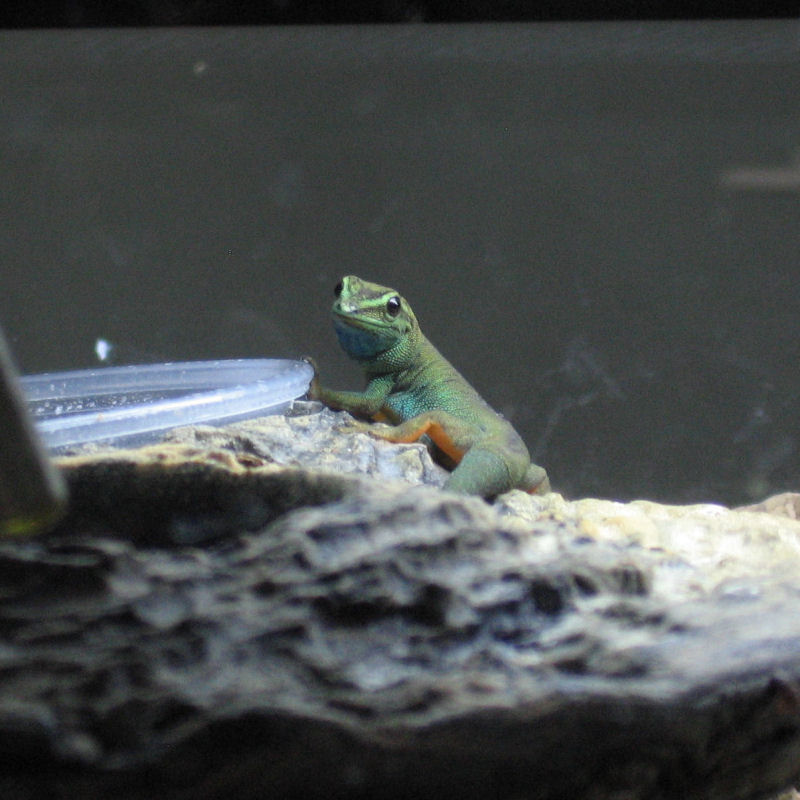
Geckos · Difficulty: Intermediate
Key facts and care guidance for Electric blue gecko (Lygodactylus williamsi) (origin: The Kimboza Forest, Tanzania – endemic, a tiny range). Adult size around 7–9 cm. Life expectancy 5–8 years. The values below are carefully researched guidance.
Short answers
Electric blue gecko: How big does the enclosure need to be?
30×30×45 cm.
Electric blue gecko: What temperature does it need?
Daytime 25–29 °C, basking spot 31 °C, at night 20–23 °C.
Electric blue gecko: Does it need UVB lighting?
UVB: Essential (UVB 5.0).
Electric blue gecko: How long do they live?
Life expectancy: 5–8 years.
Electric blue gecko: Is it suitable for beginners?
Rather not – it is considered an intermediate species (difficulty: Intermediate).
Climate
- Daytime temperature
- 25–29 °C
- Night temperature
- 20–23 °C
- Basking spot
- 31 °C
- Humidity
- 65–80 %
- UVB
- Essential (UVB 5.0)
Enclosure
- Minimum size
- 30×30×45 cm
- Substrate
- Coco humus, bamboo tubes, Pandanus-like planting
Feeding
- Food
- Small insects (micro crickets, fruit flies), fruit purée
- Feeding interval
- adults daily to every other day
Key facts
- Adult size
- 7–9 cm
- Life expectancy
- 5–8 years
- Origin
- The Kimboza Forest, Tanzania – endemic, a tiny range
- Protection status
- CITES I (EU Annex A) – commercial use only with a certificate
- Brumation
- None
- Cohabitation
- Keeping them in pairs (one male, one female) is the least stressful option, and this is how the species also lives in the wild. One male with two or more females works in a larger enclosure – the drawback: females can suppress each other, so several basking and feeding spots are needed. Never keep two males together; they injure or kill each other.
Notes
A brilliant blue male, and extremely sought-after – which is exactly why it has been all but wiped out in the wild by collecting. CITES I: buying and selling only with valid papers and proof of captive breeding. It needs vertical bamboo structures.
Do you keep this species?
Add your animal to Reptoria – Reptoria reminds you about feeding and shedding. Add your animal for free →
Look for Electric blue gecko (Lygodactylus williamsi) in the marketplace →
Related species
- Angolan dwarf gecko (Lygodactylus angularis) – Intermediate
- Chobe dwarf gecko (Lygodactylus chobiensis) – Intermediate
- Conrau's dwarf gecko (Lygodactylus conraui) – Intermediate
- Yellow-headed dwarf gecko (Lygodactylus luteopicturatus) – Beginner
- Cape dwarf gecko (Lygodactylus capensis) – Beginner
- Kim Howell's dwarf gecko (Lygodactylus kimhowelli) – Intermediate
- Mombasa dwarf gecko (Lygodactylus mombasicus) – Intermediate
- Yellow-headed dwarf gecko (Lygodactylus picturatus) – Intermediate
What you need to start
To keep Electric blue gecko (Lygodactylus williamsi) you typically need: a suitable enclosure (30×30×45 cm), substrate (Coco humus, bamboo tubes, Pandanus-like planting), a heat source with a thermostat, UVB lighting, thermometer and hygrometer, a water dish and hides. You will find equipment in the Reptoria marketplace.
The complete, interactive care database is in the Reptoria app.
Last updated: 30 October 2026 · Editor: Reptoria editorial team · Sources include: http://www.dwarfgeckos.com/lygodactylus/l_w/lygodactylus_williamsi.php, http://www.reptile-care.de/species/Gekkota/Gekkonidae/Lygodactylus-williamsi.html, https://en.wikipedia.org/wiki/Lygodactylus_williamsi, https://reptile-database.reptarium.cz/species?genus=Lygodactylus&species=williamsi, https://reptilesmagazine.com/essential-care-for-the-electric-blue-day-gecko/
All values are non-binding guidance and do not replace expert advice. Research thoroughly from several sources before acquiring and keeping an animal, and observe the applicable law (species and animal protection in particular).