Forest dwarf chameleon (Bradypodion nemorale)
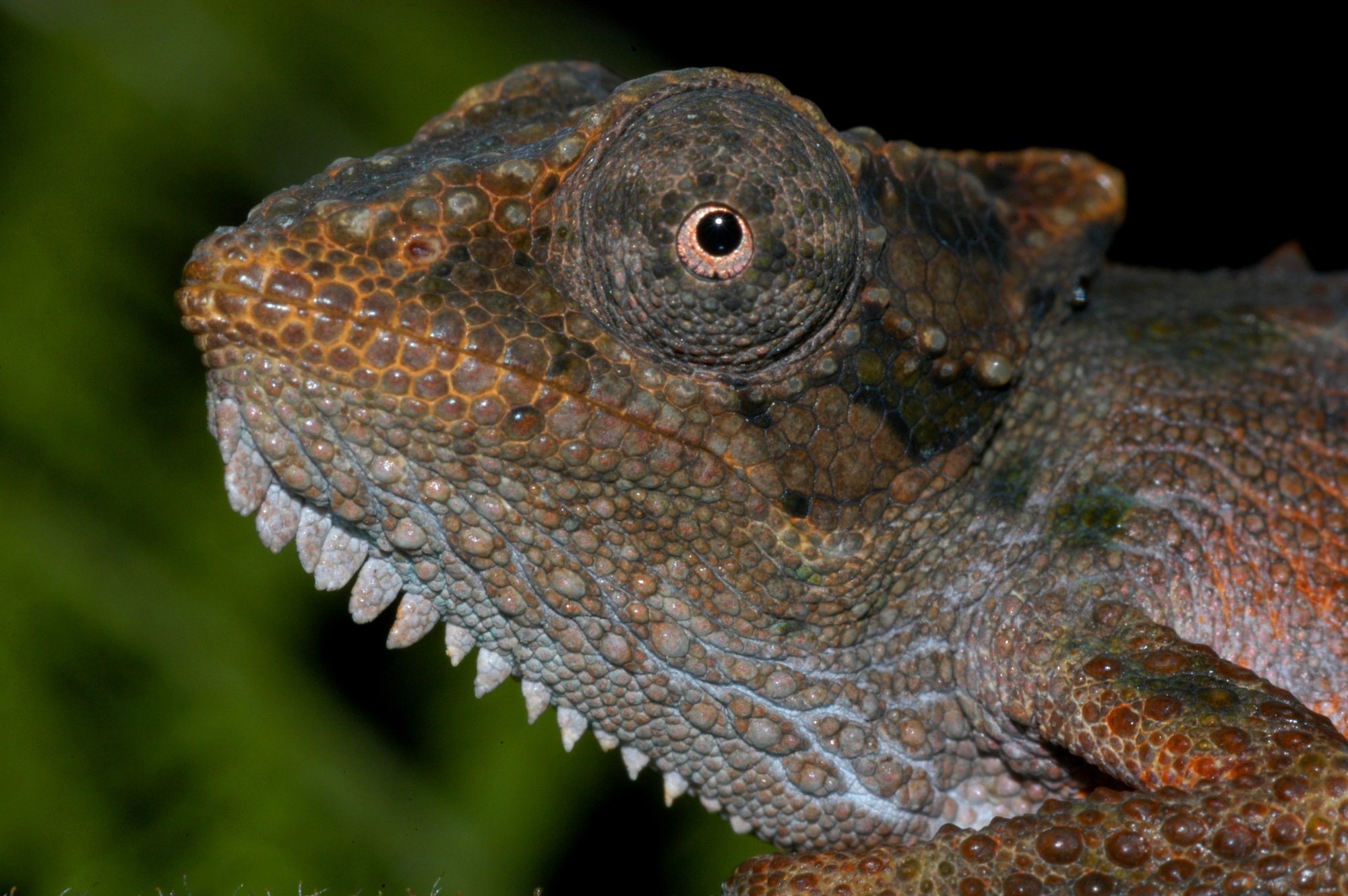
Chameleons · Difficulty: Intermediate
Key facts and care guidance for Forest dwarf chameleon (Bradypodion nemorale) (origin: The Ngome Forest, KwaZulu-Natal). Adult size around 11–15 cm. Life expectancy 4–8 years. The values below are carefully researched guidance.
Short answers
Forest dwarf chameleon: How big does the enclosure need to be?
50×50×80 cm for one animal — airflow matters more than a tight seal.
Forest dwarf chameleon: What temperature does it need?
Daytime 18–24 °C, basking spot Basking spot 26–28 °C, at night 12–16 °C.
Forest dwarf chameleon: Does it need UVB lighting?
UVB: Essential (UVB 5.0–6.0).
Forest dwarf chameleon: How long do they live?
Life expectancy: 4–8 years.
Forest dwarf chameleon: Is it suitable for beginners?
Rather not – it is considered an intermediate species (difficulty: Intermediate).
Climate
- Daytime temperature
- 18–24 °C
- Night temperature
- 12–16 °C
- Basking spot
- Basking spot 26–28 °C
- Humidity
- 70–85 %
- UVB
- Essential (UVB 5.0–6.0)
Enclosure
- Minimum size
- 50×50×80 cm for one animal — airflow matters more than a tight seal
- Substrate
- Forest-floor substrate with live plants, dense branchwork
Feeding
- Food
- House crickets, crickets, roaches and flies in rotation, dusted regularly with calcium and vitamins
- Feeding interval
- adults every other day
Key facts
- Adult size
- 11–15 cm
- Life expectancy
- 4–8 years
- Origin
- The Ngome Forest, KwaZulu-Natal
- Protection status
- CITES II — proof of origin required
- Brumation
- No winter rest; cooler in winter
- Cohabitation
- Keep strictly singly — chameleons are not group animals, and mere visual contact alone means constant stress.
Notes
Found only in one remnant patch of forest. Cool and humid.
Do you keep this species?
Add your animal to Reptoria – Reptoria reminds you about feeding and shedding. Add your animal for free →
Look for Forest dwarf chameleon (Bradypodion nemorale) in the marketplace →
Related species
- Drakensberg dwarf chameleon (Bradypodion dracomontanum) – Intermediate
- Cape dwarf chameleon (Bradypodion pumilum) – Intermediate
- Karoo dwarf chameleon (Bradypodion karrooicum) – Intermediate
- Robertson dwarf chameleon (Bradypodion gutturale) – Intermediate
- Knysna dwarf chameleon (Bradypodion damaranum) – Intermediate
- Natal Midlands dwarf chameleon (Bradypodion thamnobates) – Expert
- Black-headed dwarf chameleon (Bradypodion melanocephalum) – Intermediate
- Setaro's dwarf chameleon (Bradypodion setaroi) – Intermediate
What you need to start
To keep Forest dwarf chameleon (Bradypodion nemorale) you typically need: a suitable enclosure (50×50×80 cm for one animal — airflow matters more than a tight seal), substrate (Forest-floor substrate with live plants, dense branchwork), a heat source with a thermostat, UVB lighting, thermometer and hygrometer, a water dish and hides. You will find equipment in the Reptoria marketplace.
The complete, interactive care database is in the Reptoria app.
Last updated: 9 October 2026 · Editor: Reptoria editorial team · Sources include: https://en.wikipedia.org/wiki/Zululand_dwarf_chameleon, https://www.tyroneping.co.za/chameleons/bradypodion-nemorale/
All values are non-binding guidance and do not replace expert advice. Research thoroughly from several sources before acquiring and keeping an animal, and observe the applicable law (species and animal protection in particular).