Harvester ant (Messor barbarus)
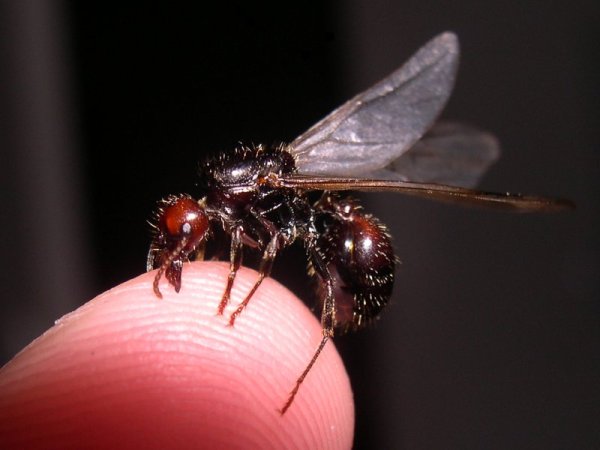
Invertebrates · Difficulty: Beginner
Key facts and care guidance for Harvester ant (Messor barbarus) (origin: The Mediterranean). Adult size around worker 3–14 mm (varying greatly), queen 15–18 mm. Life expectancy queen 15–20 years. The values below are carefully researched guidance.
Short answers
Harvester ant: How big does the enclosure need to be?
Nest from 20×15 cm plus a foraging area from 40×25 cm.
Harvester ant: What temperature does it need?
Daytime 24–28 °C, at night room temperature is enough.
Harvester ant: Does it need UVB lighting?
UVB: Not required.
Harvester ant: How long do they live?
Life expectancy: queen 15–20 years.
Harvester ant: Is it suitable for beginners?
Yes – it is considered suitable for beginners (difficulty: Beginner).
Climate
- Daytime temperature
- 24–28 °C
- Night temperature
- room temperature is enough
- Humidity
- nest 50–70 %, foraging area dry at 30–50 %
- UVB
- Not required
Enclosure
- Minimum size
- nest from 20×15 cm plus a foraging area from 40×25 cm
- Substrate
- An aerated-concrete or plaster nest, with a dry sand foraging arena
Feeding
- Food
- Seeds and grains (grass seed, poppy) — plus the occasional insect
- Feeding interval
- always offer seeds, insects 1×/week
Key facts
- Adult size
- worker 3–14 mm (varying greatly), queen 15–18 mm
- Life expectancy
- queen 15–20 years
- Origin
- The Mediterranean
- Protection status
- —
- Brumation
- Yes, mild: December to February at 10–15 °C
- Cohabitation
- Colony per enclosure. Monogynous and claustral - the queen founds alone, unaided. These animals naturally live in groups. Never combine two colonies - unfamiliar animals are not readily accepted.
Notes
A seed harvester with a granary in the nest — you watch the animals carry in seeds and mill them, and that is the appeal. It becomes very populous, so plan for space from the start. The outworld has to stay dry, or the stores go mouldy.
Do you keep this species?
Add your animal to Reptoria – Reptoria reminds you about feeding and shedding. Add your animal for free →
Look for Harvester ant (Messor barbarus) in the marketplace →
Related species
- Kenyan harvester ant (Messor cephalotes) – Intermediate
- European harvester ant (Messor structor) – Beginner
- Asian carpenter ant (Camponotus nicobarensis) – Beginner
- Leafcutter ant (Acromyrmex octospinosus) – Experts
- Nylander's acorn ant (Temnothorax nylanderi) – Beginner
- European fire ant (Manica rubida) – Intermediate
- Brown-black carpenter ant (Camponotus ligniperda) – Intermediate
- Yellow meadow ant (Lasius flavus) – Beginner
What you need to start
To keep Harvester ant (Messor barbarus) you typically need: a suitable enclosure (nest from 20×15 cm plus a foraging area from 40×25 cm), substrate (An aerated-concrete or plaster nest, with a dry sand foraging arena), a heat source with a thermostat, thermometer and hygrometer, a water dish and hides. You will find equipment in the Reptoria marketplace.
The complete, interactive care database is in the Reptoria app.
Last updated: 9 October 2026 · Editor: Reptoria editorial team · Sources include: https://de.wikipedia.org/wiki/Messor_barbarus, https://en.wikipedia.org/wiki/Messor_barbarus
All values are non-binding guidance and do not replace expert advice. Research thoroughly from several sources before acquiring and keeping an animal, and observe the applicable law (species and animal protection in particular).