Leafcutter ant (Acromyrmex octospinosus)
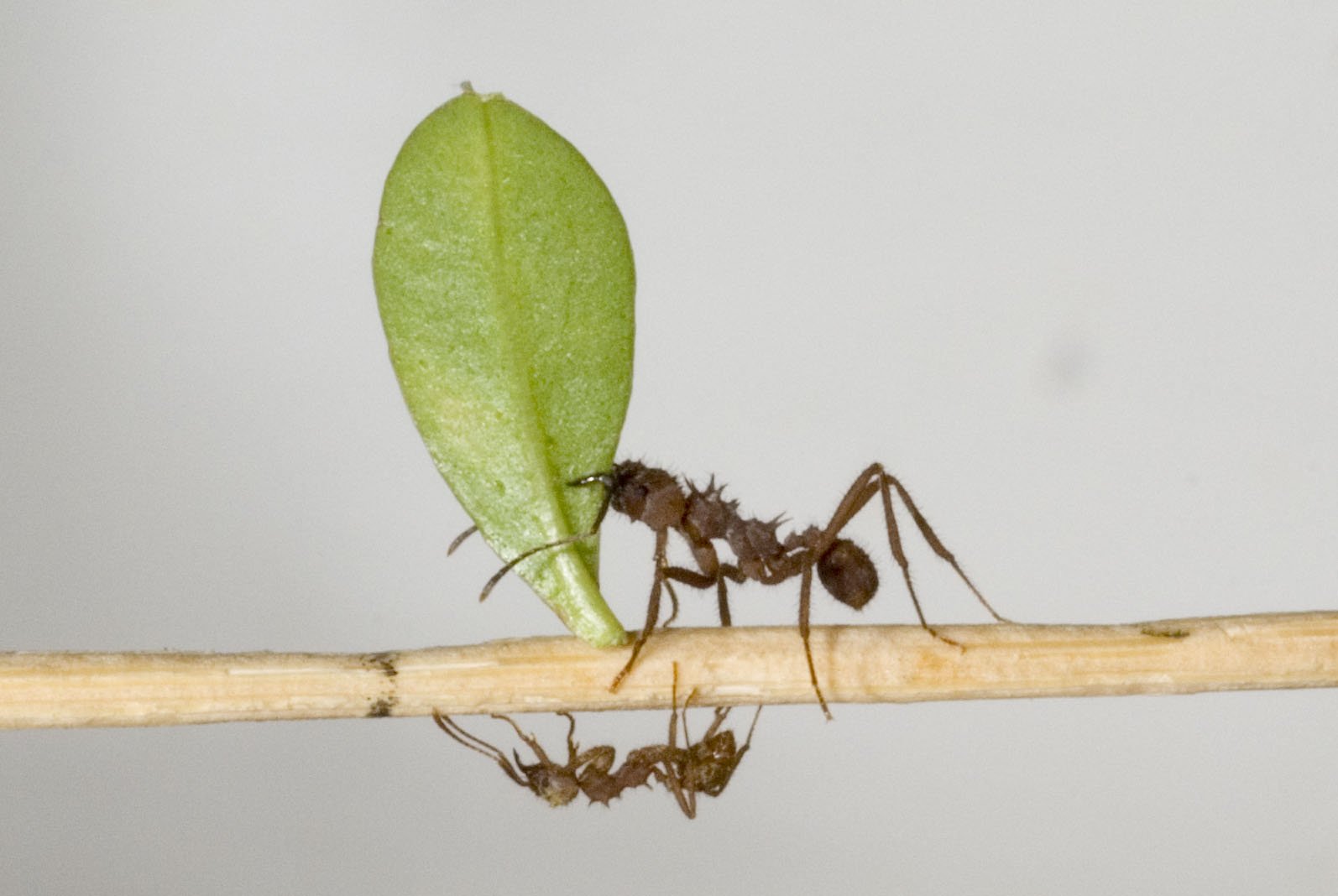
Invertebrates · Difficulty: Experts
Key facts and care guidance for Leafcutter ant (Acromyrmex octospinosus) (origin: Central and South America). Adult size around worker 3–12 mm (polymorphic, from minor to major), queen 12–14 mm. Life expectancy queen 10–20 years. The values below are carefully researched guidance.
Short answers
Leafcutter ant: How big does the enclosure need to be?
A nest chamber plus a foraging area, together from 60×40×40 cm.
Leafcutter ant: What temperature does it need?
Daytime fungus chamber 24–28 °C, outworld 21–28 °C, at night no drop needed.
Leafcutter ant: Does it need UVB lighting?
UVB: Not required.
Leafcutter ant: How long do they live?
Life expectancy: queen 10–20 years.
Leafcutter ant: Is it suitable for beginners?
No – better suited to experienced keepers (difficulty: Experts).
Climate
- Daytime temperature
- fungus chamber 24–28 °C, outworld 21–28 °C
- Night temperature
- no drop needed
- Humidity
- fungus chamber 80–98 %, outworld 40–70 %, refuse chamber dry (30–40 %)
- UVB
- Not required
Enclosure
- Minimum size
- a nest chamber plus a foraging area, together from 60×40×40 cm
- Substrate
- A nest chamber for the fungus garden, a separate feeding arena
Feeding
- Food
- Fresh, unsprayed leaves (bramble, rose, privet) — you are feeding the fungus, not the ant
- Feeding interval
- fresh leaves daily
Key facts
- Adult size
- worker 3–12 mm (polymorphic, from minor to major), queen 12–14 mm
- Life expectancy
- queen 10–20 years
- Origin
- Central and South America
- Protection status
- —
- Brumation
- No winter dormancy — a tropical species kept under the same conditions year-round
- Cohabitation
- One colony per setup. Leafcutter ants naturally live in large colonies and cannot cope on their own; in this species a colony usually has only a single queen. Two colonies must never be merged, foreign ants are killed. As the colony grows, its need for leaves and space rises considerably — a mature colony reaches several tens of thousands of individuals.
Notes
It cultivates a fungus and feeds on it — the leaves are fertiliser, not food. So everything depends on the fungus garden: too dry, too cold, or sprayed leaves, and it collapses within days. Fresh leaves are needed all year, including in winter. Not something to do on the side.
Do you keep this species?
Add your animal to Reptoria – Reptoria reminds you about feeding and shedding. Add your animal for free →
Look for Leafcutter ant (Acromyrmex octospinosus) in the marketplace →
Related species
- Asian carpenter ant (Camponotus nicobarensis) – Beginner
- Nylander's acorn ant (Temnothorax nylanderi) – Beginner
- European fire ant (Manica rubida) – Intermediate
- Brown-black carpenter ant (Camponotus ligniperda) – Intermediate
- Harvester ant (Messor barbarus) – Beginner
- Yellow meadow ant (Lasius flavus) – Beginner
- Silky field ant (Formica fusca) – Beginner
- Leafcutter ant (Atta cephalotes) – Experts
What you need to start
To keep Leafcutter ant (Acromyrmex octospinosus) you typically need: a suitable enclosure (a nest chamber plus a foraging area, together from 60×40×40 cm), substrate (A nest chamber for the fungus garden, a separate feeding arena), a heat source with a thermostat, thermometer and hygrometer, a water dish and hides. You will find equipment in the Reptoria marketplace.
The complete, interactive care database is in the Reptoria app.
Last updated: 9 October 2026 · Editor: Reptoria editorial team · Sources include: ameisenhaltung.de, antmeup.de, eu_annex.txt (lokal, VO (EU) 2026/1383), qualityants.nl, zoosky24.de
All values are non-binding guidance and do not replace expert advice. Research thoroughly from several sources before acquiring and keeping an animal, and observe the applicable law (species and animal protection in particular).