Silky field ant (Formica fusca)
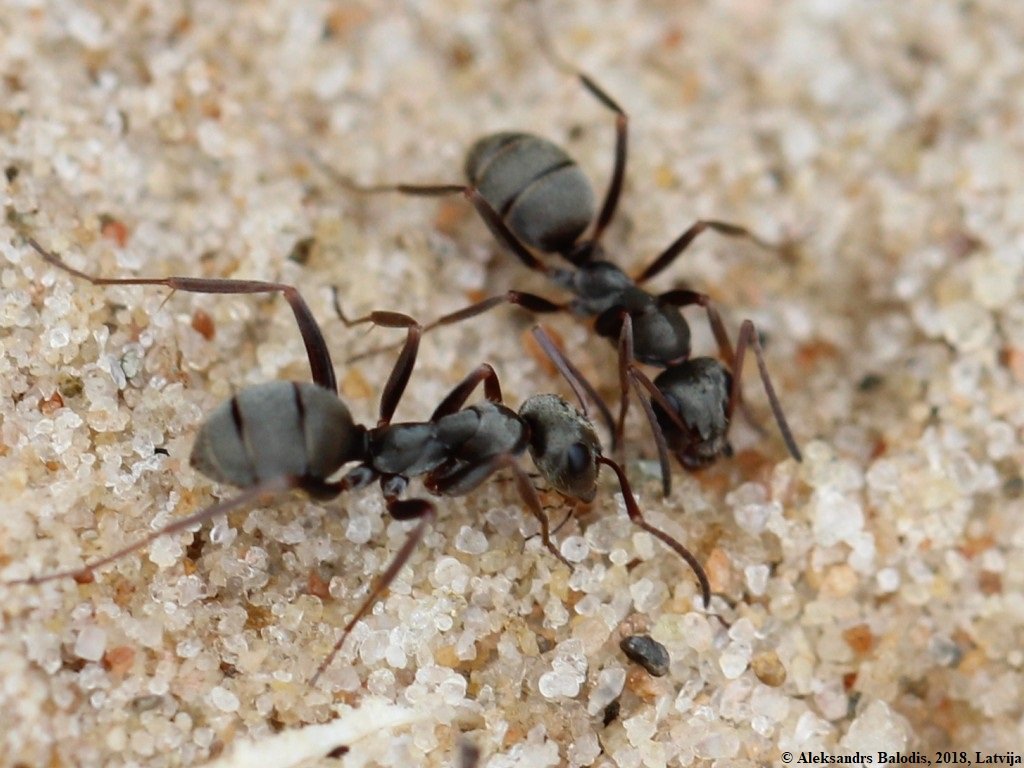
Invertebrates · Difficulty: Beginner
Key facts and care guidance for Silky field ant (Formica fusca) (origin: Europe). Adult size around worker 4–7 mm, queen 9–11 mm. Life expectancy queen up to 20 years. The values below are carefully researched guidance.
Short answers
Silky field ant: How big does the enclosure need to be?
Nest from 12×12 cm plus a foraging area from 30×20 cm.
Silky field ant: What temperature does it need?
Daytime 22–26 °C, at night room temperature is enough.
Silky field ant: Does it need UVB lighting?
UVB: Not required.
Silky field ant: How long do they live?
Life expectancy: queen up to 20 years.
Silky field ant: Is it suitable for beginners?
Yes – it is considered suitable for beginners (difficulty: Beginner).
Climate
- Daytime temperature
- 22–26 °C
- Night temperature
- room temperature is enough
- Humidity
- nest 50–70 %, foraging area 30–50 %
- UVB
- Not required
Enclosure
- Minimum size
- nest from 12×12 cm plus a foraging area from 30×20 cm
- Substrate
- An aerated-concrete or plaster nest, with a sand-loam foraging arena
Feeding
- Food
- Sugar water plus insects
- Feeding interval
- sugar always available, insects 2–3×/week
Key facts
- Adult size
- worker 4–7 mm, queen 9–11 mm
- Life expectancy
- queen up to 20 years
- Origin
- Europe
- Protection status
- —
- Brumation
- Essential: October to March at 5–8 °C
- Cohabitation
- Colony per enclosure. In the wild weakly polygynous (averaging just over three queens per nest), while ant-keepers usually keep it as a single monogynous founding colony. These animals naturally live in groups. Never combine two colonies - unfamiliar animals are not readily accepted.
Notes
Fast development, and a very active outworld. NOT to be confused with the mound-building wood ants (Formica rufa and relatives) — those are protected and may not be traded.
Do you keep this species?
Add your animal to Reptoria – Reptoria reminds you about feeding and shedding. Add your animal for free →
Look for Silky field ant (Formica fusca) in the marketplace →
Related species
- Asian carpenter ant (Camponotus nicobarensis) – Beginner
- Leafcutter ant (Acromyrmex octospinosus) – Experts
- Nylander's acorn ant (Temnothorax nylanderi) – Beginner
- European fire ant (Manica rubida) – Intermediate
- Brown-black carpenter ant (Camponotus ligniperda) – Intermediate
- Harvester ant (Messor barbarus) – Beginner
- Yellow meadow ant (Lasius flavus) – Beginner
- Leafcutter ant (Atta cephalotes) – Experts
What you need to start
To keep Silky field ant (Formica fusca) you typically need: a suitable enclosure (nest from 12×12 cm plus a foraging area from 30×20 cm), substrate (An aerated-concrete or plaster nest, with a sand-loam foraging arena), a heat source with a thermostat, thermometer and hygrometer, a water dish and hides. You will find equipment in the Reptoria marketplace.
The complete, interactive care database is in the Reptoria app.
Last updated: 9 October 2026 · Editor: Reptoria editorial team · Sources include: https://de.wikipedia.org/wiki/Grauschwarze_Sklavenameise, https://en.wikipedia.org/wiki/Formica_fusca
All values are non-binding guidance and do not replace expert advice. Research thoroughly from several sources before acquiring and keeping an animal, and observe the applicable law (species and animal protection in particular).