Ivory ornamental tarantula (Poecilotheria subfusca)
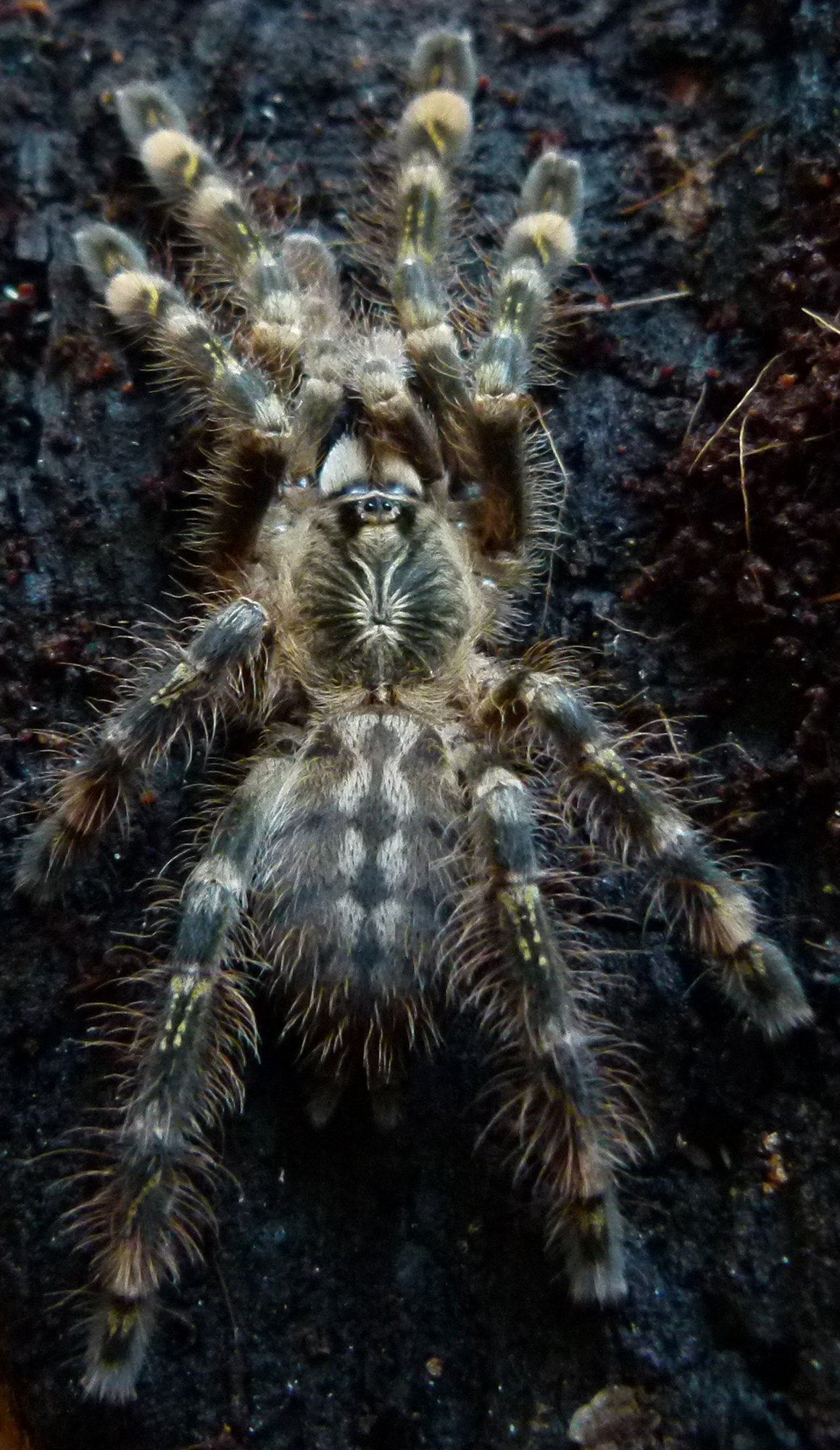
Invertebrates · Difficulty: Expert
Key facts and care guidance for Ivory ornamental tarantula (Poecilotheria subfusca) (origin: Sri Lanka – montane forest). Adult size around body 6–7 cm, leg span 16–19 cm. Life expectancy females 12–15 years. The values below are carefully researched guidance.
Short answers
Ivory ornamental tarantula: How big does the enclosure need to be?
30×30×45 cm (height).
Ivory ornamental tarantula: What temperature does it need?
Daytime 21–26 °C (COOLER), basking spot No basking spot, at night 18–21 °C.
Ivory ornamental tarantula: Does it need UVB lighting?
UVB: Not required.
Ivory ornamental tarantula: How long do they live?
Life expectancy: females 12–15 years.
Ivory ornamental tarantula: Is it suitable for beginners?
No – better suited to experienced keepers (difficulty: Expert).
Climate
- Daytime temperature
- 21–26 °C (COOLER)
- Night temperature
- 18–21 °C
- Basking spot
- No basking spot
- Humidity
- 70–80 %
- UVB
- Not required
Enclosure
- Minimum size
- 30×30×45 cm (height)
- Substrate
- Coco humus, a tall cork tube, dense planting
Feeding
- Food
- House crickets, roaches
- Feeding interval
- adults every 10–14 days
Key facts
- Adult size
- body 6–7 cm, leg span 16–19 cm
- Life expectancy
- females 12–15 years
- Origin
- Sri Lanka – montane forest
- Protection status
- CITES II; it may be classified as a dangerous animal – a medically relevant bite
- Brumation
- A cooler spell of 6–8 weeks
- Cohabitation
- Solitary housing is the safe default: solitary and cannibalistic, two animals in one enclosure regularly end up as one - even at equal size and with good feeding. Interestingly, nymphs and females live relatively socially in colonies in the wild; in captivity, solitary housing nonetheless remains the safe choice. For mating, the male is introduced under observation and separated again immediately.
Notes
A montane forest species – to be kept cooler than the other Poecilotheria. Very fast; the bite causes severe muscle cramps for days. No handling, and move it only in a container.
Do you keep this species?
Add your animal to Reptoria – Reptoria reminds you about feeding and shedding. Add your animal for free →
Look for Ivory ornamental tarantula (Poecilotheria subfusca) in the marketplace →
Related species
- Gooty sapphire ornamental tarantula (Poecilotheria metallica) – Expert
- Fringed ornamental tarantula (Poecilotheria ornata) – Expert
- Mysore ornamental tarantula (Poecilotheria striata) – Expert
- Indian ornamental tarantula (Poecilotheria regalis) – Expert
- Ghost ornamental tarantula (Poecilotheria vittata) – Expert
- Red slate ornamental tarantula (Poecilotheria rufilata) – Expert
- Sri Lankan ornamental tarantula (Poecilotheria fasciata) – Expert
- Amazon birdeater (Iridopelma hirsutum) – Intermediate
What you need to start
To keep Ivory ornamental tarantula (Poecilotheria subfusca) you typically need: a suitable enclosure (30×30×45 cm (height)), substrate (Coco humus, a tall cork tube, dense planting), a heat source with a thermostat, thermometer and hygrometer, a water dish and hides. You will find equipment in the Reptoria marketplace.
The complete, interactive care database is in the Reptoria app.
Last updated: 2 November 2026 · Editor: Reptoria editorial team · Sources include: https://de.wikipedia.org/wiki/Poecilotheria_subfusca, https://en.wikipedia.org/wiki/Poecilotheria
All values are non-binding guidance and do not replace expert advice. Research thoroughly from several sources before acquiring and keeping an animal, and observe the applicable law (species and animal protection in particular).