Ladder snake (Rhinechis scalaris)
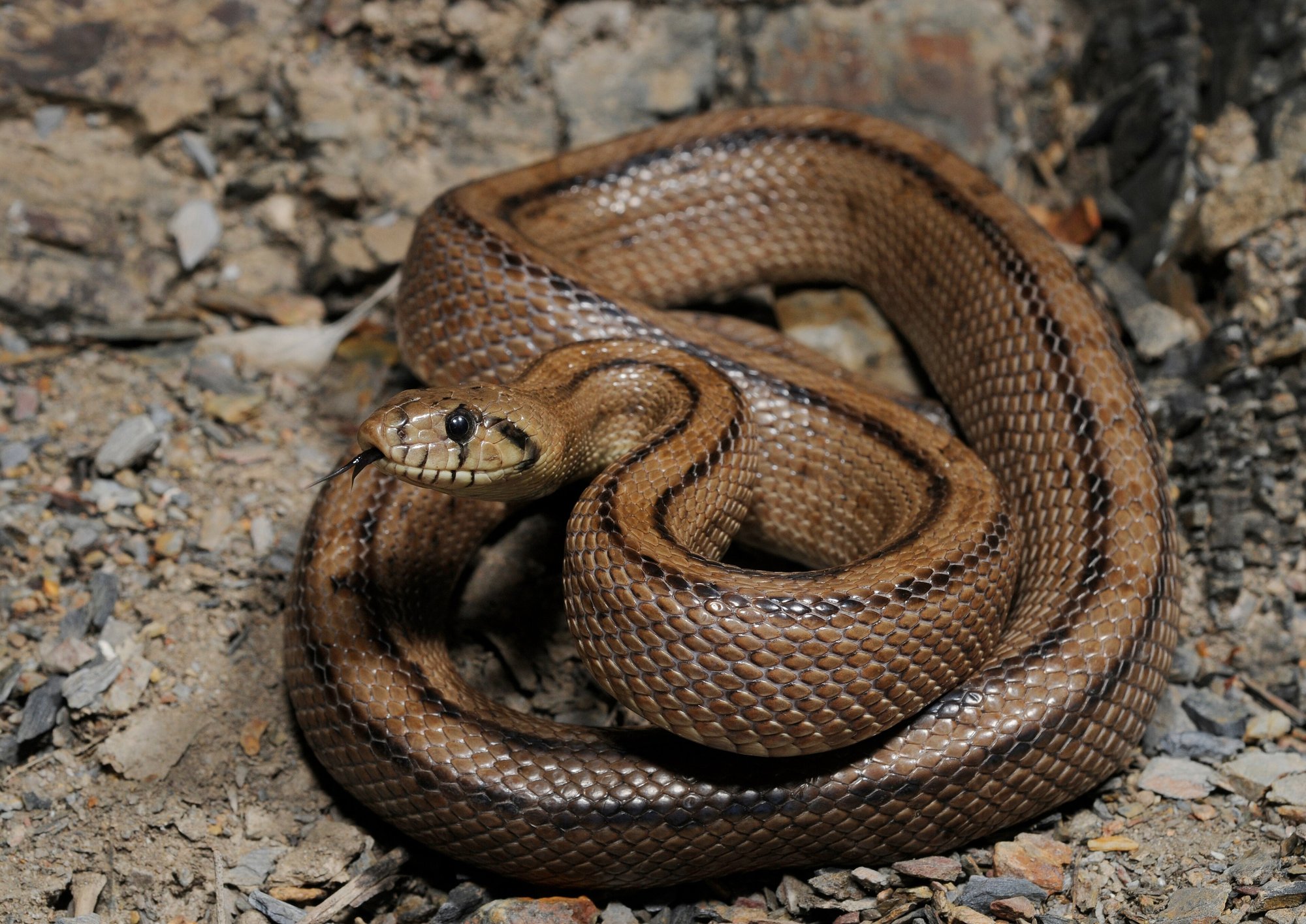
Snakes · Difficulty: Intermediate
Key facts and care guidance for Ladder snake (Rhinechis scalaris) (origin: The Iberian Peninsula, southern France, the Mediterranean islands). Adult size around 120–150 cm (rarely up to 160 cm). Life expectancy 15–20 years in captivity. The values below are carefully researched guidance.
Short answers
Ladder snake: How big does the enclosure need to be?
120×60×60 cm (adult; ground-dwelling, plenty of hides).
Ladder snake: What temperature does it need?
Daytime 26–28 °C, basking spot 32–35 °C (local hot spot), at night 20–22 °C.
Ladder snake: Does it need UVB lighting?
UVB: UVB not essential, weak UVB recommended (sun-loving).
Ladder snake: How long do they live?
Life expectancy: 15–20 years in captivity.
Ladder snake: Is it suitable for beginners?
Rather not – it is considered an intermediate species (difficulty: Intermediate).
Climate
- Daytime temperature
- 26–28 °C
- Night temperature
- 20–22 °C
- Basking spot
- 32–35 °C (local hot spot)
- Humidity
- 50–60 %
- UVB
- UVB not essential, weak UVB recommended (sun-loving)
Enclosure
- Minimum size
- 120×60×60 cm (adult; ground-dwelling, plenty of hides)
- Substrate
- A sand-loam mix or soil, cork tubes, sturdy branches, bark; a water section
Feeding
- Food
- Frozen-thawed mice; adults also take larger rodents
- Feeding interval
- adults every 7–14 days, juveniles every 5–7 days
Key facts
- Adult size
- 120–150 cm (rarely up to 160 cm)
- Life expectancy
- 15–20 years in captivity
- Origin
- The Iberian Peninsula, southern France, the Mediterranean islands
- Protection status
- Specially protected – German Federal Species Protection Ordinance Annex 1, Bern Convention Appendix III; keeping it must be registered with the nature conservation authority, and proof of origin is recommended
- Brumation
- A winter rest of about 3–4 months at about 8–12 °C (lowering the temperature from October or November)
- Cohabitation
- Single keeping. The ladder snake is a roaming loner (home range about 4,500 sq m, up to 100 m a day) with no known group bonds; only brief maternal care of the young for a few days is described. For breeding, bring animals together only briefly and under supervision and separate them again afterwards; keeping a pair or group permanently is not documented for the species.
Notes
A powerful, mainly ground-dwelling colubrid; often nervous and bitey, but it usually calms down. A distinct winter rest matters for health and breeding. Keep only registered captive-bred animals.
Do you keep this species?
Add your animal to Reptoria – Reptoria reminds you about feeding and shedding. Add your animal for free →
Look for Ladder snake (Rhinechis scalaris) in the marketplace →
Related species
- Russian rat snake (Elaphe schrenckii) – Beginner
- Aesculapian snake (Zamenis longissimus) – Intermediate
- Baird's rat snake (Pantherophis bairdi) – Beginner
- Red bamboo rat snake (Oreocryptophis porphyraceus) – Intermediate
- Twin-spotted ratsnake (Elaphe bimaculata) – Beginner
- Western fox snake (Pantherophis vulpinus) – Beginner
- Rhinoceros rat snake (Gonyosoma boulengeri) – Intermediate
- Green rat snake (Senticolis triaspis) – Intermediate
What you need to start
To keep Ladder snake (Rhinechis scalaris) you typically need: a suitable enclosure (120×60×60 cm (adult; ground-dwelling, plenty of hides)), substrate (A sand-loam mix or soil, cork tubes, sturdy branches, bark; a water section), a heat source with a thermostat, UVB lighting, thermometer and hygrometer, a water dish and hides. You will find equipment in the Reptoria marketplace.
The complete, interactive care database is in the Reptoria app.
Last updated: 7 November 2026 · Editor: Reptoria editorial team · Sources include: Reptile Database: Rhinechis scalaris – oviparous – https://reptile-database.reptarium.cz/species?genus=Rhinechis&species=scalaris, Wikipedia: Ladder snake – Eiablage Sommer – https://en.wikipedia.org/wiki/Ladder_snake, https://de.wikipedia.org/wiki/Treppennatter, https://en.wikipedia.org/wiki/Ladder_snake, https://en.wikipedia.org/wiki/Rhinechis_scalaris
All values are non-binding guidance and do not replace expert advice. Research thoroughly from several sources before acquiring and keeping an animal, and observe the applicable law (species and animal protection in particular).