Lichen anole (Anolis pentaprion)
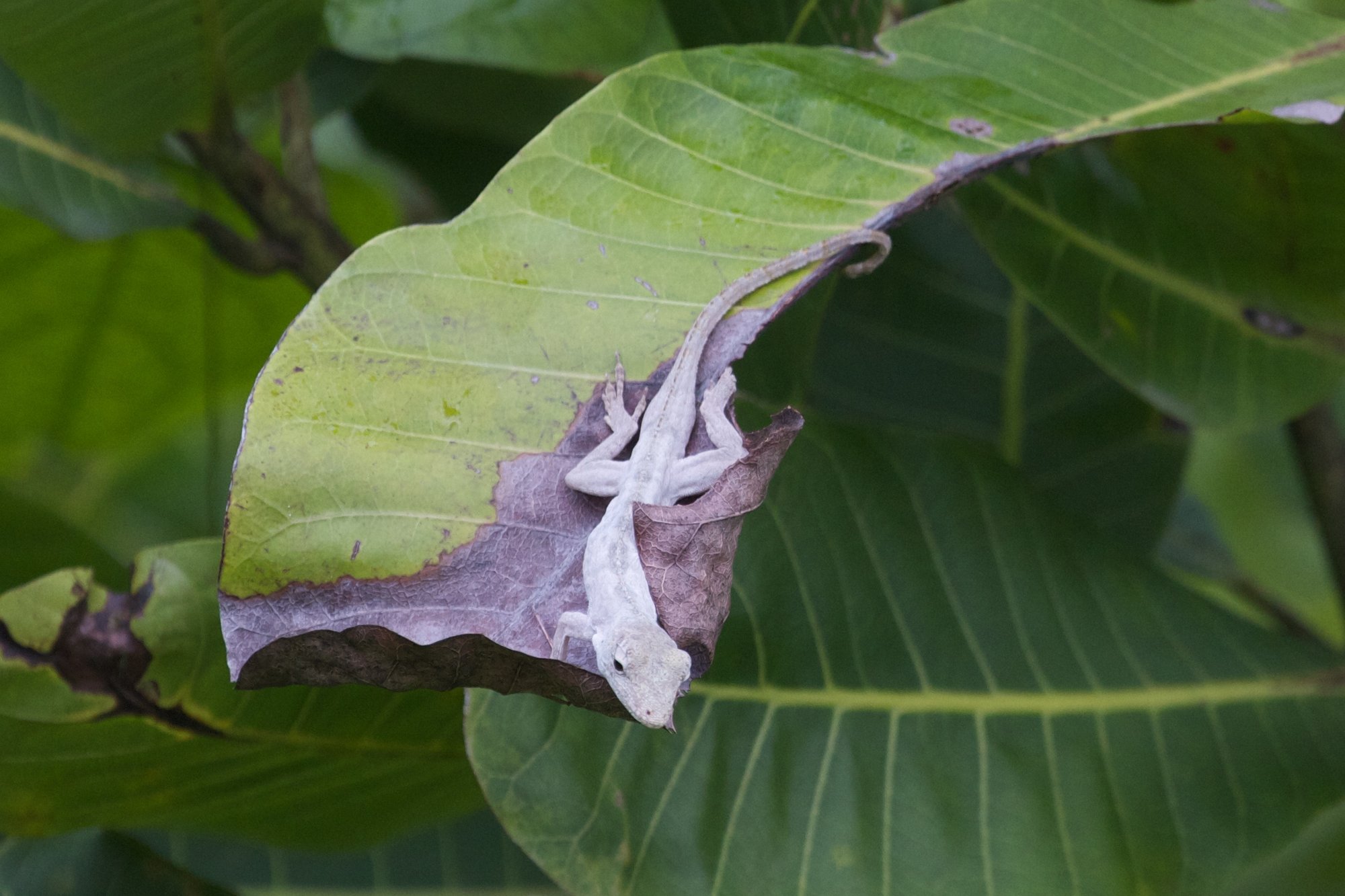
Iguanas · Difficulty: Expert
Key facts and care guidance for Lichen anole (Anolis pentaprion) (origin: Southern Nicaragua, Costa Rica, Panama and northwestern Colombia; lowland rainforest, predominantly in the canopy). Adult size around snout–vent length up to 7.7 cm (males) or 7.4 cm (females); with the comparatively short tail about 15–19 cm total length. Life expectancy uncertain, probably ~4–7 years. The values below are carefully researched guidance.
Short answers
Lichen anole: How big does the enclosure need to be?
60×50×80 cm for an adult animal or a pair, as a tall enclosure with thick, bark-covered branches, epiphytes and dense foliage. The official minimum size under the 1997 expert report (anoles, tree- and shrub-dwellers, 6 × 6 × 8 times the snout–vent length) works out, at a snout–vent length of 7.7 cm, at 46×46×62 cm.
Lichen anole: What temperature does it need?
Daytime 24–28 °C, basking spot 30–32 °C, at night 18–22 °C.
Lichen anole: Does it need UVB lighting?
UVB: UVB is needed, but in moderation: Ferguson zone 1–2, meaning a UV index below 1 in the main living area and at most 1–2.6 at the brightest spot.
Lichen anole: How long do they live?
Life expectancy: uncertain, probably ~4–7 years.
Lichen anole: Is it suitable for beginners?
No – better suited to experienced keepers (difficulty: Expert).
Climate
- Daytime temperature
- 24–28 °C
- Night temperature
- 18–22 °C
- Basking spot
- 30–32 °C
- Humidity
- 70–90 %
- UVB
- UVB is needed, but in moderation: Ferguson zone 1–2, meaning a UV index below 1 in the main living area and at most 1–2.6 at the brightest spot
Enclosure
- Minimum size
- 60×50×80 cm for an adult animal or a pair, as a tall enclosure with thick, bark-covered branches, epiphytes and dense foliage. The official minimum size under the 1997 expert report (anoles, tree- and shrub-dwellers, 6 × 6 × 8 times the snout–vent length) works out, at a snout–vent length of 7.7 cm, at 46×46×62 cm.
- Substrate
- Damp tropical or bioactive substrate, leaf litter, plenty of fine branchwork and moss
Feeding
- Food
- Small insects (small crickets, flies, fruit flies, aphids), invertebrates
- Feeding interval
- adults 2–3×/week, juveniles daily (small feeder insects!)
Key facts
- Adult size
- snout–vent length up to 7.7 cm (males) or 7.4 cm (females); with the comparatively short tail about 15–19 cm total length
- Life expectancy
- uncertain, probably ~4–7 years
- Origin
- Southern Nicaragua, Costa Rica, Panama and northwestern Colombia; lowland rainforest, predominantly in the canopy
- Protection status
- Not listed under CITES; no German registration duty as a non-native species; prefer captive-bred animals
- Brumation
- None (tropical)
- Cohabitation
- Territorial. NEVER keep males together. At most one male plus females in a large, densely planted enclosure
Notes
UNCERTAIN: a twig anole specialist with barely any published keeper data – the size figures and values are derived from its ecomorph and general anole care. It needs plenty of thin perching branches and fine feeder animals; trickier than the standard anoles.
Do you keep this species?
Add your animal to Reptoria – Reptoria reminds you about feeding and shedding. Add your animal for free →
Look for Lichen anole (Anolis pentaprion) in the marketplace →
Related species
- Ghost anole (Anolis lemurinus) – Intermediate
- Ahl's anole (Anolis ahli) – Intermediate
- Aliniger anole (Anolis aliniger) – Beginner with some knowledge
- Allogus anole (Anolis allogus) – Beginner with some knowledge
- Bahaman green anole (Anolis smaragdinus) – Beginner
- Bahoruco anole (Anolis bahorucoensis) – Beginner with some knowledge
- Baleatus giant anole (Anolis baleatus) – Intermediate
- Baracoa giant anole (Anolis baracoae) – Intermediate
What you need to start
To keep Lichen anole (Anolis pentaprion) you typically need: a suitable enclosure (60×50×80 cm for an adult animal or a pair, as a tall enclosure with thick, bark-covered branches, epiphytes and dense foliage. The official minimum size under the 1997 expert report (anoles, tree- and shrub-dwellers, 6 × 6 × 8 times the snout–vent length) works out, at a snout–vent length of 7.7 cm, at 46×46×62 cm.), substrate (Damp tropical or bioactive substrate, leaf litter, plenty of fine branchwork and moss), a heat source with a thermostat, UVB lighting, thermometer and hygrometer, a water dish and hides. You will find equipment in the Reptoria marketplace.
The complete, interactive care database is in the Reptoria app.
Last updated: 30 October 2026 · Editor: Reptoria editorial team · Sources include: reptilecentre.com, exo-terra.com, reptile-database.reptarium.cz, anoleannals.org, Wikipedia EN
All values are non-binding guidance and do not replace expert advice. Research thoroughly from several sources before acquiring and keeping an animal, and observe the applicable law (species and animal protection in particular).