Mabuya skinks (Mabuya spp.)
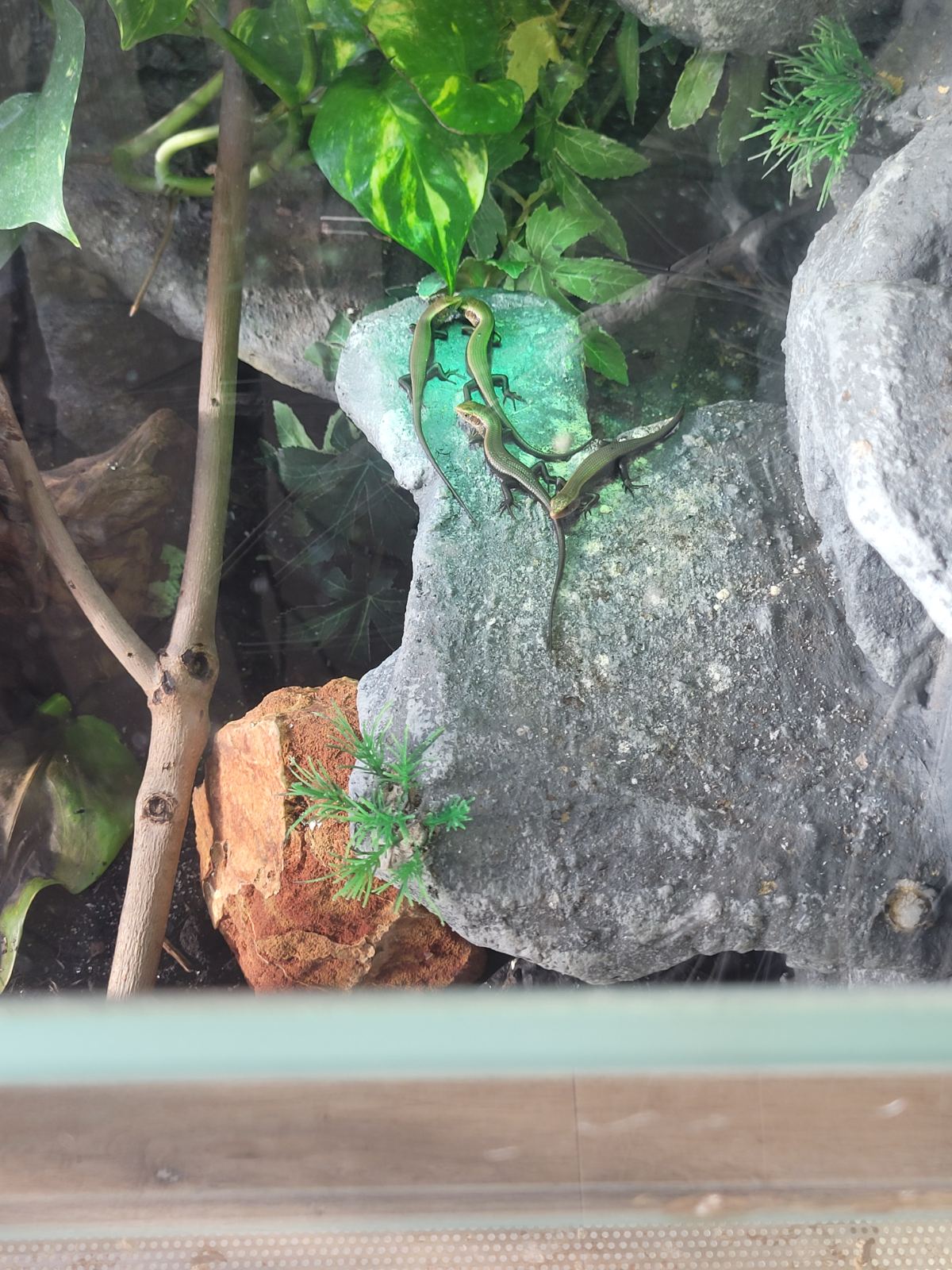
Skinks · Difficulty: Beginner to intermediate
Key facts and care guidance for Mabuya skinks (Mabuya spp.) (origin: Africa / Asia / the Americas (sun skinks, the genera Mabuya and Trachylepis)). Adult size around 18–25 cm (depends on the species). Life expectancy 5–10 years. The values below are carefully researched guidance.
Short answers
Mabuya skinks: How big does the enclosure need to be?
80 × 50 × 60–80 cm (depends on the species).
Mabuya skinks: What temperature does it need?
Daytime 25–30 °C, basking spot ~35 °C, at night 20–24 °C.
Mabuya skinks: Does it need UVB lighting?
UVB: Essential (10–12 % UVB).
Mabuya skinks: How long do they live?
Life expectancy: 5–10 years.
Mabuya skinks: Is it suitable for beginners?
Partly – manageable with some prior knowledge (difficulty: Beginner to intermediate).
Climate
- Daytime temperature
- 25–30 °C
- Night temperature
- 20–24 °C
- Basking spot
- ~35 °C
- Humidity
- 60–80 % (depends on the species)
- UVB
- Essential (10–12 % UVB)
Enclosure
- Minimum size
- 80 × 50 × 60–80 cm (depends on the species)
- Substrate
- A sand and soil mix, stones and roots, exposed basking spots
Feeding
- Food
- Insects and small invertebrates, a little fruit (insectivorous to omnivorous)
- Feeding interval
- 2–3×/week
Key facts
- Adult size
- 18–25 cm (depends on the species)
- Life expectancy
- 5–10 years
- Origin
- Africa / Asia / the Americas (sun skinks, the genera Mabuya and Trachylepis)
- Protection status
- —
- Brumation
- None (for the tropical species)
- Cohabitation
- Single housing is the safe choice for most species. Keeping a pair or a group of one male with several females is possible depending on the species. Multiple males practically never get along: they fight over territory and basking spots until one is injured or permanently displaced. Females tend to tolerate each other better, but still need their own basking and hiding spots; feed separately where there is a size difference.
Notes
A genus-level collective entry – adjust the figures to the particular species (arid versus humid origin). Sun-loving; UVB and a warm spot are essential; many species are live-bearing.
Do you keep this species?
Add your animal to Reptoria – Reptoria reminds you about feeding and shedding. Add your animal for free →
Related species
- African five-lined skink (Trachylepis quinquetaeniata) – Intermediate
- Algerian skink (Eumeces algeriensis) – Intermediate
- Berber skink (Eumeces schneideri) – Beginner to intermediate
- Berdmore's water skink (Tropidophorus berdmorei) – Beginner with some knowledge
- Mountain skink (Plestiodon callicephalus) – Beginner with some knowledge
- Pacific blue-tailed skink (Emoia caeruleocauda) – Beginner with some knowledge
- Blue-tongued water skink (Tropidophorus cocincinensis) – Beginner with some knowledge
- Bouton's snake-eyed skink (Cryptoblepharus boutonii) – Beginner with some knowledge
What you need to start
To keep Mabuya skinks (Mabuya spp.) you typically need: a suitable enclosure (80 × 50 × 60–80 cm (depends on the species)), substrate (A sand and soil mix, stones and roots, exposed basking spots), a heat source with a thermostat, UVB lighting, thermometer and hygrometer, a water dish and hides. You will find equipment in the Reptoria marketplace.
The complete, interactive care database is in the Reptoria app.
Last updated: 30 October 2026 · Editor: Reptoria editorial team · Sources include: https://en.wikipedia.org/wiki/Mabuya, https://en.wikipedia.org/wiki/Trachylepis
All values are non-binding guidance and do not replace expert advice. Research thoroughly from several sources before acquiring and keeping an animal, and observe the applicable law (species and animal protection in particular).