Mediterranean house gecko (Hemidactylus turcicus)
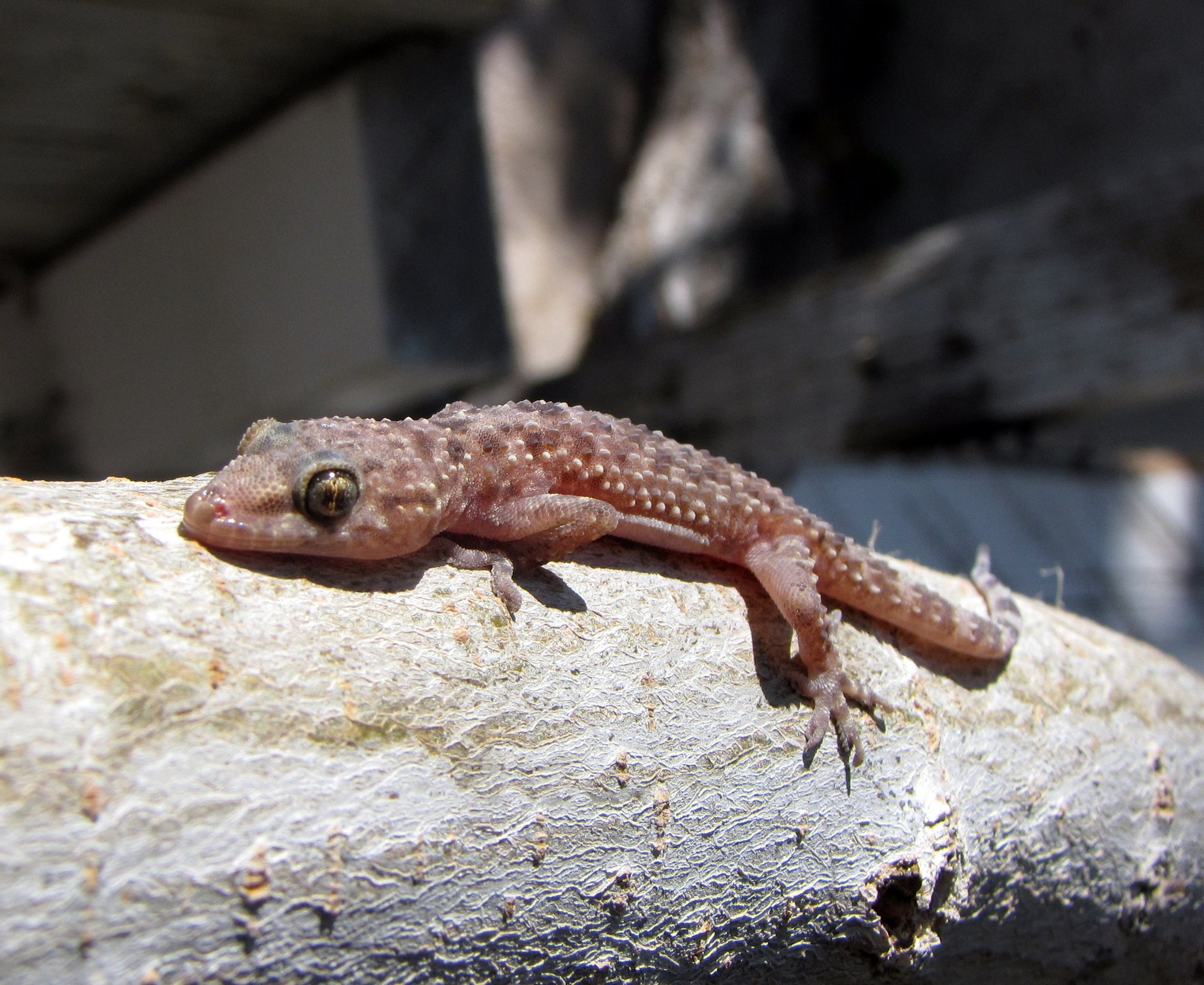
Geckos · Difficulty: Beginner
Key facts and care guidance for Mediterranean house gecko (Hemidactylus turcicus) (origin: The Mediterranean (North Africa, southern Europe, the Near East); introduced worldwide). Adult size around 10–15 cm total length. Life expectancy 5–10 years. The values below are carefully researched guidance.
Short answers
Mediterranean house gecko: How big does the enclosure need to be?
50×40×60 cm for one animal (a keen climber, use the height).
Mediterranean house gecko: What temperature does it need?
Daytime 24–28 °C, basking spot 30–32 °C (warm spot), at night 18–22 °C.
Mediterranean house gecko: Does it need UVB lighting?
UVB: UVB recommended (low dose, Ferguson zone 1–2, UV index 1–3) for D3 synthesis.
Mediterranean house gecko: How long do they live?
Life expectancy: 5–10 years.
Mediterranean house gecko: Is it suitable for beginners?
Yes – it is considered suitable for beginners (difficulty: Beginner).
Climate
- Daytime temperature
- 24–28 °C
- Night temperature
- 18–22 °C
- Basking spot
- 30–32 °C (warm spot)
- Humidity
- 50–60 % (mist lightly in the evening)
- UVB
- UVB recommended (low dose, Ferguson zone 1–2, UV index 1–3) for D3 synthesis
Enclosure
- Minimum size
- 50×40×60 cm for one animal (a keen climber, use the height)
- Substrate
- A sand-loam mix with cork, stones and pieces of bark
Feeding
- Food
- Insects (crickets, house crickets, small roaches)
- Feeding interval
- adults 2–3×/week, juveniles daily
Key facts
- Adult size
- 10–15 cm total length
- Life expectancy
- 5–10 years
- Origin
- The Mediterranean (North Africa, southern Europe, the Near East); introduced worldwide
- Protection status
- No CITES; Bern Convention Appendix III; not specially protected in Germany (not native) – no registration duty
- Brumation
- Recommended – a cooler overwintering of 2–3 months at ~12–16 °C benefits health and breeding
- Cohabitation
- In pairs or as a harem (one male with several females) — both are common, females generally get along. Two males must never be kept together; they are strongly territorial and fight over their patch. Keep juveniles separate from adults to avoid cannibalism, and provide enough visual barriers.
Notes
An undemanding, robust beginner's species. Nocturnal, often on walls. A common mistake is keeping it permanently too damp. Vocal (it chirps).
Do you keep this species?
Add your animal to Reptoria – Reptoria reminds you about feeding and shedding. Add your animal for free →
Look for Mediterranean house gecko (Hemidactylus turcicus) in the marketplace →
Related species
- Common house gecko (Hemidactylus frenatus) – Beginner
- Termite hill gecko (Hemidactylus triedrus) – Intermediate
- Giant leaf-toed gecko (Hemidactylus giganteus) – Intermediate
- Tropical house gecko (Hemidactylus mabouia) – Beginner
- Arabian short-fingered gecko (Stenodactylus arabicus) – Beginner with some knowledge
- Bastard's big-headed gecko (Paroedura bastardi) – Beginner
- Common barking gecko (Ptenopus garrulus) – Intermediate
- Boettger's wall gecko (Tarentola boettgeri) – Beginner
What you need to start
To keep Mediterranean house gecko (Hemidactylus turcicus) you typically need: a suitable enclosure (50×40×60 cm for one animal (a keen climber, use the height)), substrate (A sand-loam mix with cork, stones and pieces of bark), a heat source with a thermostat, UVB lighting, thermometer and hygrometer, a water dish and hides. You will find equipment in the Reptoria marketplace.
The complete, interactive care database is in the Reptoria app.
Last updated: 2 November 2026 · Editor: Reptoria editorial team · Sources include: https://de.wikipedia.org/wiki/Europ%C3%A4ischer_Halbfinger, https://reptifiles.com/mediterranean-house-gecko-care-sheet/, https://reptile-database.reptarium.cz/species?genus=Hemidactylus&species=turcicus, https://www.einrichtungsbeispiele.de/terrarium-tiere/diverse-biotope/hemidactylus-turcicus-slnk.html
All values are non-binding guidance and do not replace expert advice. Research thoroughly from several sources before acquiring and keeping an animal, and observe the applicable law (species and animal protection in particular).