Common barking gecko (Ptenopus garrulus)
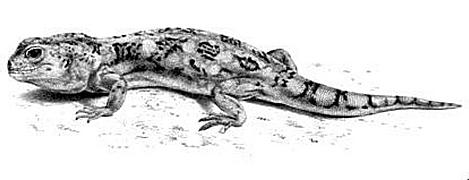
Geckos · Difficulty: Intermediate
Key facts and care guidance for Common barking gecko (Ptenopus garrulus) (origin: Namibia, Botswana, South Africa – sandy desert). Adult size around 8–11 cm total length. Life expectancy 6–10 years. The values below are carefully researched guidance.
Short answers
Common barking gecko: How big does the enclosure need to be?
60×40×40 cm.
Common barking gecko: What temperature does it need?
Daytime 25–30 °C, basking spot 36 °C, at night 16–20 °C.
Common barking gecko: Does it need UVB lighting?
UVB: Recommended, low-output UVB (2–5%).
Common barking gecko: How long do they live?
Life expectancy: 6–10 years.
Common barking gecko: Is it suitable for beginners?
Rather not – it is considered an intermediate species (difficulty: Intermediate).
Climate
- Daytime temperature
- 25–30 °C
- Night temperature
- 16–20 °C
- Basking spot
- 36 °C
- Humidity
- 25–40 %
- UVB
- Recommended, low-output UVB (2–5%)
Enclosure
- Minimum size
- 60×40×40 cm
- Substrate
- Very deep, compactable sand (15–25 cm) for burrowing
Feeding
- Food
- House crickets, crickets, termites, mealworm larvae
- Feeding interval
- 2–3×/week
Key facts
- Adult size
- 8–11 cm total length
- Life expectancy
- 6–10 years
- Origin
- Namibia, Botswana, South Africa – sandy desert
- Protection status
- Not listed under CITES
- Brumation
- A cooler dry spell of 8–10 weeks
- Cohabitation
- A pair or 1.2 in a sufficiently large enclosure with deep substrate. Two males do not work together: each defends its own burrow and calls from its entrance, and males react aggressively to a neighbour's call. So it is about burrow and calling site, not about a basking spot. Females tolerate each other but need enough floor space for each to dig its own burrow.
Notes
It digs deep burrows and calls loudly in the evening from the entrance, barking – one of the few genuinely "vocal" gecko species. The sand has to be deep and compactable, or the burrows collapse.
Do you keep this species?
Add your animal to Reptoria – Reptoria reminds you about feeding and shedding. Add your animal for free →
Look for Common barking gecko (Ptenopus garrulus) in the marketplace →
Related species
- Arabian short-fingered gecko (Stenodactylus arabicus) – Beginner with some knowledge
- Bastard's big-headed gecko (Paroedura bastardi) – Beginner
- Boettger's wall gecko (Tarentola boettgeri) – Beginner
- Bibron's thick-toed gecko (Pachydactylus bibronii) – Beginner
- Elegant gecko (Stenodactylus stenodactylus) – Beginner to intermediate
- Fan-fingered gecko (Ptyodactylus hasselquistii) – Intermediate
- Eastern Canary gecko (Tarentola angustimentalis) – Beginner with some knowledge
- Spotted thick-toed gecko (Pachydactylus maculatus) – Beginner with some knowledge
What you need to start
To keep Common barking gecko (Ptenopus garrulus) you typically need: a suitable enclosure (60×40×40 cm), substrate (Very deep, compactable sand (15–25 cm) for burrowing), a heat source with a thermostat, UVB lighting, thermometer and hygrometer, a water dish and hides. You will find equipment in the Reptoria marketplace.
The complete, interactive care database is in the Reptoria app.
Last updated: 9 October 2026 · Editor: Reptoria editorial team · Sources include: Wikipedia EN, reptile-database.reptarium.cz, gutachten.txt (BML 1997, lokal), bioone.org (Journal of Herpetology), eu_annex.txt (VO (EU) 2026/1383, lokal)
All values are non-binding guidance and do not replace expert advice. Research thoroughly from several sources before acquiring and keeping an animal, and observe the applicable law (species and animal protection in particular).