Fan-fingered gecko (Ptyodactylus hasselquistii)
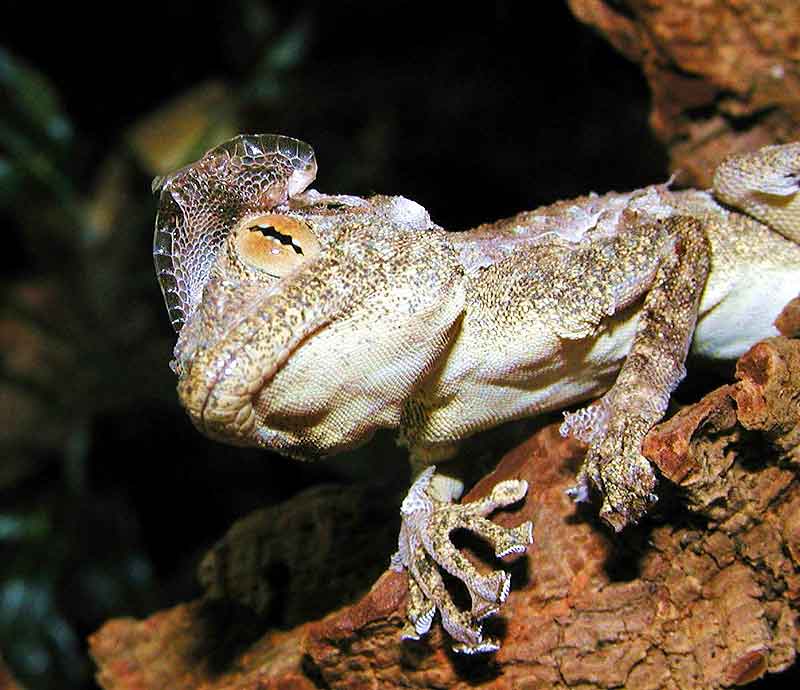
Geckos · Difficulty: Intermediate
Key facts and care guidance for Fan-fingered gecko (Ptyodactylus hasselquistii) (origin: North Africa and the Middle East (rocky deserts, arid steppe)). Adult size around approx. 14–20 cm total length (snout–vent length up to approx. 9.5 cm, the tail makes up about half). Life expectancy ~8–10 years. The values below are carefully researched guidance.
Short answers
Fan-fingered gecko: How big does the enclosure need to be?
80×40×50 cm (height matters – a climber).
Fan-fingered gecko: What temperature does it need?
Daytime 28–32 °C, basking spot ~35 °C (basking on rock), at night 22–24 °C.
Fan-fingered gecko: Does it need UVB lighting?
UVB: Recommended (desert-grade UVB).
Fan-fingered gecko: How long do they live?
Life expectancy: ~8–10 years.
Fan-fingered gecko: Is it suitable for beginners?
Rather not – it is considered an intermediate species (difficulty: Intermediate).
Climate
- Daytime temperature
- 28–32 °C
- Night temperature
- 22–24 °C
- Basking spot
- ~35 °C (basking on rock)
- Humidity
- 40–60 % (higher at night, mist occasionally)
- UVB
- Recommended (desert-grade UVB)
Enclosure
- Minimum size
- 80×40×50 cm (height matters – a climber)
- Substrate
- Sand-loam, rock structures, cork tubes, bark
Feeding
- Food
- Insects (crickets, locusts, flies, roaches)
- Feeding interval
- 2–3×/week
Key facts
- Adult size
- approx. 14–20 cm total length (snout–vent length up to approx. 9.5 cm, the tail makes up about half)
- Life expectancy
- ~8–10 years
- Origin
- North Africa and the Middle East (rocky deserts, arid steppe)
- Protection status
- —
- Brumation
- A slight winter cooling is possible (to stimulate breeding)
- Cohabitation
- A pair or group with one male; the males are aggressive over territory. The reason: several males fight over territory and the warm spot until one is injured or spends its life in a corner. Females usually get on, but each needs its own warm spot and hide; feed them separately once they differ in size.
Notes
A quick, climbing-keen rock gecko of dry habitats; it needs warmth, good ventilation and UV. Very fast and fond of jumping – take care when opening the enclosure.
Do you keep this species?
Add your animal to Reptoria – Reptoria reminds you about feeding and shedding. Add your animal for free →
Look for Fan-fingered gecko (Ptyodactylus hasselquistii) in the marketplace →
Related species
- Arabian short-fingered gecko (Stenodactylus arabicus) – Beginner with some knowledge
- Bastard's big-headed gecko (Paroedura bastardi) – Beginner
- Common barking gecko (Ptenopus garrulus) – Intermediate
- Boettger's wall gecko (Tarentola boettgeri) – Beginner
- Bibron's thick-toed gecko (Pachydactylus bibronii) – Beginner
- Elegant gecko (Stenodactylus stenodactylus) – Beginner to intermediate
- Eastern Canary gecko (Tarentola angustimentalis) – Beginner with some knowledge
- Spotted thick-toed gecko (Pachydactylus maculatus) – Beginner with some knowledge
What you need to start
To keep Fan-fingered gecko (Ptyodactylus hasselquistii) you typically need: a suitable enclosure (80×40×50 cm (height matters – a climber)), substrate (Sand-loam, rock structures, cork tubes, bark), a heat source with a thermostat, UVB lighting, thermometer and hygrometer, a water dish and hides. You will find equipment in the Reptoria marketplace.
The complete, interactive care database is in the Reptoria app.
Last updated: 9 October 2026 · Editor: Reptoria editorial team · Sources include: Wikipedia EN, einrichtungsbeispiele.de, eur-lex.europa.eu, herpetology.com, reptile-database.reptarium.cz
All values are non-binding guidance and do not replace expert advice. Research thoroughly from several sources before acquiring and keeping an animal, and observe the applicable law (species and animal protection in particular).