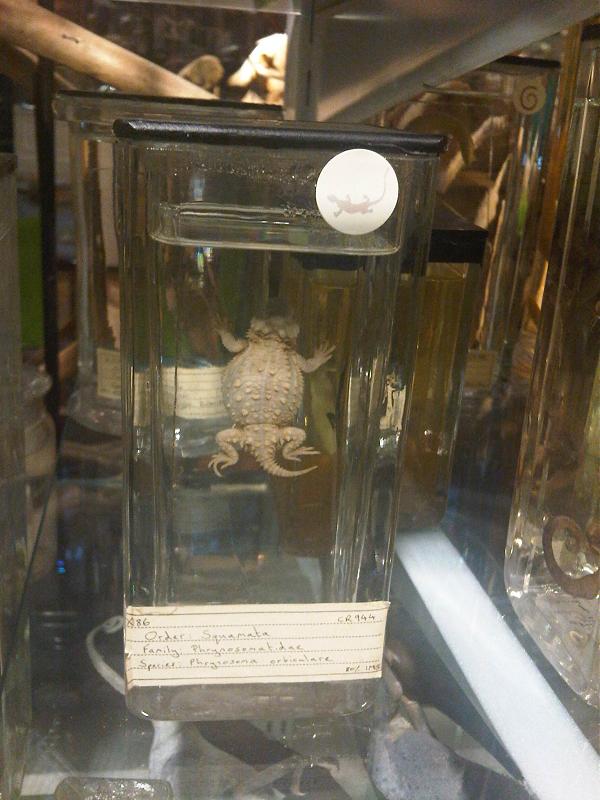
Mountain horned lizard (Phrynosoma orbiculare)
Iguanas · Difficulty: Expert
Key facts and care guidance for Mountain horned lizard (Phrynosoma orbiculare) (origin: Mexico, endemic — highlands between 1500 and 3352 m, semi-arid scrubland and pine-oak forests with a temperate climate). Adult size around 7–11 cm. Life expectancy 5–10 years. The values below are carefully researched guidance.
Short answers
Mountain horned lizard: How big does the enclosure need to be?
120×60×60 cm for a group.
Mountain horned lizard: What temperature does it need?
Daytime 25–30 °C, basking spot Basking spot 42–48 °C, at night 15–20 °C.
Mountain horned lizard: Does it need UVB lighting?
UVB: Essential (UVB 10.0–12.0).
Mountain horned lizard: How long do they live?
Life expectancy: 5–10 years.
Mountain horned lizard: Is it suitable for beginners?
No – better suited to experienced keepers (difficulty: Expert).
Climate
- Daytime temperature
- 25–30 °C
- Night temperature
- 15–20 °C
- Basking spot
- Basking spot 42–48 °C
- Humidity
- 30–50 %
- UVB
- Essential (UVB 10.0–12.0)
Enclosure
- Minimum size
- 120×60×60 cm for a group
- Substrate
- A sand-loam mix they can dig in, with stone slabs, roots and a few twigs
Feeding
- Food
- The main food is ants; in the terrarium, substituted with many small, chitin-rich insects (small crickets and house crickets, firebrats, seed beetles, small roaches), dusted regularly with calcium and vitamins
- Feeding interval
- Adults daily to every other day, small portions.
Key facts
- Adult size
- 7–11 cm
- Life expectancy
- 5–10 years
- Origin
- Mexico, endemic — highlands between 1500 and 3352 m, semi-arid scrubland and pine-oak forests with a temperate climate
- Protection status
- Not listed under CITES
- Brumation
- A cooler rest of 8–12 weeks at 10–15 °C
- Cohabitation
- Solitary or as a group, 1.2 or 1.3 is common. Horned lizards are loners but not pronounced territorial fighters – in good habitats they live very densely, one Mexican study counted around 155 animals per hectare. So what matters is less separating the males than providing enough basking spots and digging area for all animals, plus separate feeding if there are size differences. Do not mix different species and subspecies.
Notes
A highland species, live-bearing; it needs cool nights.
Do you keep this species?
Add your animal to Reptoria – Reptoria reminds you about feeding and shedding. Add your animal for free →
Look for Mountain horned lizard (Phrynosoma orbiculare) in the marketplace →
Related species
- Regal horned lizard (Phrynosoma solare) – Beginner with some knowledge
- Greater short-horned lizard (Phrynosoma hernandesi) – Beginner with some knowledge
- Coast horned lizard (Phrynosoma coronatum) – Beginner with some knowledge
- Giant horned lizard (Phrynosoma asio) – Beginner with some knowledge
- Round-tailed horned lizard (Phrynosoma modestum) – Beginner with some knowledge
- Texas horned lizard (Phrynosoma cornutum) – Expert
- Desert horned lizard (Phrynosoma platyrhinos) – Beginner with some knowledge
- Anegada ground iguana (Cyclura pinguis) – Expert
What you need to start
To keep Mountain horned lizard (Phrynosoma orbiculare) you typically need: a suitable enclosure (120×60×60 cm for a group), substrate (A sand-loam mix they can dig in, with stone slabs, roots and a few twigs), a heat source with a thermostat, UVB lighting, thermometer and hygrometer, a water dish and hides. You will find equipment in the Reptoria marketplace.
The complete, interactive care database is in the Reptoria app.
Last updated: 2 November 2026 · Editor: Reptoria editorial team · Sources include: gutachten.txt (BML 1997, lokal), herpconbio.org (Oviedo-Hernández et al. 2024), Wikipedia DE, Wikipedia EN, cites.org (CoP19-Anträge Phrynosoma)
All values are non-binding guidance and do not replace expert advice. Research thoroughly from several sources before acquiring and keeping an animal, and observe the applicable law (species and animal protection in particular).