Ocelot gecko (Paroedura picta)
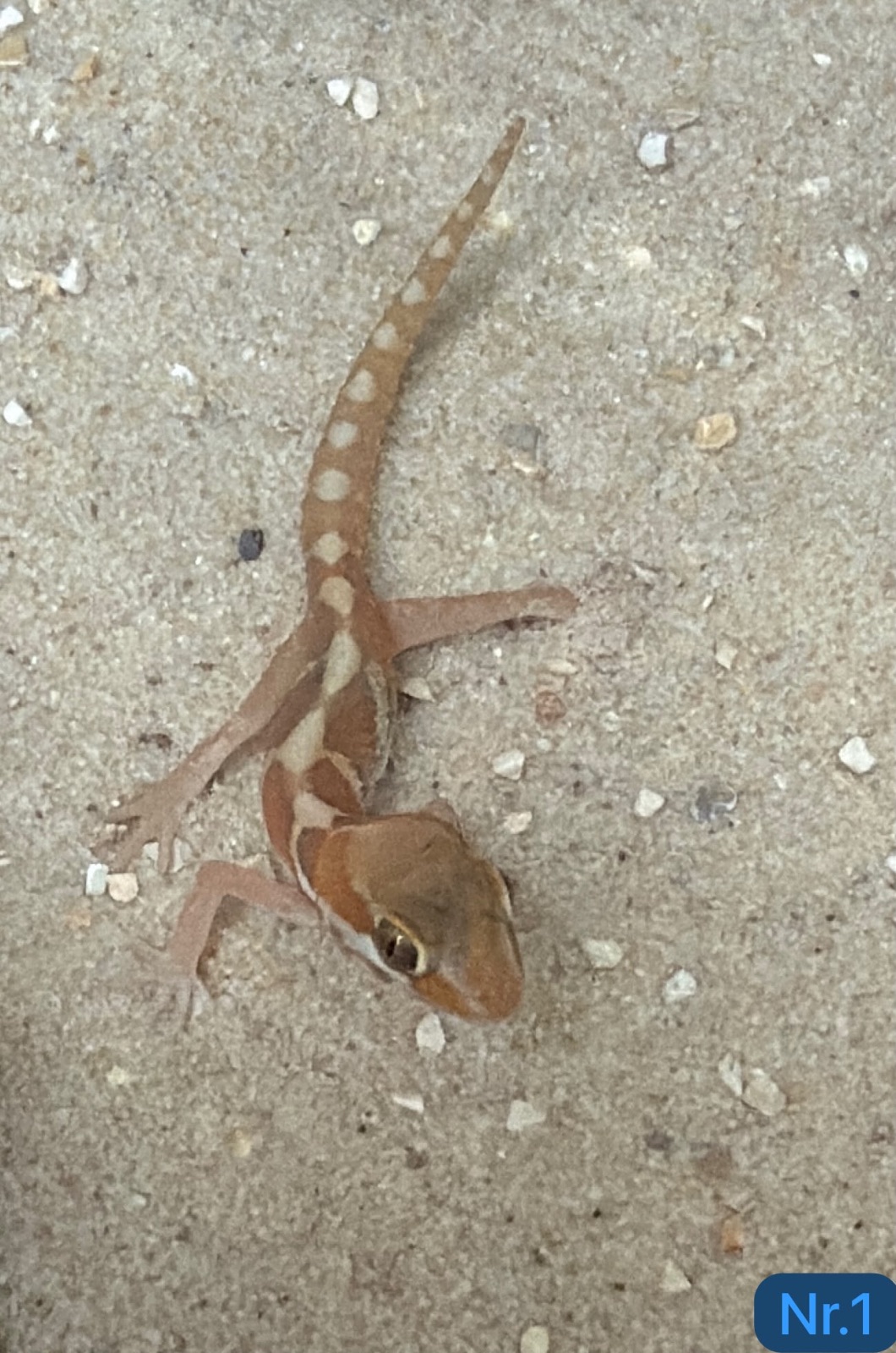
Geckos · Difficulty: Beginner
Key facts and care guidance for Ocelot gecko (Paroedura picta) (origin: Southern and south-western Madagascar (dry forest)). Adult size around 10–15 cm total length. Life expectancy 8–12 years (females considerably shorter-lived under continuous breeding). The values below are carefully researched guidance.
Short answers
Ocelot gecko: How big does the enclosure need to be?
60×40×40 cm for one animal (mostly ground-dwelling, low climbing opportunities).
Ocelot gecko: What temperature does it need?
Daytime 25–28 °C, basking spot 30–32 °C (local warm spot), at night 20–22 °C.
Ocelot gecko: Does it need UVB lighting?
UVB: UVB not essential (nocturnal), a low dose is harmless and recommended.
Ocelot gecko: How long do they live?
Life expectancy: 8–12 years (females considerably shorter-lived under continuous breeding).
Ocelot gecko: Is it suitable for beginners?
Yes – it is considered suitable for beginners (difficulty: Beginner).
Climate
- Daytime temperature
- 25–28 °C
- Night temperature
- 20–22 °C
- Basking spot
- 30–32 °C (local warm spot)
- Humidity
- 55–70 % (mist lightly every second day)
- UVB
- UVB not essential (nocturnal), a low dose is harmless and recommended
Enclosure
- Minimum size
- 60×40×40 cm for one animal (mostly ground-dwelling, low climbing opportunities)
- Substrate
- A sand-loam mix or coco humus, slightly damp; cork and bark hides
Feeding
- Food
- Insects (crickets, house crickets, small roaches)
- Feeding interval
- adults 2–3×/week, juveniles daily
Key facts
- Adult size
- 10–15 cm total length
- Life expectancy
- 8–12 years (females considerably shorter-lived under continuous breeding)
- Origin
- Southern and south-western Madagascar (dry forest)
- Protection status
- No CITES; no special protected status – no registration duty
- Brumation
- No real winter rest; a slight cool or drop phase (4–6 weeks) to stimulate breeding is possible
- Cohabitation
- Keeping singly is the least stressful. For breeding, one male with at least two females; a permanent pair (1.1) is possible, but: the single female gets worn out by constant breeding, so keep the male separate for large parts of the year. NEVER keep males together (territorial, they bite each other seriously). Females can also be incompatible with each other – keep an eye on them.
Notes
A proven, productive beginner's species. A common mistake: continuous breeding exhausts the females (calcium deficiency) – take a breeding break in winter. Supplement calcium and D3 consistently.
Do you keep this species?
Add your animal to Reptoria – Reptoria reminds you about feeding and shedding. Add your animal for free →
Ocelot gecko (Paroedura picta) currently offered
- Paroedura picta Jungtiere zur Abgabe – Goseck
Related species
- Bastard's big-headed gecko (Paroedura bastardi) – Beginner
- Masobe gecko (Paroedura masobe) – Expert
- Androy ground gecko (Paroedura androyensis) – Beginner
- Slender ground gecko (Paroedura gracilis) – Beginner with some knowledge
- Stumpff's ground gecko (Paroedura stumpffi) – Beginner with some knowledge
- Arabian short-fingered gecko (Stenodactylus arabicus) – Beginner with some knowledge
- Common barking gecko (Ptenopus garrulus) – Intermediate
- Boettger's wall gecko (Tarentola boettgeri) – Beginner
What you need to start
To keep Ocelot gecko (Paroedura picta) you typically need: a suitable enclosure (60×40×40 cm for one animal (mostly ground-dwelling, low climbing opportunities)), substrate (A sand-loam mix or coco humus, slightly damp; cork and bark hides), a heat source with a thermostat, UVB lighting, thermometer and hygrometer, a water dish and hides. You will find equipment in the Reptoria marketplace.
The complete, interactive care database is in the Reptoria app.
Last updated: 2 November 2026 · Editor: Reptoria editorial team · Sources include: einrichtungsbeispiele.de, sphaerodactylus.de, megazoo-nord.de, einrichtungsbeispiele.de – Madagaskar-Bodengecko Paroedura picta (26–29 °C, 55–65 Tage) – https://www.einrichtungsbeispiele.de/terrarium-tiere/afrika/paroedura-picta-slnk.html, DGHT-Foren – Paroedura picta: Fragen zur Inkubation u. Geschlechterentwicklung (23–25 °C ca. 90 Tage, >26 °C ca. 60 Tage – https://www.dght-foren.de/forum/reptilien/geckos/55524-paroedura-picta-fragen-zur-inkubation-u-geschlechterentwicklung
All values are non-binding guidance and do not replace expert advice. Research thoroughly from several sources before acquiring and keeping an animal, and observe the applicable law (species and animal protection in particular).