Oriental rat snake (Ptyas mucosa)
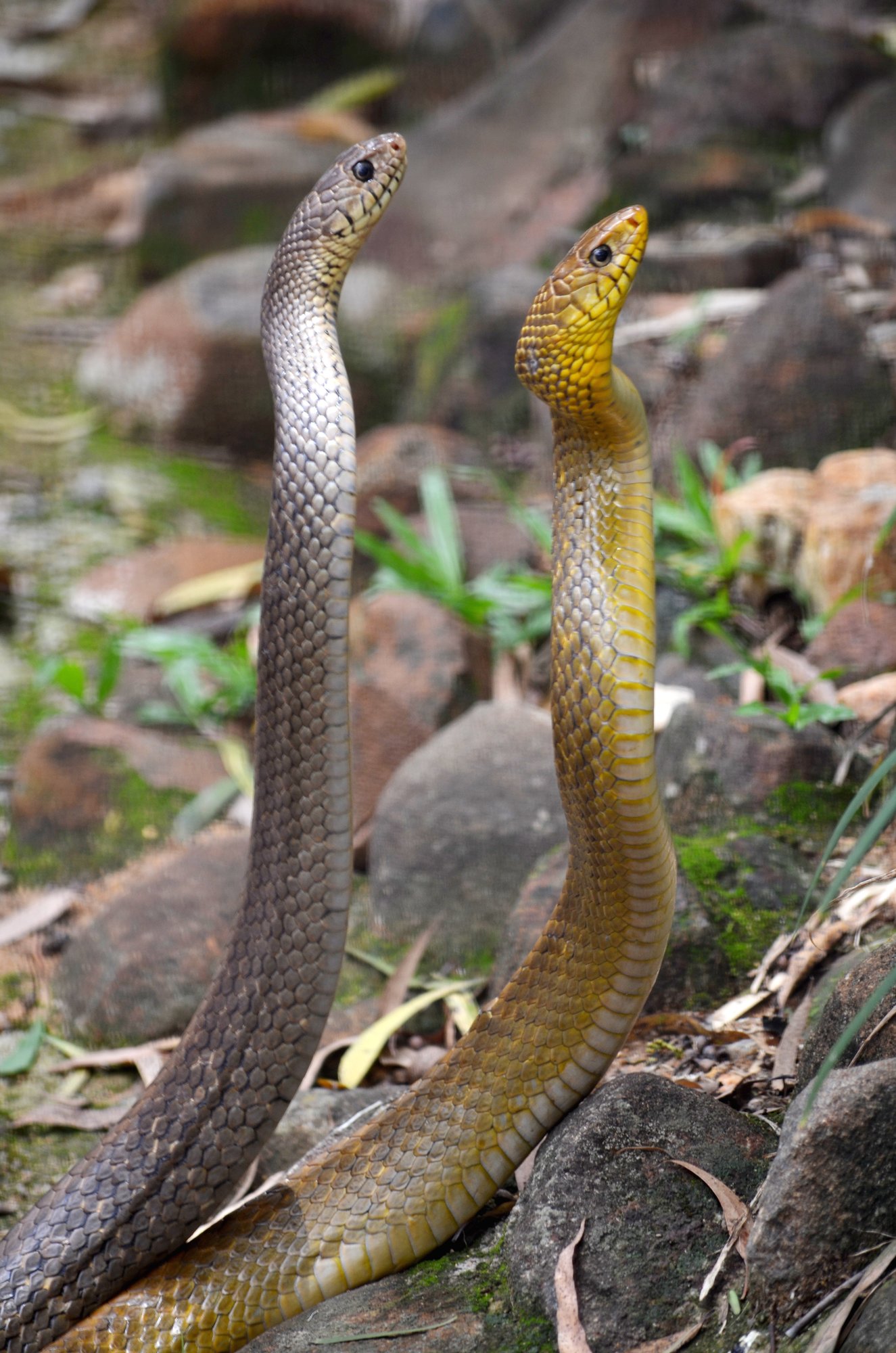
Snakes · Difficulty: Expert
Key facts and care guidance for Oriental rat snake (Ptyas mucosa) (origin: South and South-East Asia (from Iran and Afghanistan through India to southern China, Vietnam, Indonesia)). Adult size around approx. 180–240 cm, rarely up to 300 cm. Life expectancy approx. 12–20 years in captivity. The values below are carefully researched guidance.
Short answers
Oriental rat snake: How big does the enclosure need to be?
From 300×150×150 cm (minimum size per the 1997 expert report, rat snakes); or larger (a large, tall enclosure — a very active, semi-arboreal species).
Oriental rat snake: What temperature does it need?
Daytime 26–30 °C, basking spot 30–33 °C, at night 22–24 °C.
Oriental rat snake: Does it need UVB lighting?
UVB: UVB recommended (diurnal; Ferguson zone 2, UV index 1–3).
Oriental rat snake: How long do they live?
Life expectancy: approx. 12–20 years in captivity.
Oriental rat snake: Is it suitable for beginners?
No – better suited to experienced keepers (difficulty: Expert).
Climate
- Daytime temperature
- 26–30 °C
- Night temperature
- 22–24 °C
- Basking spot
- 30–33 °C
- Humidity
- 60–80 %
- UVB
- UVB recommended (diurnal; Ferguson zone 2, UV index 1–3)
Enclosure
- Minimum size
- from 300×150×150 cm (minimum size per the 1997 expert report, rat snakes); or larger (a large, tall enclosure — a very active, semi-arboreal species)
- Substrate
- A moisture-retaining coco humus or soil substrate; a large water basin, sturdy climbing branches, a visual screen
Feeding
- Food
- Thawed rodents, chicks or quail, bird eggs; in the wild also amphibians, reptiles and fish
- Feeding interval
- adults every 5–7 days (a high metabolism), juveniles every 3–5 days
Key facts
- Adult size
- approx. 180–240 cm, rarely up to 300 cm
- Life expectancy
- approx. 12–20 years in captivity
- Origin
- South and South-East Asia (from Iran and Afghanistan through India to southern China, Vietnam, Indonesia)
- Protection status
- Not in the CITES appendices; nationally protected or regulated in places – mind the origin (captive-bred rather than wild-caught)
- Brumation
- No real winter rest (tropical / subtropical); at most a slight seasonal drop in temperature for breeding
- Cohabitation
- Keep them singly. A very large, extremely active and defensive snake – put it with its own kind only briefly and under supervision for breeding; feed them separately because of the strong feeding drive (a risk of bite accidents and cannibalism).
Notes
Only for experienced keepers: hectically fast, nervous, a powerful biter, with a huge space requirement; often nervous wild-caught animals – prefer captive-bred ones and animals used to frozen/thawed food. Non-venomous. Detailed, reputable care sheets are scarce – the figures are a conservative consensus, hence medium confidence on the finer values.
Do you keep this species?
Add your animal to Reptoria – Reptoria reminds you about feeding and shedding. Add your animal for free →
Look for Oriental rat snake (Ptyas mucosa) in the marketplace →
Related species
- Russian rat snake (Elaphe schrenckii) – Beginner
- Aesculapian snake (Zamenis longissimus) – Intermediate
- Baird's rat snake (Pantherophis bairdi) – Beginner
- Red bamboo rat snake (Oreocryptophis porphyraceus) – Intermediate
- Twin-spotted ratsnake (Elaphe bimaculata) – Beginner
- Western fox snake (Pantherophis vulpinus) – Beginner
- Rhinoceros rat snake (Gonyosoma boulengeri) – Intermediate
- Green rat snake (Senticolis triaspis) – Intermediate
What you need to start
To keep Oriental rat snake (Ptyas mucosa) you typically need: a suitable enclosure (from 300×150×150 cm (minimum size per the 1997 expert report, rat snakes); or larger (a large, tall enclosure — a very active, semi-arboreal species)), substrate (A moisture-retaining coco humus or soil substrate; a large water basin, sturdy climbing branches, a visual screen), a heat source with a thermostat, UVB lighting, thermometer and hygrometer, a water dish and hides. You will find equipment in the Reptoria marketplace.
The complete, interactive care database is in the Reptoria app.
Last updated: 5 November 2026 · Editor: Reptoria editorial team · Sources include: https://en.wikipedia.org/wiki/Oriental_rat_snake, https://en.wikipedia.org/wiki/Ptyas_mucosus, en.wikipedia „Ptyas mucosa“ („Rat snakes are diurnal and semi-arboreal“); Reptiles & Amphibians (journals.ku.edu), Beobachtung nächtlicher Jagd bei einer „primarily diurnal snake“
All values are non-binding guidance and do not replace expert advice. Research thoroughly from several sources before acquiring and keeping an animal, and observe the applicable law (species and animal protection in particular).