Peters' banded skink (Scincopus fasciatus)
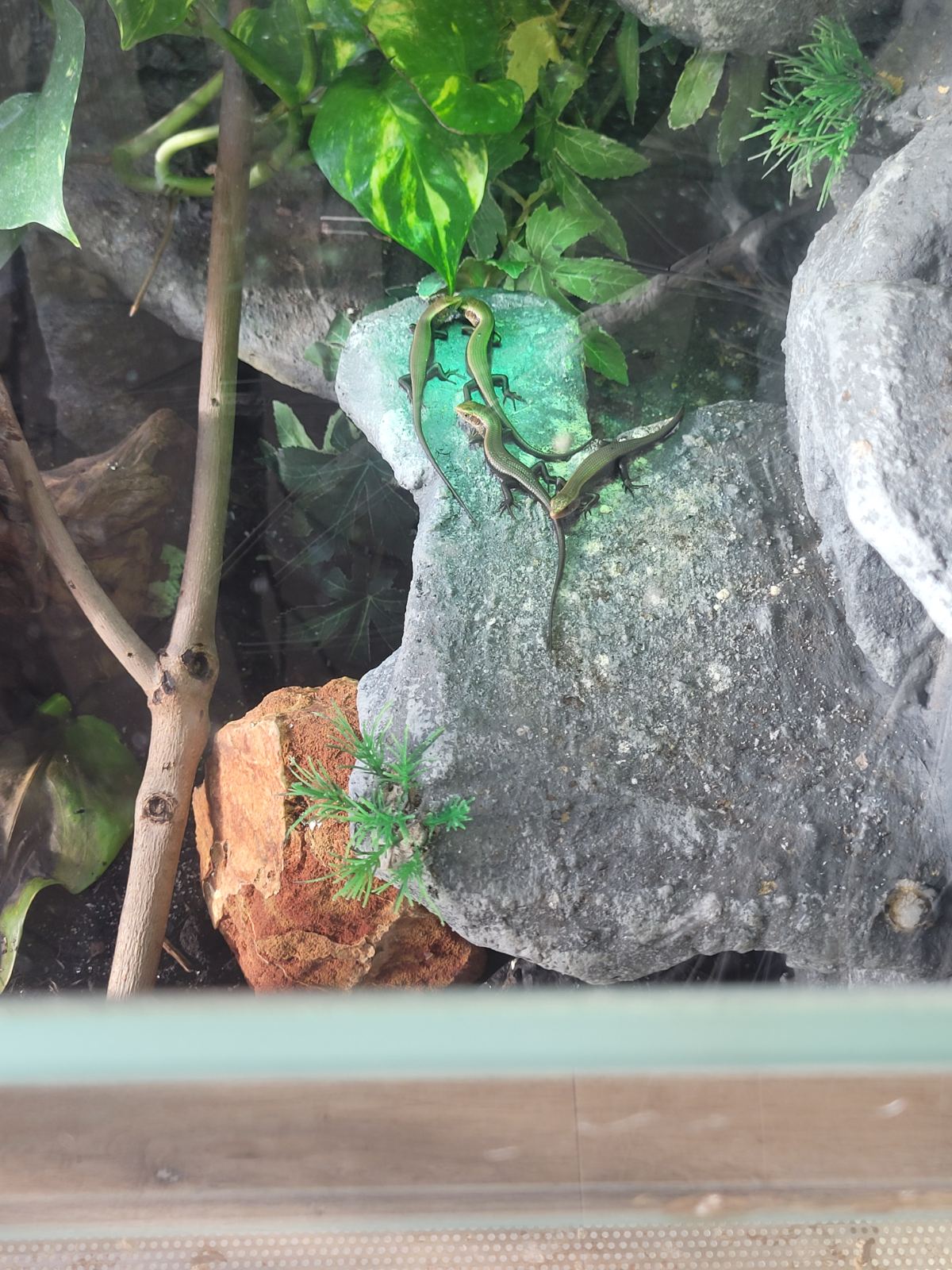
Skinks · Difficulty: Expert
Key facts and care guidance for Peters' banded skink (Scincopus fasciatus) (origin: The Sahel and parts of the southern Sahara; Mauritania to Sudan and Niger, with isolated populations on the northern edge of the Sahara (Algeria, Libya, Tunisia)). Adult size around ~13–18 cm total length (with the tail). Life expectancy uncertain and not documented – no reliable source gives dependable figures (conservatively marked as unknown). The values below are carefully researched guidance.
Short answers
Peters' banded skink: How big does the enclosure need to be?
~90×45×45 cm for one animal.
Peters' banded skink: What temperature does it need?
Daytime warm side ~28–32 °C, cool side ~22–25 °C, basking spot warm floor hide / local spot ~32–36 °C (nocturnal → provide warmth through warm substrate rather than a bright basking lamp), at night ~18–22 °C (heating off at night).
Peters' banded skink: Does it need UVB lighting?
UVB: Nocturnal, so a low UVB requirement (Ferguson zone 1, UV index 0–1); weak UVB is still recommended to be safe.
Peters' banded skink: How long do they live?
Life expectancy: uncertain and not documented – no reliable source gives dependable figures (conservatively marked as unknown).
Peters' banded skink: Is it suitable for beginners?
No – better suited to experienced keepers (difficulty: Expert).
Climate
- Daytime temperature
- warm side ~28–32 °C, cool side ~22–25 °C
- Night temperature
- ~18–22 °C (heating off at night)
- Basking spot
- warm floor hide / local spot ~32–36 °C (nocturnal → provide warmth through warm substrate rather than a bright basking lamp)
- Humidity
- ~30–50 % (dry), but with a humid hide (microclimate ~70 %) on the cool side
- UVB
- Nocturnal, so a low UVB requirement (Ferguson zone 1, UV index 0–1); weak UVB is still recommended to be safe
Enclosure
- Minimum size
- ~90×45×45 cm for one animal
- Substrate
- Sand or a sand-loam mix they can dig in, at least 10 cm, better 12–15 cm; partly damp and partly dry
Feeding
- Food
- Insects (crickets, roaches, black soldier fly larvae, worms), plus some plant food and fruit
- Feeding interval
- adults every 2–3 days; juveniles daily
Key facts
- Adult size
- ~13–18 cm total length (with the tail)
- Life expectancy
- uncertain and not documented – no reliable source gives dependable figures (conservatively marked as unknown)
- Origin
- The Sahel and parts of the southern Sahara; Mauritania to Sudan and Niger, with isolated populations on the northern edge of the Sahara (Algeria, Libya, Tunisia)
- Protection status
- Not listed under CITES; IUCN "Least Concern"; not specially protected in Germany, no registration duty. As they are almost always wild-caught: check legality, origin and health (endoparasites!) when buying
- Brumation
- None documented or required; at most a slight seasonal drop is optional
- Cohabitation
- Keep them singly (conservative and documented) – it is considered non-social, and keeping several together is not recommended; never keep males together under any circumstances
Notes
Nocturnal, and buried by day – quiet matters. Wild-caught animals only, with no established captive breeding and thin data → "expert". Common mistakes: a heat mat without a thermostat (overheating is lethal), UVB blocked by glass, and no damp hide → shedding problems. Wild-caught animals are often dehydrated and parasitised → a veterinary entry examination plus a faecal sample. One outlier care sheet ("diurnal / beginner / 15–20 years") was rejected as inconsistent with the taxonomy.
Do you keep this species?
Add your animal to Reptoria – Reptoria reminds you about feeding and shedding. Add your animal for free →
Look for Peters' banded skink (Scincopus fasciatus) in the marketplace →
Related species
- African five-lined skink (Trachylepis quinquetaeniata) – Intermediate
- Algerian skink (Eumeces algeriensis) – Intermediate
- Berber skink (Eumeces schneideri) – Beginner to intermediate
- Berdmore's water skink (Tropidophorus berdmorei) – Beginner with some knowledge
- Mountain skink (Plestiodon callicephalus) – Beginner with some knowledge
- Pacific blue-tailed skink (Emoia caeruleocauda) – Beginner with some knowledge
- Blue-tongued water skink (Tropidophorus cocincinensis) – Beginner with some knowledge
- Bouton's snake-eyed skink (Cryptoblepharus boutonii) – Beginner with some knowledge
What you need to start
To keep Peters' banded skink (Scincopus fasciatus) you typically need: a suitable enclosure (~90×45×45 cm for one animal), substrate (Sand or a sand-loam mix they can dig in, at least 10 cm, better 12–15 cm; partly damp and partly dry), a heat source with a thermostat, UVB lighting, thermometer and hygrometer, a water dish and hides. You will find equipment in the Reptoria marketplace.
The complete, interactive care database is in the Reptoria app.
Last updated: 2 November 2026 · Editor: Reptoria editorial team · Sources include: https://en.wikipedia.org/wiki/Peters%27s_banded_skink, https://reptile-database.reptarium.cz/species?genus=Scincopus&species=fasciatus
All values are non-binding guidance and do not replace expert advice. Research thoroughly from several sources before acquiring and keeping an animal, and observe the applicable law (species and animal protection in particular).