Plain-bellied water snake (Nerodia erythrogaster)
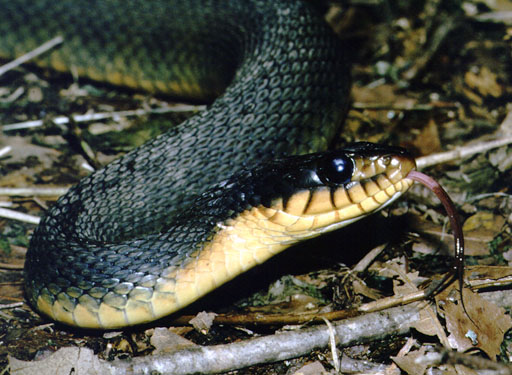
Snakes · Difficulty: Intermediate
Key facts and care guidance for Plain-bellied water snake (Nerodia erythrogaster) (origin: The central and eastern USA (wetlands, rivers, floodplains)). Adult size around 75–120 cm (30–48 inches; females considerably larger and stockier). Life expectancy ~10–15 years. The values below are carefully researched guidance.
Short answers
Plain-bellied water snake: How big does the enclosure need to be?
150×60×60 cm (an aqua-terrarium with a large water section and a basking spot).
Plain-bellied water snake: What temperature does it need?
Daytime 24–28 °C, basking spot 30–35 °C (basking spot), at night 18–22 °C.
Plain-bellied water snake: Does it need UVB lighting?
UVB: UVB not essential but recommended (diurnal, basks).
Plain-bellied water snake: How long do they live?
Life expectancy: ~10–15 years.
Plain-bellied water snake: Is it suitable for beginners?
Rather not – it is considered an intermediate species (difficulty: Intermediate).
Climate
- Daytime temperature
- 24–28 °C
- Night temperature
- 18–22 °C
- Basking spot
- 30–35 °C (basking spot)
- Humidity
- 50–70 %
- UVB
- UVB not essential but recommended (diurnal, basks)
Enclosure
- Minimum size
- 150×60×60 cm (an aqua-terrarium with a large water section and a basking spot)
- Substrate
- Absorbent substrate; a large water area (semi-aquatic) plus a land section with hides
Feeding
- Food
- Fish (smelt), amphibians; add vitamin B1 if feeding fish only
- Feeding interval
- adults ~1×/week, juveniles every 3–4 days
Key facts
- Adult size
- 75–120 cm (30–48 inches; females considerably larger and stockier)
- Life expectancy
- ~10–15 years
- Origin
- The central and eastern USA (wetlands, rivers, floodplains)
- Protection status
- Not listed under CITES; not protected (not native)
- Brumation
- A winter rest or cooling of 6–10 weeks at ~10–15 °C to stimulate breeding
- Cohabitation
- Keeping them singly is recommended – a powerful, defensive water snake with a strong competitive drive around food; there is a considerable risk of injury and cannibalism when feeding them together; put them together only under supervision for breeding
Notes
Defensive: it bites when disturbed and releases musk. A large, deep water section is essential. A fish eater → vitamin B1 is essential. Do not house it with garter snakes. Some species-specific husbandry figures are derived from the Nerodia complex.
Do you keep this species?
Add your animal to Reptoria – Reptoria reminds you about feeding and shedding. Add your animal for free →
Look for Plain-bellied water snake (Nerodia erythrogaster) in the marketplace →
Related species
- Northern water snake (Nerodia sipedon) – Intermediate
- Banded water snake (Nerodia fasciata) – Intermediate
- Ahumada's alpine garter snake (Thamnophis ahumadai) – Expert
- Barred grass snake (Natrix helvetica) – Intermediate
- Bogert's garter snake (Thamnophis bogerti) – Expert
- Dekay's brown snake (Storeria dekayi) – Intermediate
- Butler's garter snake (Thamnophis butleri) – Intermediate
- Cope's mountain meadow snake (Thamnophis copei) – Expert
What you need to start
To keep Plain-bellied water snake (Nerodia erythrogaster) you typically need: a suitable enclosure (150×60×60 cm (an aqua-terrarium with a large water section and a basking spot)), substrate (Absorbent substrate; a large water area (semi-aquatic) plus a land section with hides), a heat source with a thermostat, UVB lighting, thermometer and hygrometer, a water dish and hides. You will find equipment in the Reptoria marketplace.
The complete, interactive care database is in the Reptoria app.
Last updated: 9 October 2026 · Editor: Reptoria editorial team · Sources include: https://en.wikipedia.org/wiki/Plain-bellied_water_snake, https://reptile-database.reptarium.cz/species?genus=Nerodia&species=erythrogaster
All values are non-binding guidance and do not replace expert advice. Research thoroughly from several sources before acquiring and keeping an animal, and observe the applicable law (species and animal protection in particular).