Ploughshare tortoise (Astrochelys yniphora)
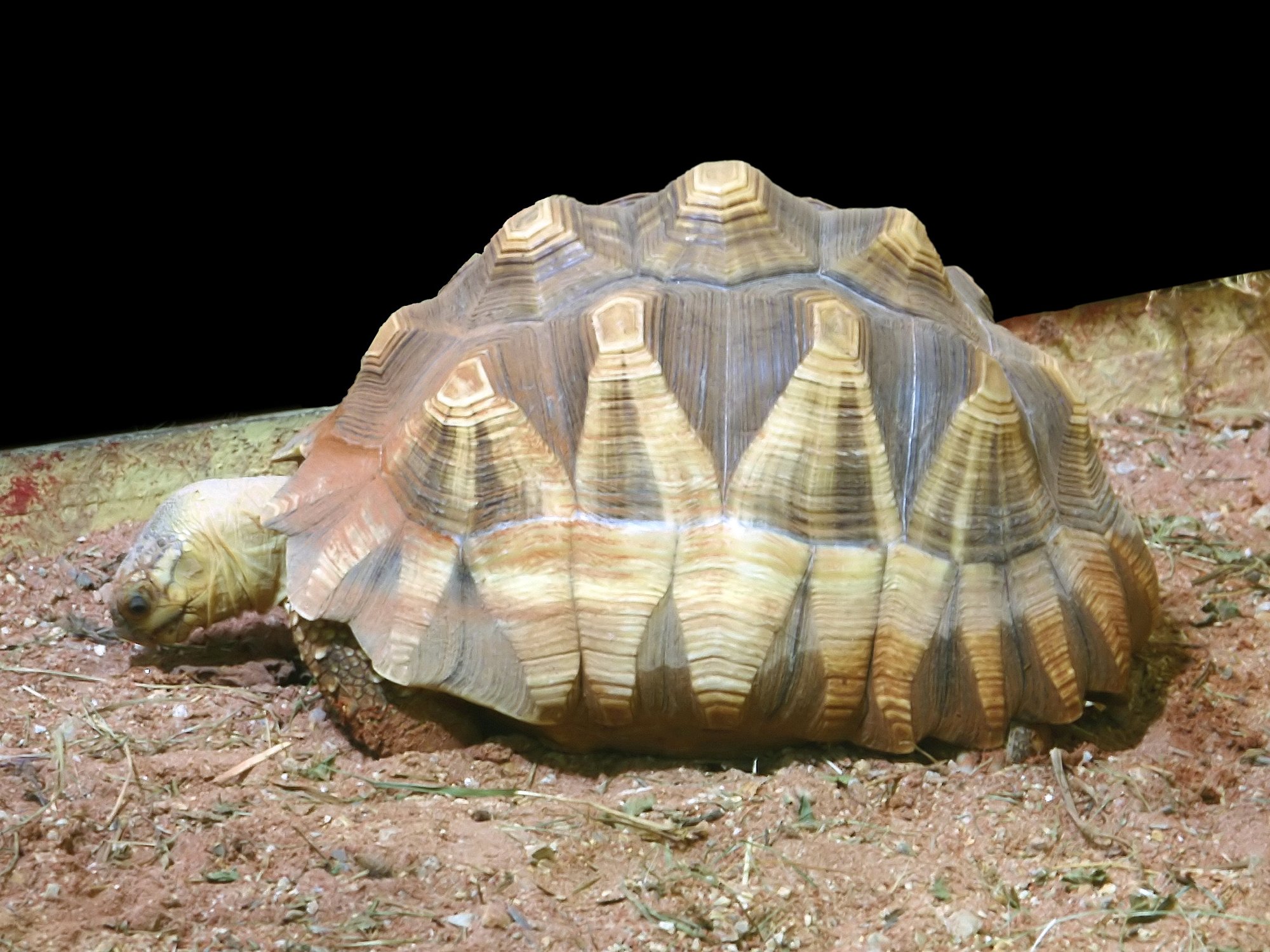
Turtles & tortoises · Difficulty: Expert
Key facts and care guidance for Ploughshare tortoise (Astrochelys yniphora) (origin: North-western Madagascar (Baly Bay, dry forest), endemic). Adult size around carapace length 31–49 cm (males averaging 41.5 cm, females averaging 37 cm), 5.5–19 kg. Life expectancy several decades (50+). The values below are carefully researched guidance.
Short answers
Ploughshare tortoise: How big does the enclosure need to be?
A large outdoor facility at a zoo or breeding station – not for private keeping.
Ploughshare tortoise: What temperature does it need?
Daytime 28–32 °C, basking spot 35–40 °C, at night 17–24 °C (dry season cooler ~17 °C, rainy season ~24 °C).
Ploughshare tortoise: Does it need UVB lighting?
UVB: Essential.
Ploughshare tortoise: How long do they live?
Life expectancy: several decades (50+).
Ploughshare tortoise: Is it suitable for beginners?
No – better suited to experienced keepers (difficulty: Expert).
Climate
- Daytime temperature
- 28–32 °C
- Night temperature
- 17–24 °C (dry season cooler ~17 °C, rainy season ~24 °C)
- Basking spot
- 35–40 °C
- Humidity
- Changing with the season: dry in the dry season, humid and high in the rainy season
- UVB
- Essential
Enclosure
- Minimum size
- a large outdoor facility at a zoo or breeding station – not for private keeping
- Substrate
- Soil and sand with bamboo and shrub structure (dry forest)
Feeding
- Food
- Herbivore: grasses, herbs, foliage and fruit; in the wild it prefers the foliage of the shrub Bauhinia pervillei, and occasionally eats the droppings of lemurs and bushpigs. No animal protein, little fruit.
- Feeding interval
- Plant food daily
Key facts
- Adult size
- carapace length 31–49 cm (males averaging 41.5 cm, females averaging 37 cm), 5.5–19 kg
- Life expectancy
- several decades (50+)
- Origin
- North-western Madagascar (Baly Bay, dry forest), endemic
- Protection status
- CITES Appendix I / EU Annex A; critically endangered (fewer than 400 in the wild) – all trade is illegal, only conservation breeding
- Brumation
- None; a seasonal cycle (rainy and dry seasons)
- Cohabitation
- Only in a coordinated breeding programme. Males fight each other with the plough-shaped projection on the plastron and try to flip the opponent onto its back; an overturned animal overheats quickly in the sun and can die from it. So never two males together — instead one male with several females, with visual screening and a way to separate them. During prolonged courtship a female visibly loses weight and must be separated.
Notes
NOT a pet species – CITES I, one of the rarest turtles in the world. Kept exclusively in coordinated conservation breeding programmes (EAZA for example); private trade is illegal (poaching and smuggling).
Do you keep this species?
Add your animal to Reptoria – Reptoria reminds you about feeding and shedding. Add your animal for free →
Look for Ploughshare tortoise (Astrochelys yniphora) in the marketplace →
Related species
- Radiated tortoise (Astrochelys radiata) – Expert
- Speckled padloper (Homopus areolatus) – Expert
- Serrated tent tortoise (Psammobates oculifer) – Expert
- Bell's hinge-back tortoise (Kinixys belliana) – Intermediate
- Speckled padloper tortoise (Chersobius signatus) – Expert
- Angulate tortoise (Chersina angulata) – Intermediate
- Home's hinge-back tortoise (Kinixys homeana) – Expert
- Natal hinge-back tortoise (Kinixys natalensis) – Intermediate
What you need to start
To keep Ploughshare tortoise (Astrochelys yniphora) you typically need: a suitable enclosure (a large outdoor facility at a zoo or breeding station – not for private keeping), substrate (Soil and sand with bamboo and shrub structure (dry forest)), a heat source with a thermostat, UVB lighting, thermometer and hygrometer, a water dish and hides. You will find equipment in the Reptoria marketplace.
The complete, interactive care database is in the Reptoria app.
Last updated: 2 November 2026 · Editor: Reptoria editorial team · Sources include: animaldiversity.org, Wikipedia EN, Wikipedia DE, bmleh.de (Gutachten Reptilien 1997), eur-lex.europa.eu (VO (EU) 2026/1383)
All values are non-binding guidance and do not replace expert advice. Research thoroughly from several sources before acquiring and keeping an animal, and observe the applicable law (species and animal protection in particular).