Serrated tent tortoise (Psammobates oculifer)
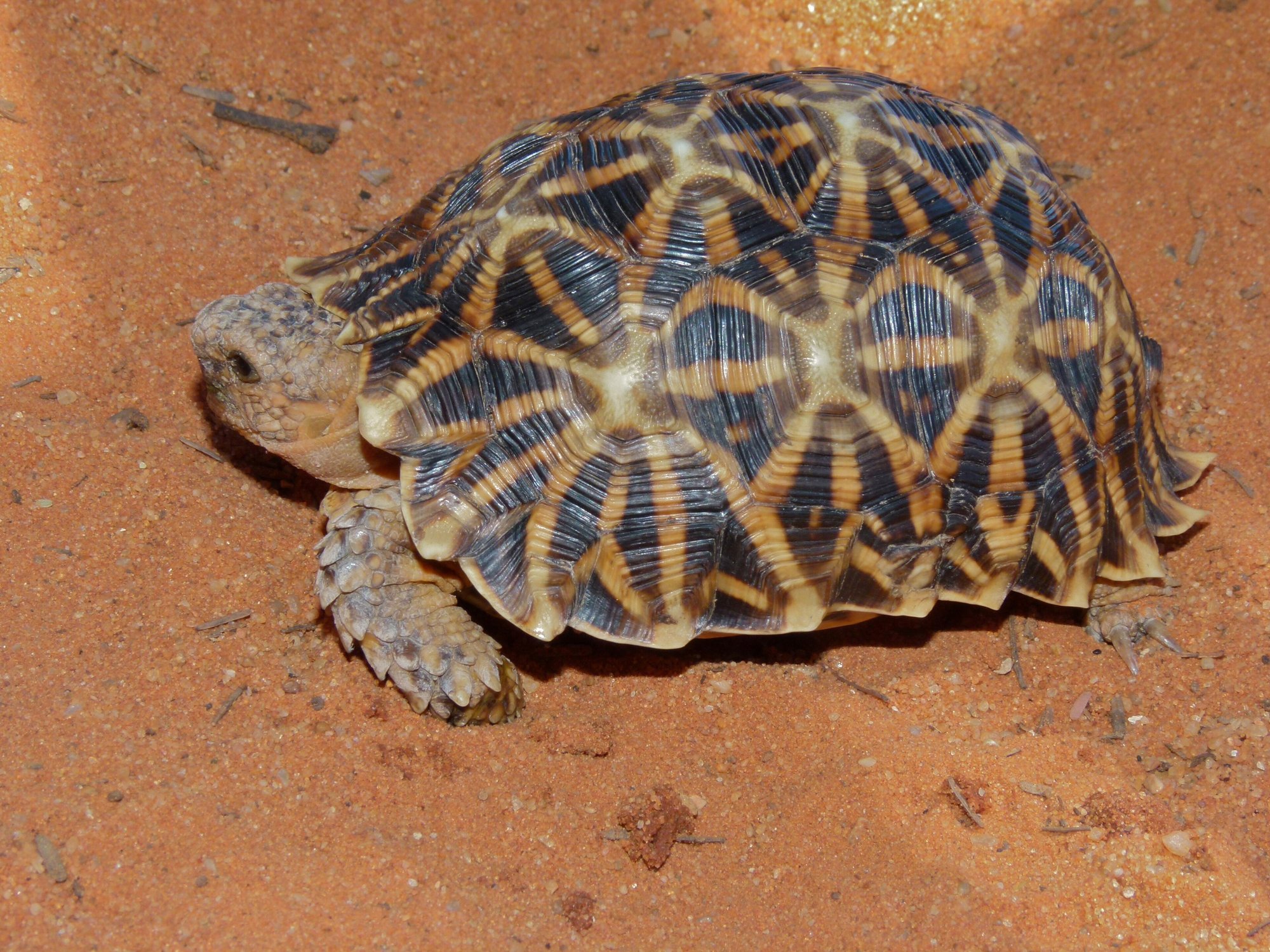
Turtles & tortoises · Difficulty: Expert
Key facts and care guidance for Serrated tent tortoise (Psammobates oculifer) (origin: The Kalahari (Botswana, Namibia, South Africa)). Adult size around 10–15 cm. Life expectancy 30–50 years. The values below are carefully researched guidance.
Short answers
Serrated tent tortoise: How big does the enclosure need to be?
From 100×50 cm floor space for one animal; for a pair from 115×50 cm (15 % more floor space per additional animal, as in the 1997 expert report).
Serrated tent tortoise: What temperature does it need?
Daytime 25–33 °C, basking spot 40–45 °C under the lamp, at night 15–20 °C.
Serrated tent tortoise: Does it need UVB lighting?
UVB: Essential (UVB 10.0–12 %).
Serrated tent tortoise: How long do they live?
Life expectancy: 30–50 years.
Serrated tent tortoise: Is it suitable for beginners?
No – better suited to experienced keepers (difficulty: Expert).
Climate
- Daytime temperature
- 25–33 °C
- Night temperature
- 15–20 °C
- Basking spot
- 40–45 °C under the lamp
- Humidity
- 20–35 %
- UVB
- Essential (UVB 10.0–12 %)
Enclosure
- Minimum size
- from 100×50 cm floor space for one animal; for a pair from 115×50 cm (15 % more floor space per additional animal, as in the 1997 expert report)
- Substrate
- Sand with gravel, flat stones, dry grasses
Feeding
- Food
- Dry grasses and herbs – purely plant-based and very high in fibre
- Feeding interval
- plant food daily
Key facts
- Adult size
- 10–15 cm
- Life expectancy
- 30–50 years
- Origin
- The Kalahari (Botswana, Namibia, South Africa)
- Protection status
- CITES II
- Brumation
- No winter dormancy as with European tortoises. During the cooler dry season, a rest period of about 10 to 12 weeks with less food, a shorter day and lower temperature; the animals then withdraw and burrow in.
- Cohabitation
- Solitary or pair. Two males harass each other and the females; during prolonged courtship a female visibly loses weight. So a pair only works if you can remove the male as soon as it harasses the female — a second tank belongs in the planning. Anyone with more space keeps one male with several females, so the courtship is spread out.
Notes
A Kalahari dweller with a radiating pattern. To be kept extremely dry; in the wild it takes up water almost only during rainy periods – occasional baths rather than permanent damp.
Do you keep this species?
Add your animal to Reptoria – Reptoria reminds you about feeding and shedding. Add your animal for free →
Look for Serrated tent tortoise (Psammobates oculifer) in the marketplace →
Related species
- Tent tortoise (Psammobates tentorius) – Expert
- Ploughshare tortoise (Astrochelys yniphora) – Expert
- Speckled padloper (Homopus areolatus) – Expert
- Bell's hinge-back tortoise (Kinixys belliana) – Intermediate
- Speckled padloper tortoise (Chersobius signatus) – Expert
- Angulate tortoise (Chersina angulata) – Intermediate
- Home's hinge-back tortoise (Kinixys homeana) – Expert
- Natal hinge-back tortoise (Kinixys natalensis) – Intermediate
What you need to start
To keep Serrated tent tortoise (Psammobates oculifer) you typically need: a suitable enclosure (from 100×50 cm floor space for one animal; for a pair from 115×50 cm (15 % more floor space per additional animal, as in the 1997 expert report)), substrate (Sand with gravel, flat stones, dry grasses), a heat source with a thermostat, UVB lighting, thermometer and hygrometer, a water dish and hides. You will find equipment in the Reptoria marketplace.
The complete, interactive care database is in the Reptoria app.
Last updated: 9 October 2026 · Editor: Reptoria editorial team · Sources include: Wikipedia EN, eu_annex.txt (VO (EU) 2026/1383, lokal), gutachten.txt (BML 1997, lokal), hellabrunn.de, ms-reptilien.de
All values are non-binding guidance and do not replace expert advice. Research thoroughly from several sources before acquiring and keeping an animal, and observe the applicable law (species and animal protection in particular).