Pygmy algyroides (Algyroides fitzingeri)
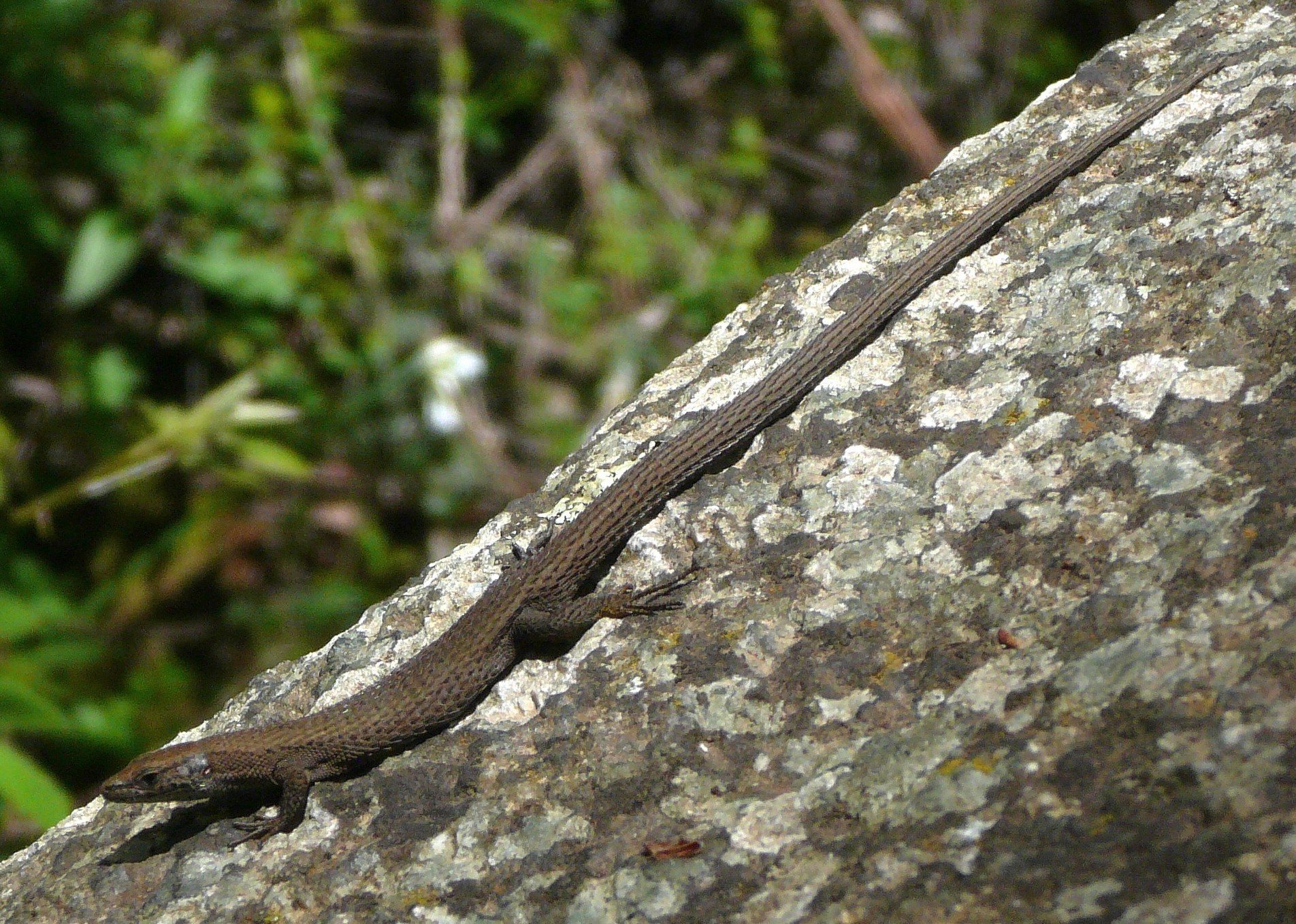
Lizards · Difficulty: Expert
Key facts and care guidance for Pygmy algyroides (Algyroides fitzingeri) (origin: Endemic to Corsica and Sardinia, humid shaded maquis and forest from sea level to ~1,800 m). Adult size around very small, up to ~13 cm total length (SVL ~4.5–5 cm). Life expectancy probably approx. 4–6 years in captivity (little documented). The values below are carefully researched guidance.
Short answers
Pygmy algyroides: How big does the enclosure need to be?
50–60×40×40 cm, densely planted with moss, bark, leaf litter and shaded zones.
Pygmy algyroides: What temperature does it need?
Daytime 22–27 °C, basking spot 28–32 °C (mild, avoid overheating), at night 15–19 °C.
Pygmy algyroides: Does it need UVB lighting?
UVB: UVB recommended, moderate (Ferguson zone 1–2, UV index 1–3; offer plenty of shade).
Pygmy algyroides: How long do they live?
Life expectancy: probably approx. 4–6 years in captivity (little documented).
Pygmy algyroides: Is it suitable for beginners?
No – better suited to experienced keepers (difficulty: Expert).
Climate
- Daytime temperature
- 22–27 °C
- Night temperature
- 15–19 °C
- Basking spot
- 28–32 °C (mild, avoid overheating)
- Humidity
- 60–80 % (humid and shaded)
- UVB
- UVB recommended, moderate (Ferguson zone 1–2, UV index 1–3; offer plenty of shade)
Enclosure
- Minimum size
- 50–60×40×40 cm, densely planted with moss, bark, leaf litter and shaded zones
- Substrate
- Humus-rich forest floor or leaf litter with moss, permanently slightly damp; dense planting
Feeding
- Food
- Small insects, preferably ants and small beetles, springtails, small crickets
- Feeding interval
- adults 3–4×/week, juveniles daily
Key facts
- Adult size
- very small, up to ~13 cm total length (SVL ~4.5–5 cm)
- Life expectancy
- probably approx. 4–6 years in captivity (little documented)
- Origin
- Endemic to Corsica and Sardinia, humid shaded maquis and forest from sea level to ~1,800 m
- Protection status
- Strictly protected (Habitats Directive Annex IV, Bern Convention); only documented captive-bred animals
- Brumation
- A mild winter rest: about 2 months at 8–10 °C
- Cohabitation
- Keeping it singly is unproblematic; one male with 1(-2) females in a well-structured, densely planted humid enclosure also works - but never males together.
Notes
A tiny, hidden-living keeled-lizard specialist of damp, shady microhabitats (do not keep it dry or hot!). Rarely kept – the care figures are derived from its natural habitat, with medium confidence. Micro-food is needed.
Do you keep this species?
Add your animal to Reptoria – Reptoria reminds you about feeding and shedding. Add your animal for free →
Look for Pygmy algyroides (Algyroides fitzingeri) in the marketplace →
Related species
- Dalmatian algyroides (Algyroides nigropunctatus) – Intermediate
- Greek algyroides (Algyroides moreoticus) – Intermediate
- Erhard's wall lizard (Podarcis erhardii) – Beginner to intermediate
- Large psammodromus (Psammodromus algirus) – Intermediate
- Pamphylian green lizard (Lacerta pamphylica) – Intermediate
- Lilford's wall lizard (Podarcis lilfordi) – Expert
- Balkan green lizard (Lacerta trilineata) – Intermediate
- Sawtail lizard (Holaspis guentheri) – Intermediate
What you need to start
To keep Pygmy algyroides (Algyroides fitzingeri) you typically need: a suitable enclosure (50–60×40×40 cm, densely planted with moss, bark, leaf litter and shaded zones), substrate (Humus-rich forest floor or leaf litter with moss, permanently slightly damp; dense planting), a heat source with a thermostat, UVB lighting, thermometer and hygrometer, a water dish and hides. You will find equipment in the Reptoria marketplace.
The complete, interactive care database is in the Reptoria app.
Last updated: 9 October 2026 · Editor: Reptoria editorial team · Sources include: https://en.wikipedia.org/wiki/Algyroides, https://reptile-database.reptarium.cz/species?genus=Algyroides&species=fitzingeri
All values are non-binding guidance and do not replace expert advice. Research thoroughly from several sources before acquiring and keeping an animal, and observe the applicable law (species and animal protection in particular).