Trans-Pecos rat snake (Bogertophis subocularis)
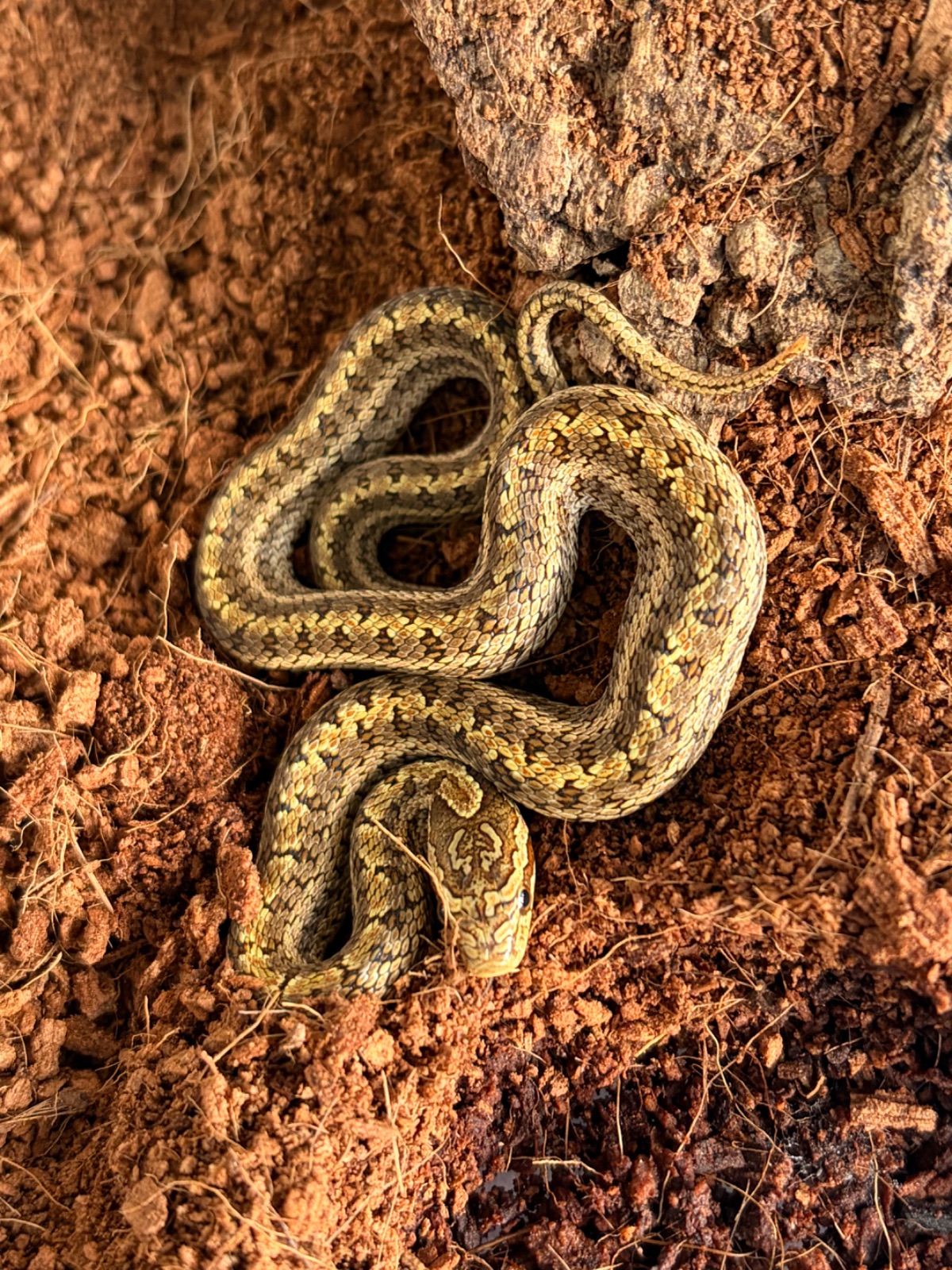
Snakes · Difficulty: Beginner
Key facts and care guidance for Trans-Pecos rat snake (Bogertophis subocularis) (origin: Western Texas, northern Mexico – the Chihuahuan Desert). Adult size around 100–140 cm. Life expectancy 20–25 years. The values below are carefully researched guidance.
Short answers
Trans-Pecos rat snake: How big does the enclosure need to be?
120×60×70 cm.
Trans-Pecos rat snake: What temperature does it need?
Daytime 25–32 °C, basking spot 33 °C, at night 18–22 °C.
Trans-Pecos rat snake: Does it need UVB lighting?
UVB: Not required.
Trans-Pecos rat snake: How long do they live?
Life expectancy: 20–25 years.
Trans-Pecos rat snake: Is it suitable for beginners?
Yes – it is considered suitable for beginners (difficulty: Beginner).
Climate
- Daytime temperature
- 25–32 °C
- Night temperature
- 18–22 °C
- Basking spot
- 33 °C
- Humidity
- 40–55 %
- UVB
- Not required
Enclosure
- Minimum size
- 120×60×70 cm
- Substrate
- Sand-loam or bark mulch, stone slabs, climbing branches, a water dish
Feeding
- Food
- Frozen-thawed mice of a suitable size
- Feeding interval
- 1×/week
Key facts
- Adult size
- 100–140 cm
- Life expectancy
- 20–25 years
- Origin
- Western Texas, northern Mexico – the Chihuahuan Desert
- Protection status
- Not listed under CITES
- Brumation
- A winter rest of 8–12 weeks at 12–16 °C
- Cohabitation
- Keep them singly. Snakes are solitary and do not seek company — a shared hide is competition for the best spot, not social behaviour. The concrete reason is the feeding accident: if two animals grab the same food item, one can swallow the other along with it. On top of that, once they are kept together you can no longer tell which animal has eaten and which is losing weight. For breeding, put them together under supervision and separate them again afterwards.
Notes
Large eyes, a slender build, and nocturnal – one of the calmest and longest-lived rat snakes. Dry conditions with climbing structure; very good-natured and therefore an underrated beginner's snake.
Do you keep this species?
Add your animal to Reptoria – Reptoria reminds you about feeding and shedding. Add your animal for free →
Look for Trans-Pecos rat snake (Bogertophis subocularis) in the marketplace →
Related species
- Russian rat snake (Elaphe schrenckii) – Beginner
- Aesculapian snake (Zamenis longissimus) – Intermediate
- Baird's rat snake (Pantherophis bairdi) – Beginner
- Red bamboo rat snake (Oreocryptophis porphyraceus) – Intermediate
- Twin-spotted ratsnake (Elaphe bimaculata) – Beginner
- Western fox snake (Pantherophis vulpinus) – Beginner
- Rhinoceros rat snake (Gonyosoma boulengeri) – Intermediate
- Green rat snake (Senticolis triaspis) – Intermediate
What you need to start
To keep Trans-Pecos rat snake (Bogertophis subocularis) you typically need: a suitable enclosure (120×60×70 cm), substrate (Sand-loam or bark mulch, stone slabs, climbing branches, a water dish), a heat source with a thermostat, thermometer and hygrometer, a water dish and hides. You will find equipment in the Reptoria marketplace.
The complete, interactive care database is in the Reptoria app.
Last updated: 30 October 2026 · Editor: Reptoria editorial team · Sources include: https://en.wikipedia.org/wiki/Trans-Pecos_rat_snake, https://reptile-database.reptarium.cz/species?genus=Bogertophis&species=subocularis, https://reptilesmagazine.com/trans-pecos-rat-snake-natural-history-and-captive-care/
All values are non-binding guidance and do not replace expert advice. Research thoroughly from several sources before acquiring and keeping an animal, and observe the applicable law (species and animal protection in particular).