Transvaal dwarf chameleon (Bradypodion transvaalense)
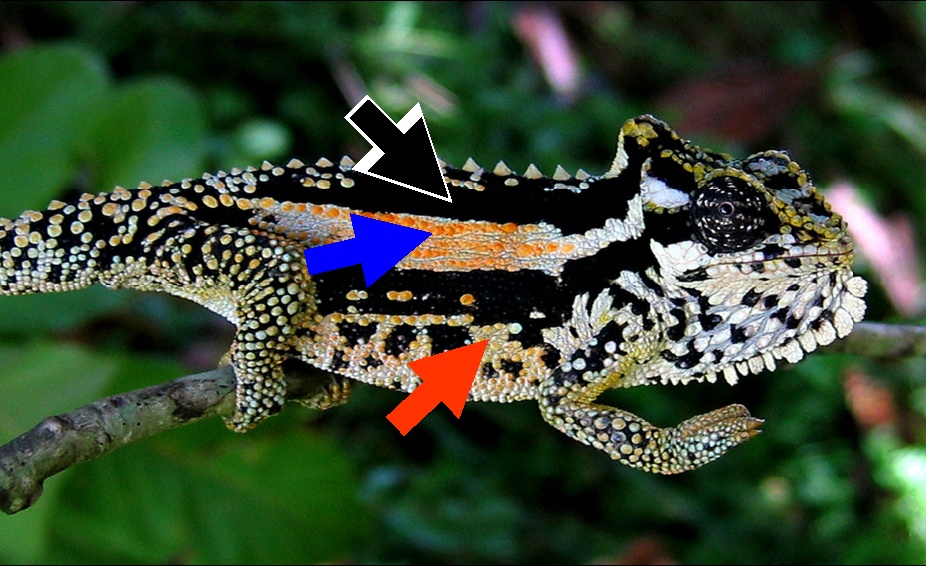
Chameleons · Difficulty: Expert
Key facts and care guidance for Transvaal dwarf chameleon (Bradypodion transvaalense) (origin: South Africa, the provinces of Mpumalanga and Limpopo (the Wolkberg), forested mountain regions). Adult size around approx. 14–16 cm total length (SVL ~7 cm). Life expectancy approx. 3–5 years. The values below are carefully researched guidance.
Short answers
Transvaal dwarf chameleon: How big does the enclosure need to be?
60×40×90 cm for one adult animal (densely planted, plenty of air movement).
Transvaal dwarf chameleon: What temperature does it need?
Daytime 20–26 °C (keep below 30 °C), basking spot 26–28 °C (moderate), at night 10–15 °C (temperate mountain climate).
Transvaal dwarf chameleon: Does it need UVB lighting?
UVB: UVB needed (Ferguson zone 2–3, UV index 3; a UVB tube plus natural light, good ventilation).
Transvaal dwarf chameleon: How long do they live?
Life expectancy: approx. 3–5 years.
Transvaal dwarf chameleon: Is it suitable for beginners?
No – better suited to experienced keepers (difficulty: Expert).
Climate
- Daytime temperature
- 20–26 °C (keep below 30 °C)
- Night temperature
- 10–15 °C (temperate mountain climate)
- Basking spot
- 26–28 °C (moderate)
- Humidity
- 60–80 %
- UVB
- UVB needed (Ferguson zone 2–3, UV index 3; a UVB tube plus natural light, good ventilation)
Enclosure
- Minimum size
- 60×40×90 cm for one adult animal (densely planted, plenty of air movement)
- Substrate
- A humus soil or forest floor, dense planting (ficus), fine branches; mesh ventilation at the top and low at the front (high air exchange)
Feeding
- Food
- Insects: small crickets, house crickets, flies, roaches; dusted with calcium and vitamins
- Feeding interval
- adults 2–3×/week, juveniles daily
Key facts
- Adult size
- approx. 14–16 cm total length (SVL ~7 cm)
- Life expectancy
- approx. 3–5 years
- Origin
- South Africa, the provinces of Mpumalanga and Limpopo (the Wolkberg), forested mountain regions
- Protection status
- CITES Appendix II / EU Regulation Annex B – specially protected: proof of origin plus registration required; export from South Africa requires a permit; IUCN "Least Concern"
- Brumation
- Recreate a cool winter spell (a temperate origin): day ~15–20 °C, night down to ~10 °C, with reduced feeding and misting
- Cohabitation
- Keep them singly. Strongly territorial and aggressive towards each other – housing them together permanently leads to fights and stress. Only briefly together for breeding. NEVER keep males together
Notes
Live-bearing (litters of up to about 11 young, several litters a year). Pronounced territoriality; dominant males show strong red and orange colouring. Bradypodion in general are demanding to keep and breed; very good ventilation is essential. A common mistake: too warm.
Do you keep this species?
Add your animal to Reptoria – Reptoria reminds you about feeding and shedding. Add your animal for free →
Look for Transvaal dwarf chameleon (Bradypodion transvaalense) in the marketplace →
Related species
- Drakensberg dwarf chameleon (Bradypodion dracomontanum) – Intermediate
- Cape dwarf chameleon (Bradypodion pumilum) – Intermediate
- Karoo dwarf chameleon (Bradypodion karrooicum) – Intermediate
- Robertson dwarf chameleon (Bradypodion gutturale) – Intermediate
- Knysna dwarf chameleon (Bradypodion damaranum) – Intermediate
- Natal Midlands dwarf chameleon (Bradypodion thamnobates) – Expert
- Black-headed dwarf chameleon (Bradypodion melanocephalum) – Intermediate
- Setaro's dwarf chameleon (Bradypodion setaroi) – Intermediate
What you need to start
To keep Transvaal dwarf chameleon (Bradypodion transvaalense) you typically need: a suitable enclosure (60×40×90 cm for one adult animal (densely planted, plenty of air movement)), substrate (A humus soil or forest floor, dense planting (ficus), fine branches; mesh ventilation at the top and low at the front (high air exchange)), a heat source with a thermostat, UVB lighting, thermometer and hygrometer, a water dish and hides. You will find equipment in the Reptoria marketplace.
The complete, interactive care database is in the Reptoria app.
Last updated: 9 October 2026 · Editor: Reptoria editorial team · Sources include: https://en.wikipedia.org/wiki/Transvaal_dwarf_chameleon, https://www.tyroneping.co.za/chameleons/bradypodion-transvaalense/
All values are non-binding guidance and do not replace expert advice. Research thoroughly from several sources before acquiring and keeping an animal, and observe the applicable law (species and animal protection in particular).