Tricolor isopod (Merulanella sp. Tricolor)
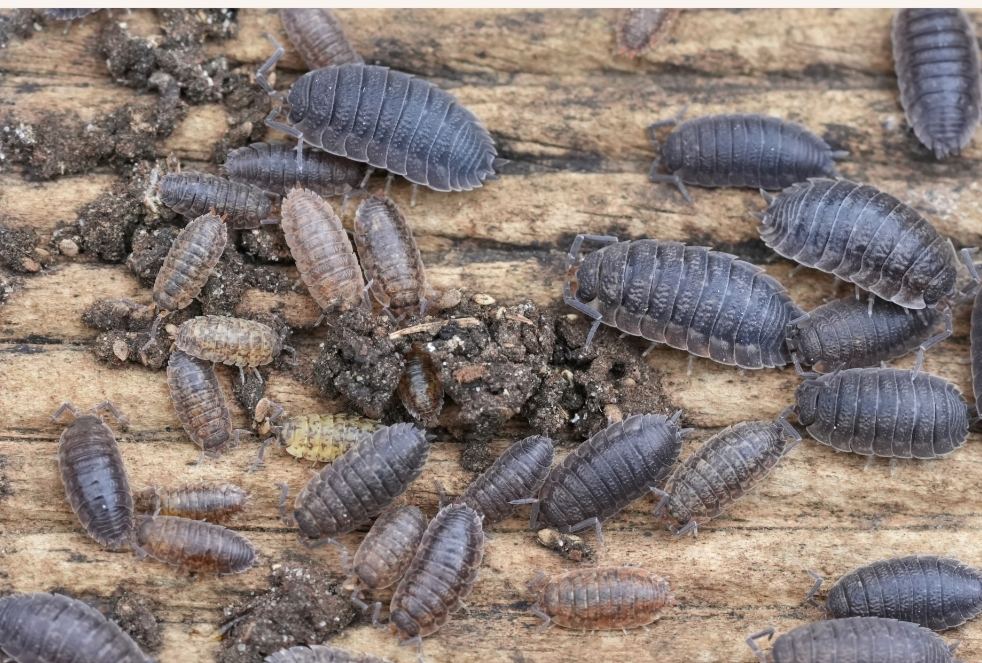
Invertebrates · Difficulty: Intermediate
Key facts and care guidance for Tricolor isopod (Merulanella sp. Tricolor) (origin: Vietnam (family Armadillidae); taxonomically placed in Ardentiella sp. in 2025). Adult size around approx. 2.0 cm. Life expectancy approx. 1.5–2 years. The values below are carefully researched guidance.
Short answers
Tricolor isopod: How big does the enclosure need to be?
A box from 25×20×20 cm, escape-proof (it climbs vertically up glass and plastic), very well ventilated.
Tricolor isopod: What temperature does it need?
Daytime 19–26 °C (rather cooler), at night 18–22 °C.
Tricolor isopod: Does it need UVB lighting?
UVB: No UVB needed.
Tricolor isopod: How long do they live?
Life expectancy: approx. 1.5–2 years.
Tricolor isopod: Is it suitable for beginners?
Rather not – it is considered an intermediate species (difficulty: Intermediate).
Climate
- Daytime temperature
- 19–26 °C (rather cooler)
- Night temperature
- 18–22 °C
- Basking spot
- —
- Humidity
- 60–75 % (humid, substrate not wet)
- UVB
- No UVB needed
Enclosure
- Minimum size
- a box from 25×20×20 cm, escape-proof (it climbs vertically up glass and plastic), very well ventilated
- Substrate
- Damp but not soaked; layered cork bark, moss, leaf litter, lichens and rotten wood; climbing branches; calcium
Feeding
- Food
- Vegetables, leaf litter, moss and lichens, rotten pale wood; protein (Gammarus), calcium – no bee pollen
- Feeding interval
- protein and vegetables 1–2×/week, leaf litter and wood always available
Key facts
- Adult size
- approx. 2.0 cm
- Life expectancy
- approx. 1.5–2 years
- Origin
- Vietnam (family Armadillidae); taxonomically placed in Ardentiella sp. in 2025
- Protection status
- Not protected (no CITES, no German Federal Nature Conservation Act listing)
- Brumation
- None
- Cohabitation
- A colony of 5–10 animals or more in its own box. Isopods are gregarious; single animals will not build a stable group. Do not mix with other colour forms such as Scarlet or Red Diablo, otherwise the lines interbreed. Springtails are sensible tank mates because they clear up mould and leftovers.
Notes
A three-coloured species, active by day and night; more demanding than standard isopods – a balance of high humidity and good ventilation is decisive. Captive-bred animals are "easy to moderate", wild-caught ones markedly harder. Keep it escape-proof (it climbs vertically).
Do you keep this species?
Add your animal to Reptoria – Reptoria reminds you about feeding and shedding. Add your animal for free →
Look for Tricolor isopod (Merulanella sp. Tricolor) in the marketplace →
Related species
- Scarlet isopod (Merulanella sp. Scarlet) – Intermediate
- Little sea isopod (Cubaris murina) – Beginner
- Greek pill woodlouse (Armadillidium gestroi) – Beginner
- Giant canyon isopod (Porcellio dilatatus) – Beginner
- Common pill woodlouse (Armadillidium vulgare) – Beginner
- Rubber ducky isopod (Cubaris sp. Rubber Ducky) – Intermediate
- Powder blue isopod (Porcellionides pruinosus) – Beginner
- Marbled pill woodlouse (Armadillidium granulatum) – Beginner
What you need to start
To keep Tricolor isopod (Merulanella sp. Tricolor) you typically need: a suitable enclosure (a box from 25×20×20 cm, escape-proof (it climbs vertically up glass and plastic), very well ventilated), substrate (Damp but not soaked; layered cork bark, moss, leaf litter, lichens and rotten wood; climbing branches; calcium), a heat source with a thermostat, UVB lighting, thermometer and hygrometer, a water dish and hides. You will find equipment in the Reptoria marketplace.
The complete, interactive care database is in the Reptoria app.
Last updated: 25 September 2026 · Editor: Reptoria editorial team · Sources include: https://en.wikipedia.org/wiki/Ardentiella, https://exuvium.net/merulanella-sp-tricolor-isopods-for-sale/, https://isopod.site/isopod/armadillidae-ardentiella-sp-tricolor/, https://postpods.co.uk/blogs/isopods-useful-articles/care-for-merulanella-tri-colour-isopods, https://postpods.co.uk/blogs/isopods-useful-articles/caring-for-merulanella-isopods
All values are non-binding guidance and do not replace expert advice. Research thoroughly from several sources before acquiring and keeping an animal, and observe the applicable law (species and animal protection in particular).