Western chameleon gecko (Eurydactylodes occidentalis)
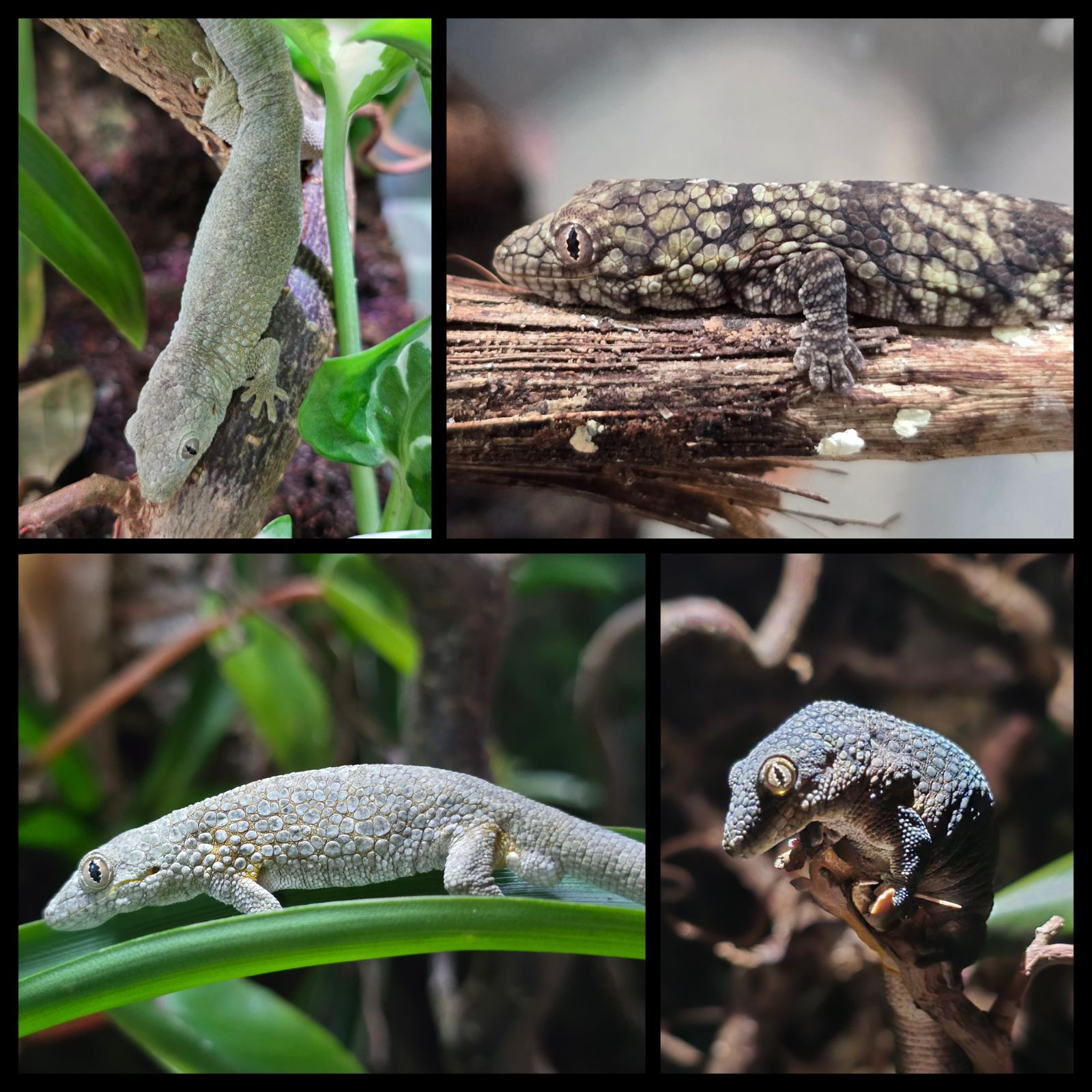
Geckos · Difficulty: Intermediate
Key facts and care guidance for Western chameleon gecko (Eurydactylodes occidentalis) (origin: New Caledonia, endemic to the west coast of the main island Grande Terre (Southern Province) – lowland coastal forest, localities below 20 m elevation). Adult size around 10–12 cm total length. Life expectancy 10 years and more. The values below are carefully researched guidance.
Short answers
Western chameleon gecko: How big does the enclosure need to be?
From 35×35×45 cm for one animal or a pair (breeder figure 30×30×45 cm; the 1997 expert report does not list the genus, the factor for the related giant geckos would give about 32×32×43 cm).
Western chameleon gecko: What temperature does it need?
Daytime 20–24 °C, basking spot 26–28 °C, at night 18–20 °C.
Western chameleon gecko: Does it need UVB lighting?
UVB: Low-level UVB possible, at a distance for juveniles.
Western chameleon gecko: How long do they live?
Life expectancy: 10 years and more.
Western chameleon gecko: Is it suitable for beginners?
Rather not – it is considered an intermediate species (difficulty: Intermediate).
Climate
- Daytime temperature
- 20–24 °C
- Night temperature
- 18–20 °C
- Basking spot
- 26–28 °C
- Humidity
- 60–80 %
- UVB
- Low-level UVB possible, at a distance for juveniles
Enclosure
- Minimum size
- from 35×35×45 cm for one animal or a pair (breeder figure 30×30×45 cm; the 1997 expert report does not list the genus, the factor for the related giant geckos would give about 32×32×43 cm)
- Substrate
- Dense planting, many thin to finger-thick climbing branches, hiding places in the foliage, shady humid retreats
Feeding
- Food
- Fruit mash (commercial diet), plus small insects such as fruit flies and micro crickets
Key facts
- Adult size
- 10–12 cm total length
- Life expectancy
- 10 years and more
- Origin
- New Caledonia, endemic to the west coast of the main island Grande Terre (Southern Province) – lowland coastal forest, localities below 20 m elevation
- Protection status
- Not listed under CITES
- Cohabitation
- Possible in pairs or small groups; keepers describe the species as very tolerant. Still watch every group and offer several perches.
Notes
Smallest and most threatened of the chameleon geckos, found only on the west coast of New Caledonia. Species-specific husbandry information is still sparse – many values come from a single breeder source so far.
Do you keep this species?
Add your animal to Reptoria – Reptoria reminds you about feeding and shedding. Add your animal for free →
Western chameleon gecko (Eurydactylodes occidentalis) currently offered
- 1.0.2 Eurydactylodes occidentalis Chamäleongecko – Wandlitz · 100 €
Related species
- Agricola's chameleon gecko (Eurydactylodes agricolae) – Intermediate
- Symmetrical chameleon gecko (Eurydactylodes symmetricus) – Intermediate
- Vieillard's chameleon gecko (Eurydactylodes vieillardi) – Intermediate
- Bavay's gecko (Bavayia sauvagii) – Beginner
- Mossy New Caledonian gecko (Mniarogekko chahoua) – Beginner to intermediate
- Gargoyle gecko (Rhacodactylus auriculatus) – Beginner
- Crested gecko (Correlophus ciliatus) – Beginner
- New Caledonian giant gecko (Rhacodactylus leachianus) – Intermediate
What you need to start
To keep Western chameleon gecko (Eurydactylodes occidentalis) you typically need: a suitable enclosure (from 35×35×45 cm for one animal or a pair (breeder figure 30×30×45 cm; the 1997 expert report does not list the genus, the factor for the related giant geckos would give about 32×32×43 cm)), substrate (Dense planting, many thin to finger-thick climbing branches, hiding places in the foliage, shady humid retreats), a heat source with a thermostat, UVB lighting, thermometer and hygrometer, a water dish and hides. You will find equipment in the Reptoria marketplace.
The complete, interactive care database is in the Reptoria app.
Last updated: 14 November 2026 · Editor: Reptoria editorial team · Sources include: Ridgeway Frozen, Western Chameleon Gecko (Eurydactylodes occidentalis), Nachzucht UK – 10–12 cm Gesamtlänge, zehn Jahre und mehr, nachtaktiv mit kurzer Dämmerungsaktivität, sanft/langsam, eher zum Beobachten, 20–24 °C, Nacht 18–20 °C, Wärmeplatz bis 26–28 °C, starke Hitze vermeiden, 60–80 %, dichte Bepflanzung, dünne Äste, Fertigbrei + kleine Insekten – https://www.ridgewayfrozen.co.uk/product/western-chameleon-gecko-eurydactylodes-occidentalis/, neukaledonien-geckos.com, Seite Eurydactylodes occidentalis – am stärksten bedrohte Art, gelbe Fläche Ohr–Mundspalte mit schwarzem Streifen, Paare/Gruppen, sehr sozial, Junge schlüpfen im Terrarium, ca. 30×30×45 cm, fingerdicke Äste, UV von Adulten angenommen, bei Jungtieren mit Abstand; Futter Brei (Repashy/Pangea), Obst, Drosophila mit Kalk/Vitaminen – https://www.neukaledonien-geckos.com/eurydactylodes-species-bauer-s-chameleon-geckos/eurydactylodes-occidentalis/, Reptile Database: Eurydactylodes occidentalis Bauer, Jackman, Sadlier & Whitaker 2009 – Südprovinz/Westküste, Typuslokalität Gouaro-Déva < 5 m, max. 53,4 mm KRL, eierlegend, IUCN CR, Lit. Frank 2020 Elaphe (Haltung und Nachzucht des Westlichen Chamäleongeckos) – https://reptile-database.reptarium.cz/species?genus=Eurydactylodes&species=occidentalis, Wikipedia EN: Eurydactylodes occidentalis – kleinste Art der Gattung, max. 5,3 cm KRL, endemisch Grande Terre, Wald um 20 m, eierlegend, IUCN EN (2021) – https://en.wikipedia.org/wiki/Eurydactylodes_occidentalis, Pangea Reptile, Eurydactylodes care information – E. occidentalis rund 10 mm KRL kleiner als die übrigen Arten, im Handel erhältlich – https://www.pangeareptile.com/blogs/care-breeding/eurydactylodes-care-information
All values are non-binding guidance and do not replace expert advice. Research thoroughly from several sources before acquiring and keeping an animal, and observe the applicable law (species and animal protection in particular).