Crested gecko (Correlophus ciliatus)
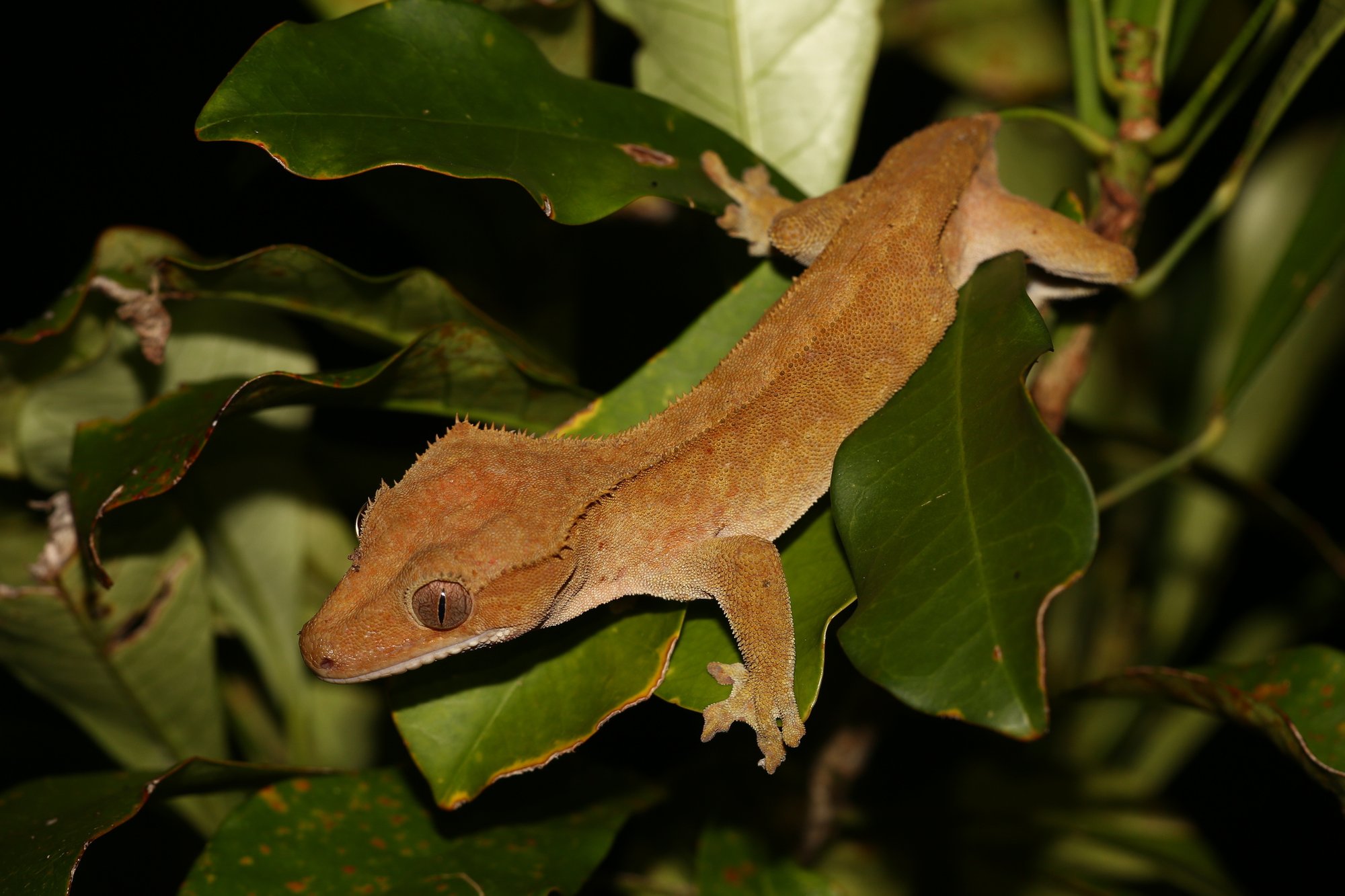
Geckos · Difficulty: Beginner
Key facts and care guidance for Crested gecko (Correlophus ciliatus) (origin: New Caledonia). Adult size around 20–25 cm (with the tail). Life expectancy 15–20 years. The values below are carefully researched guidance.
Short answers
Crested gecko: How big does the enclosure need to be?
From 45×45×60 cm for one animal; for 1.2 from 60×60×80 cm (1997 expert report: 6×6×8 times the snout–vent length for 1.1, at 10 cm SVL).
Crested gecko: What temperature does it need?
Daytime 22–26 °C, at night 18–22 °C.
Crested gecko: Does it need UVB lighting?
UVB: Recommended (low, UVB 2–5%).
Crested gecko: How long do they live?
Life expectancy: 15–20 years.
Crested gecko: Is it suitable for beginners?
Yes – it is considered suitable for beginners (difficulty: Beginner).
Climate
- Daytime temperature
- 22–26 °C
- Night temperature
- 18–22 °C
- Basking spot
- —
- Humidity
- 60–80 %
- UVB
- Recommended (low, UVB 2–5%)
Enclosure
- Minimum size
- from 45×45×60 cm for one animal; for 1.2 from 60×60×80 cm (1997 expert report: 6×6×8 times the snout–vent length for 1.1, at 10 cm SVL)
- Substrate
- Terrarium soil or sphagnum, densely planted
Feeding
- Food
- A prepared diet (CGD or Repashy) plus insects
- Feeding interval
- 2–3× a week
Key facts
- Adult size
- 20–25 cm (with the tail)
- Life expectancy
- 15–20 years
- Origin
- New Caledonia
- Protection status
- No CITES Appendix; in the EU only in Annex D (import notification at customs only) — no papers are needed to buy or sell. New Caledonia no longer allows wild animals to be exported: all animals in the trade are captive-bred. The IUCN Red List lists this species as Vulnerable.
- Brumation
- None
- Cohabitation
- On its own – that always works. A trio of one male and two females (1.2) works just as well. A pair (1.1) is not recommended: the male constantly pursues the single female, she barely gets any rest and is worn down by the many clutches. Two males must never be kept together; they fight over territory and feeding spots. For 1.2 the enclosure needs to be considerably larger: from 60×60×80 cm. Several feeding spots and plenty of visual barriers are important, otherwise one animal eats for everyone.
Notes
No permanent heat above about 28 °C. It sheds its tail (which does not grow back). Nocturnal, with plenty of climbing.
Do you keep this species?
Add your animal to Reptoria – Reptoria reminds you about feeding and shedding. Add your animal for free →
Crested gecko (Correlophus ciliatus) currently offered
- Pet Only Kronengecko pos. Weibchen – Liebenburg · 30 €
- Pet Only Kronengecko – Liebenburg · 30 €
- Kronengecko Männchen – Liebenburg · 45 €
- Kronengecko Männchen 2023 – Liebenburg · 35 €
- Kronengecko – Liebenburg · 50 €
- Kronengecko – Liebenburg · 50 €
Related species
- Sarasin's giant gecko (Correlophus sarasinorum) – Beginner
- Agricola's chameleon gecko (Eurydactylodes agricolae) – Intermediate
- Bavay's gecko (Bavayia sauvagii) – Beginner
- Mossy New Caledonian gecko (Mniarogekko chahoua) – Beginner to intermediate
- Gargoyle gecko (Rhacodactylus auriculatus) – Beginner
- New Caledonian giant gecko (Rhacodactylus leachianus) – Intermediate
- Jalu mossy gecko (Mniarogekko jalu) – Intermediate
- Rough-snouted giant gecko (Rhacodactylus trachycephalus) – Expert
What you need to start
To keep Crested gecko (Correlophus ciliatus) you typically need: a suitable enclosure (from 45×45×60 cm for one animal; for 1.2 from 60×60×80 cm (1997 expert report: 6×6×8 times the snout–vent length for 1.1, at 10 cm SVL)), substrate (Terrarium soil or sphagnum, densely planted), a heat source with a thermostat, UVB lighting, thermometer and hygrometer, a water dish and hides. You will find equipment in the Reptoria marketplace.
The complete, interactive care database is in the Reptoria app.
Last updated: 3 November 2026 · Editor: Reptoria editorial team · Sources include: drta-archiv.de, einrichtungsbeispiele.de, koenigspython.com, MEGAZOO Merkblatt, tropic-shop.de
All values are non-binding guidance and do not replace expert advice. Research thoroughly from several sources before acquiring and keeping an animal, and observe the applicable law (species and animal protection in particular).