Woma python (Aspidites ramsayi)
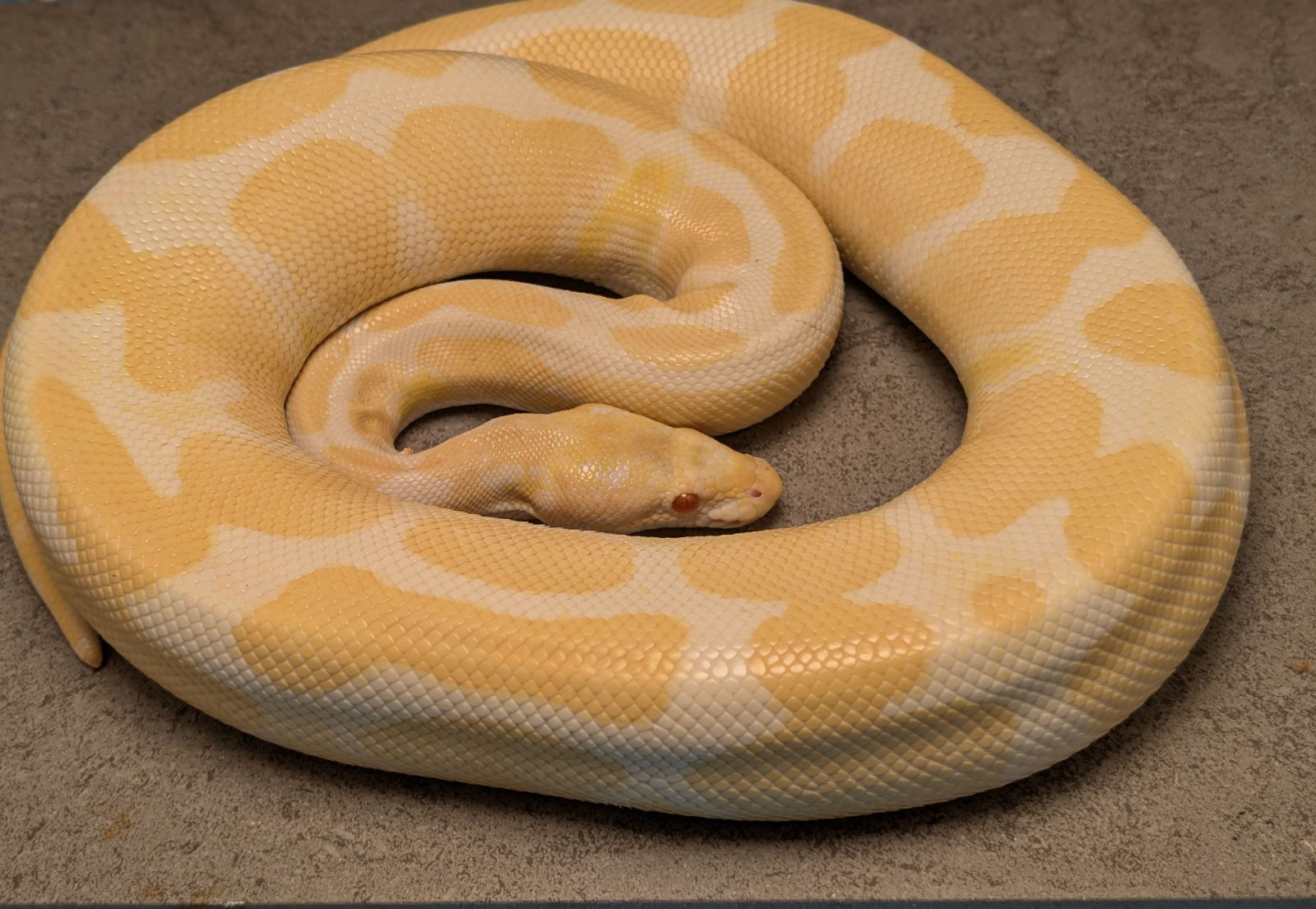
Snakes · Difficulty: Intermediate
Key facts and care guidance for Woma python (Aspidites ramsayi) (origin: Central and Western Australia (arid zones)). Adult size around 150–230 cm (average ~1.5 m). Life expectancy 20–30 years. The values below are carefully researched guidance.
Short answers
Woma python: How big does the enclosure need to be?
From 230×115×175 cm (minimum size according to the 1997 expert report, woma and black-headed python); ground-oriented.
Woma python: What temperature does it need?
Daytime 25–30 °C, basking spot 30–35 °C, at night 22–24 °C.
Woma python: Does it need UVB lighting?
UVB: UVB not essential, low UVB recommended.
Woma python: How long do they live?
Life expectancy: 20–30 years.
Woma python: Is it suitable for beginners?
Rather not – it is considered an intermediate species (difficulty: Intermediate).
Climate
- Daytime temperature
- 25–30 °C
- Night temperature
- 22–24 °C
- Basking spot
- 30–35 °C
- Humidity
- 40–60 % (with a humid shedding box of up to ~70 % for the moult)
- UVB
- UVB not essential, low UVB recommended
Enclosure
- Minimum size
- from 230×115×175 cm (minimum size according to the 1997 expert report, woma and black-headed python); ground-oriented
- Substrate
- Aspen shavings, about 8–15 cm deep; they like to dig
Feeding
- Food
- Rodents (mice, then rats); reptile-eating in the wild
- Feeding interval
- adults 1× every 10–14 days, juveniles 1× every 5–7 days
Key facts
- Adult size
- 150–230 cm (average ~1.5 m)
- Life expectancy
- 20–30 years
- Origin
- Central and Western Australia (arid zones)
- Protection status
- CITES Appendix II / EU Regulation Annex B – registration required, proof of origin required. An Australian export ban → captive-bred animals only.
- Brumation
- None as such; a slight winter drop or shorter photoperiod to stimulate breeding
- Cohabitation
- Keep them singly – solitary and ophiophagous (it eats reptiles and snakes) → a risk of cannibalism; put them together only briefly for supervised breeding
Notes
A burrowing desert species that thermoregulates via floor heat – do not let the night temperature fall below about 22–24 °C. Robust and usually calm; correct temperature management is decisive. Because it is primed on reptile prey, stay alert when feeding and handling.
Do you keep this species?
Add your animal to Reptoria – Reptoria reminds you about feeding and shedding. Add your animal for free →
Look for Woma python (Aspidites ramsayi) in the marketplace →
Related species
- Black-headed python (Aspidites melanocephalus) – Intermediate
- Amethystine python (Simalia amethistina) – Intermediate to expert
- Angolan python (Python anchietae) – Intermediate
- Australian scrub python (Simalia kinghorni) – Intermediate
- Boelen's python (Simalia boeleni) – Expert
- Burmese python (Python bivittatus) – Expert
- Indian python (Python molurus) – Expert
- Ball python (Python regius) – Beginner to intermediate
What you need to start
To keep Woma python (Aspidites ramsayi) you typically need: a suitable enclosure (from 230×115×175 cm (minimum size according to the 1997 expert report, woma and black-headed python); ground-oriented), substrate (Aspen shavings, about 8–15 cm deep; they like to dig), a heat source with a thermostat, UVB lighting, thermometer and hygrometer, a water dish and hides. You will find equipment in the Reptoria marketplace.
The complete, interactive care database is in the Reptoria app.
Last updated: 24 September 2026 · Editor: Reptoria editorial team · Sources include: https://dubiaroaches.com/blogs/snake-care/woma-python-care-sheet, https://en.wikipedia.org/wiki/Woma_python, https://reptile-database.reptarium.cz/species?genus=Aspidites&species=ramsayi, https://reptilesmagazine.com/woma-python-care-and-breeding/
All values are non-binding guidance and do not replace expert advice. Research thoroughly from several sources before acquiring and keeping an animal, and observe the applicable law (species and animal protection in particular).