Yellow-bellied skink (Eurylepis taeniolata)
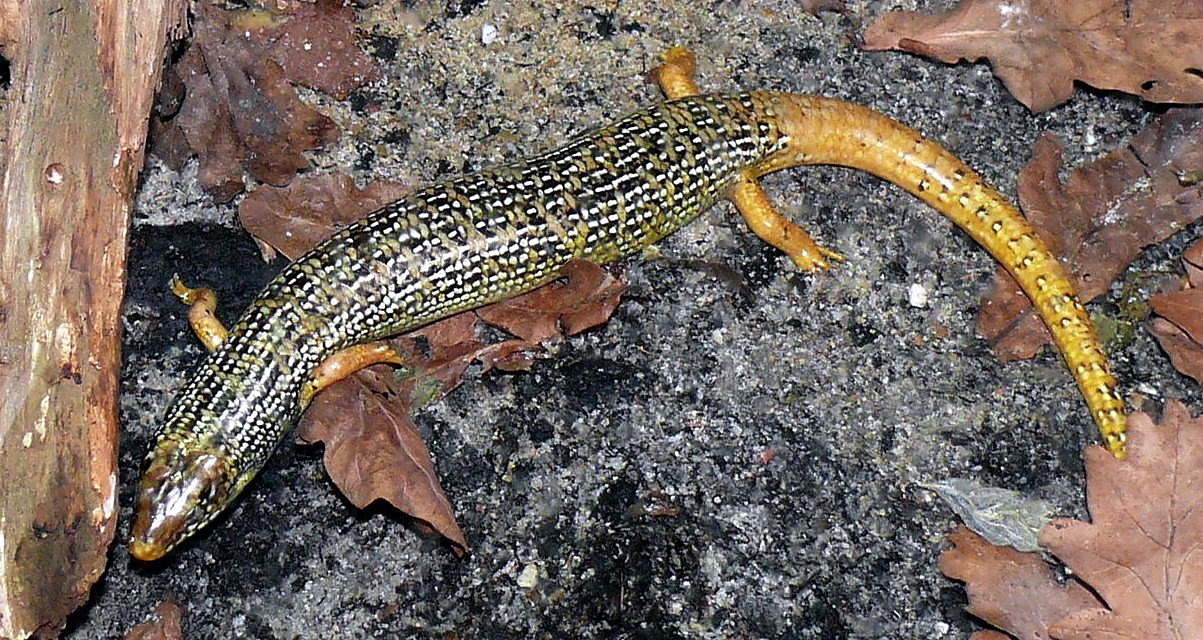
Skinks · Difficulty: Intermediate
Key facts and care guidance for Yellow-bellied skink (Eurylepis taeniolata) (origin: Jordan, western and north-western Saudi Arabia, Iraq, north-eastern Iran, Afghanistan, Pakistan, northern and north-western India (Kashmir, Punjab among others), southern Turkmenistan; the type locality "Alpine Punjab" → partly montane and seasonally cold). Adult size around approx. 18–25 cm total length (uncertain, not documented by two or more sources). Life expectancy uncertain, by analogy with the Eumeces group ~10 years (not documented). The values below are carefully researched guidance.
Short answers
Yellow-bellied skink: How big does the enclosure need to be?
Approx. 80×40×40 cm for one animal (inferred; floor area matters more than height).
Yellow-bellied skink: What temperature does it need?
Daytime approx. 26–30 °C (inferred by analogy with Eumeces, uncertain), basking spot approx. 38–42 °C (inferred), at night approx. 18–20 °C (inferred).
Yellow-bellied skink: Does it need UVB lighting?
UVB: UVB recommended (an open-living semi-desert species, roughly Ferguson zone 2–3, UV index 2–3; inferred, uncertain).
Yellow-bellied skink: How long do they live?
Life expectancy: uncertain, by analogy with the Eumeces group ~10 years (not documented).
Yellow-bellied skink: Is it suitable for beginners?
Rather not – it is considered an intermediate species (difficulty: Intermediate).
Climate
- Daytime temperature
- approx. 26–30 °C (inferred by analogy with Eumeces, uncertain)
- Night temperature
- approx. 18–20 °C (inferred)
- Basking spot
- approx. 38–42 °C (inferred)
- Humidity
- approx. 30–50 % with a humid corner or hide (inferred)
- UVB
- UVB recommended (an open-living semi-desert species, roughly Ferguson zone 2–3, UV index 2–3; inferred, uncertain)
Enclosure
- Minimum size
- approx. 80×40×40 cm for one animal (inferred; floor area matters more than height)
- Substrate
- A sand-loam mix they can dig in, 10–15 cm deep (a burrowing mole-skink build: elongated, with short legs)
Feeding
- Food
- Insects (crickets, house crickets, roaches), occasionally earthworms or superworms (inferred)
- Feeding interval
- adults 2–3×/week (inferred)
Key facts
- Adult size
- approx. 18–25 cm total length (uncertain, not documented by two or more sources)
- Life expectancy
- uncertain, by analogy with the Eumeces group ~10 years (not documented)
- Origin
- Jordan, western and north-western Saudi Arabia, Iraq, north-eastern Iran, Afghanistan, Pakistan, northern and north-western India (Kashmir, Punjab among others), southern Turkmenistan; the type locality "Alpine Punjab" → partly montane and seasonally cold
- Protection status
- Not listed under CITES; IUCN "Least Concern"; no special protection or registration duty in Germany
- Brumation
- Given its northern and montane origin a winter rest is probably needed (by analogy ~6–8 weeks at 10–12 °C); plausible, but not documented for this species (uncertain)
- Cohabitation
- Solitary housing, conservatively recommended. There is no species-specific evidence for pair or group tolerance; never keep males together.
Notes
IMPORTANT: barely any public husbandry literature; the climate, equipment and size figures are analogy conclusions from the closely related Eumeces group (especially Eumeces schneiderii) and are NOT documented species data – consult the specialist literature or experienced keepers before acquiring one. Only the taxonomy, distribution, egg-laying (oviparous) and IUCN status are documented.
Do you keep this species?
Add your animal to Reptoria – Reptoria reminds you about feeding and shedding. Add your animal for free →
Look for Yellow-bellied skink (Eurylepis taeniolata) in the marketplace →
Related species
- African five-lined skink (Trachylepis quinquetaeniata) – Intermediate
- Algerian skink (Eumeces algeriensis) – Intermediate
- Berber skink (Eumeces schneideri) – Beginner to intermediate
- Berdmore's water skink (Tropidophorus berdmorei) – Beginner with some knowledge
- Mountain skink (Plestiodon callicephalus) – Beginner with some knowledge
- Pacific blue-tailed skink (Emoia caeruleocauda) – Beginner with some knowledge
- Blue-tongued water skink (Tropidophorus cocincinensis) – Beginner with some knowledge
- Bouton's snake-eyed skink (Cryptoblepharus boutonii) – Beginner with some knowledge
What you need to start
To keep Yellow-bellied skink (Eurylepis taeniolata) you typically need: a suitable enclosure (approx. 80×40×40 cm for one animal (inferred; floor area matters more than height)), substrate (A sand-loam mix they can dig in, 10–15 cm deep (a burrowing mole-skink build: elongated, with short legs)), a heat source with a thermostat, UVB lighting, thermometer and hygrometer, a water dish and hides. You will find equipment in the Reptoria marketplace.
The complete, interactive care database is in the Reptoria app.
Last updated: 9 October 2026 · Editor: Reptoria editorial team · Sources include: https://en.wikipedia.org/wiki/Eurylepis_taeniolata, https://www.gbif.org/species/5225513
All values are non-binding guidance and do not replace expert advice. Research thoroughly from several sources before acquiring and keeping an animal, and observe the applicable law (species and animal protection in particular).