Yellow-spotted night lizard (Lepidophyma flavimaculatum)
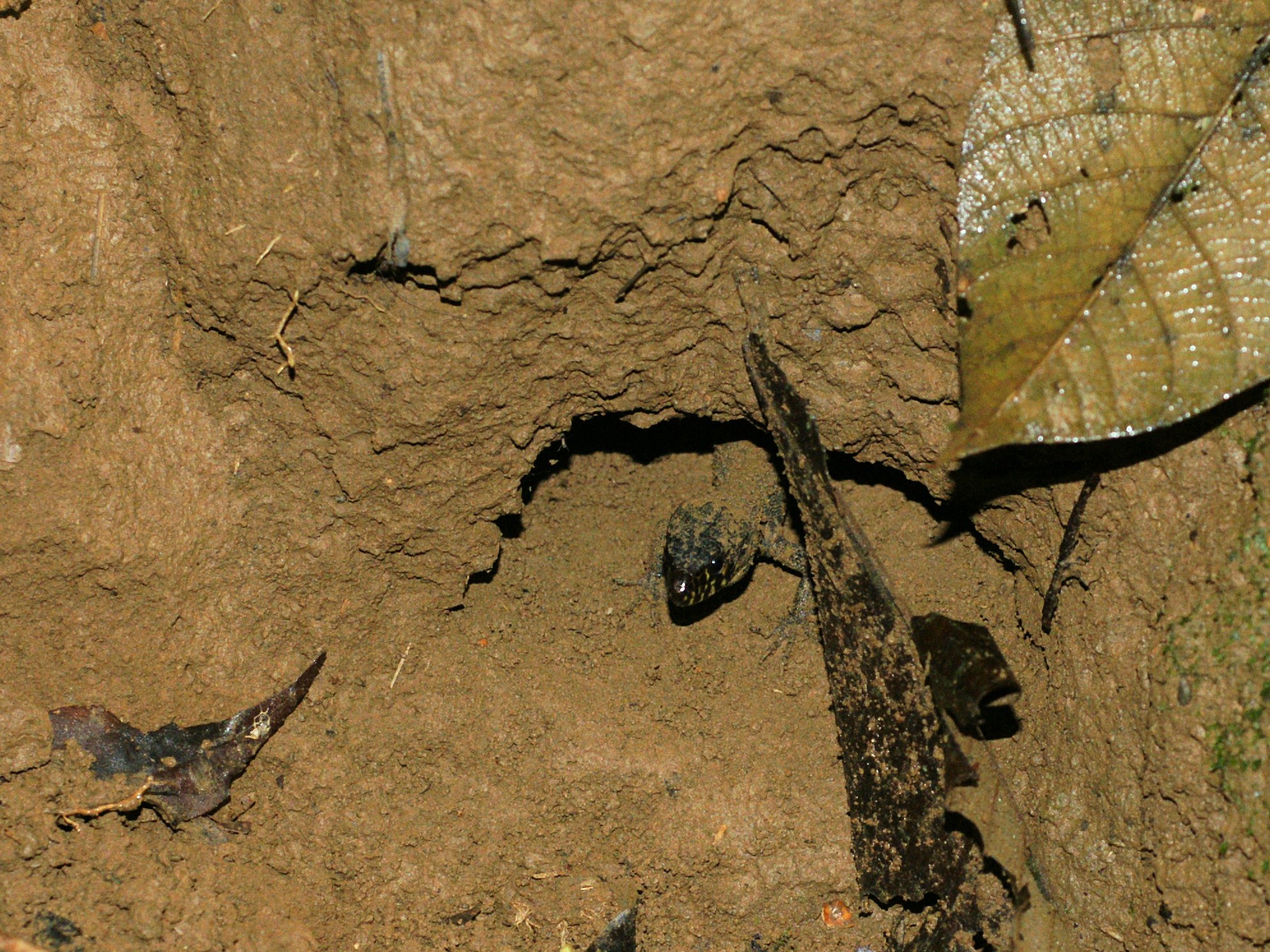
Lizards · Difficulty: Intermediate
Key facts and care guidance for Yellow-spotted night lizard (Lepidophyma flavimaculatum) (origin: Southern Mexico to Panama). Adult size around head and body 13–15 cm, around 25 cm with the tail. Life expectancy over 10 years. The values below are carefully researched guidance.
Short answers
Yellow-spotted night lizard: How big does the enclosure need to be?
80×40×40 cm for one or two animals.
Yellow-spotted night lizard: What temperature does it need?
Daytime 22–26 °C, basking spot No basking spot — at most a warm corner up to 28 °C, at night 19–21 °C.
Yellow-spotted night lizard: Does it need UVB lighting?
UVB: Not essential (crepuscular and nocturnal), weak UVB is possible.
Yellow-spotted night lizard: How long do they live?
Life expectancy: over 10 years.
Yellow-spotted night lizard: Is it suitable for beginners?
Rather not – it is considered an intermediate species (difficulty: Intermediate).
Climate
- Daytime temperature
- 22–26 °C
- Night temperature
- 19–21 °C
- Basking spot
- No basking spot — at most a warm corner up to 28 °C
- Humidity
- 70–90 %
- UVB
- Not essential (crepuscular and nocturnal), weak UVB is possible
Enclosure
- Minimum size
- 80×40×40 cm for one or two animals
- Substrate
- A deep layer of leaf litter and humus, cork bark, pieces of bark and flat hides on the floor
Feeding
- Food
- Crickets, roaches, house crickets and other small insects, dusted regularly with calcium and vitamins
- Feeding interval
- adults 2–3×/week
Key facts
- Adult size
- head and body 13–15 cm, around 25 cm with the tail
- Life expectancy
- over 10 years
- Origin
- Southern Mexico to Panama
- Protection status
- No special protected status
- Brumation
- No winter rest
- Cohabitation
- A group of several females is possible if enough hides are available. Males do not tolerate each other and fight over territory and the best hides until one is injured or permanently cornered. Females generally get along but need their own hides; feed separately if sizes differ.
Notes
A ground dweller and crepuscular: floor area counts, not height, and the animals barely show themselves by day. Anyone looking for an animal to see will be disappointed. A shallow water section and a permanently damp ground layer matter more than the lighting.
Do you keep this species?
Add your animal to Reptoria – Reptoria reminds you about feeding and shedding. Add your animal for free →
Look for Yellow-spotted night lizard (Lepidophyma flavimaculatum) in the marketplace →
Related species
- Granite night lizard (Xantusia henshawi) – Intermediate
- Knob-scaled lizard (Xenosaurus grandis) – Experts
- Chinese crocodile lizard (Shinisaurus crocodilurus) – Experts
- Large psammodromus (Psammodromus algirus) – Intermediate
- Pamphylian green lizard (Lacerta pamphylica) – Intermediate
- Madrean alligator lizard (Elgaria kingii) – Intermediate
- Artvin lizard (Darevskia derjugini) – Intermediate
- Asian glass lizard (Dopasia gracilis) – Intermediate
What you need to start
To keep Yellow-spotted night lizard (Lepidophyma flavimaculatum) you typically need: a suitable enclosure (80×40×40 cm for one or two animals), substrate (A deep layer of leaf litter and humus, cork bark, pieces of bark and flat hides on the floor), a heat source with a thermostat, UVB lighting, thermometer and hygrometer, a water dish and hides. You will find equipment in the Reptoria marketplace.
The complete, interactive care database is in the Reptoria app.
Last updated: 30 October 2026 · Editor: Reptoria editorial team · Sources include: https://de.wikipedia.org/wiki/Krokodil-Nachtechse, https://en.wikipedia.org/wiki/Lepidophyma
All values are non-binding guidance and do not replace expert advice. Research thoroughly from several sources before acquiring and keeping an animal, and observe the applicable law (species and animal protection in particular).