Yellow-throated garter snake (Thamnophis pulchrilatus)
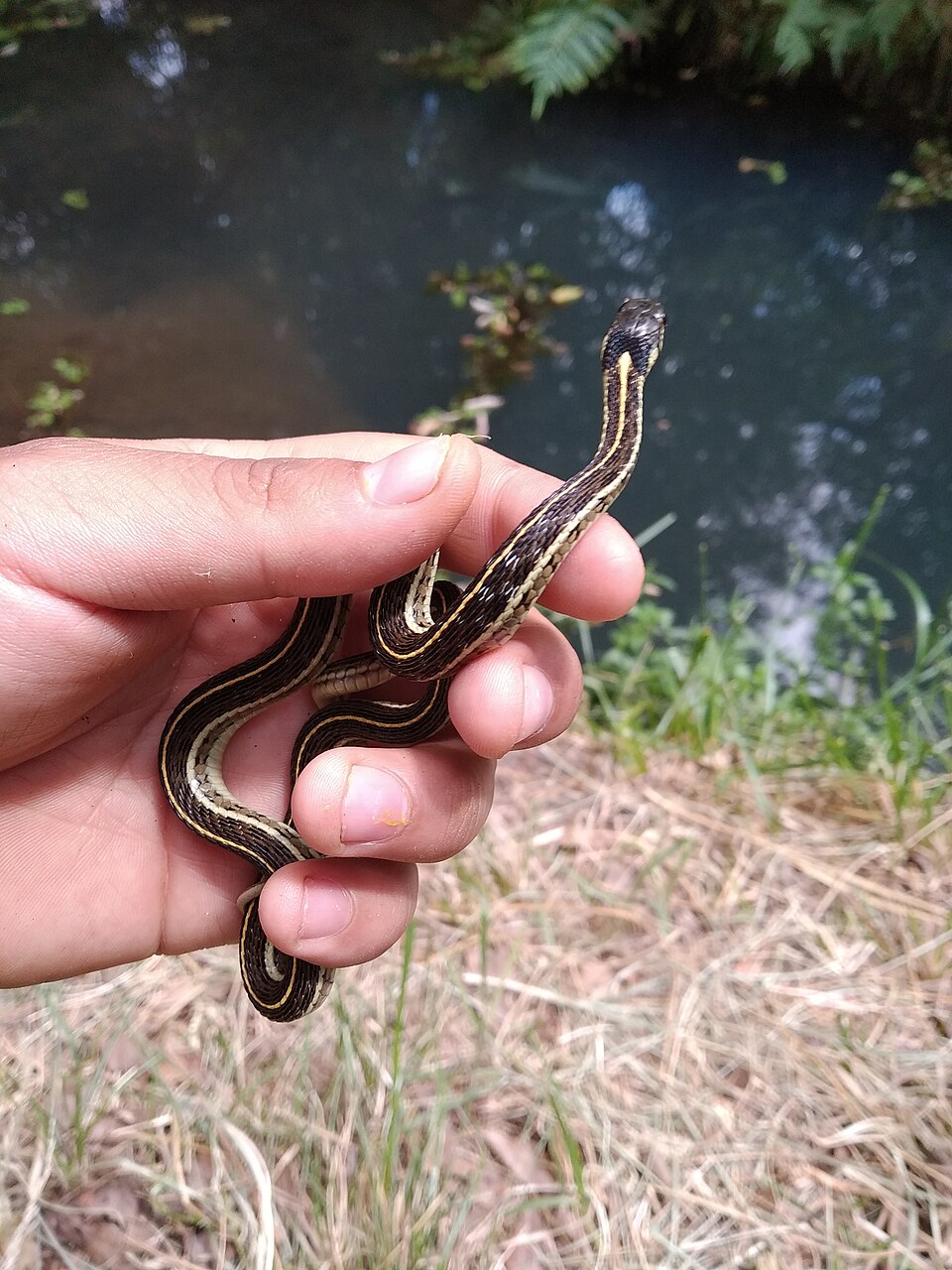
Snakes · Difficulty: Expert
Key facts and care guidance for Yellow-throated garter snake (Thamnophis pulchrilatus) (origin: Endemic to Mexico, scattered populations from Durango and Nuevo León to Oaxaca, about 1370–3050 m). Adult size around 45–75 cm (maximum 77 cm). Life expectancy 8–10 years (estimate based on the genus). The values below are carefully researched guidance.
Short answers
Yellow-throated garter snake: How big does the enclosure need to be?
From 95×55×40 cm (minimum size per the 1997 expert report, garter snakes; clearly more floor space for a pair).
Yellow-throated garter snake: What temperature does it need?
Daytime 20–27 °C, basking spot Basking spot 30–32 °C, at night 12–18 °C.
Yellow-throated garter snake: Does it need UVB lighting?
UVB: Recommended (UVB tube above the basking spot, as for all diurnal garter snakes).
Yellow-throated garter snake: How long do they live?
Life expectancy: 8–10 years (estimate based on the genus).
Yellow-throated garter snake: Is it suitable for beginners?
No – better suited to experienced keepers (difficulty: Expert).
Climate
- Daytime temperature
- 20–27 °C
- Night temperature
- 12–18 °C
- Basking spot
- Basking spot 30–32 °C
- Humidity
- 50–70 % (one moist corner, well ventilated)
- UVB
- Recommended (UVB tube above the basking spot, as for all diurnal garter snakes)
Enclosure
- Minimum size
- from 95×55×40 cm (minimum size per the 1997 expert report, garter snakes; clearly more floor space for a pair)
- Substrate
- Coco humus or soil with leaf litter, cool side slightly moist, bark and rocks as hides, a few climbing branches, a large shallow water basin
Feeding
- Food
- Low-thiaminase fish (with vitamin B1), earthworms, thawed pinkie mice; barely studied in the wild – tadpoles, tree frogs and a salamander are documented, fish, worms and lizards are also suspected
- Feeding interval
- adults 2×/week, juveniles more often
Key facts
- Adult size
- 45–75 cm (maximum 77 cm)
- Life expectancy
- 8–10 years (estimate based on the genus)
- Origin
- Endemic to Mexico, scattered populations from Durango and Nuevo León to Oaxaca, about 1370–3050 m
- Protection status
- Not listed under CITES
- Brumation
- Short rest period of 6–8 weeks at 12–16 °C with a few hours of basking per day (mild highland overwintering; colder variants with nights around 5 °C are used by specialists but are riskier)
- Cohabitation
- In pairs or singly, with roughly equal-sized animals; experience on compatibility is lacking. Always feed singly, ideally in separate boxes.
Notes
Hardly any captive experience; the values are derived from the habitat and from close relatives. Climbs occasionally – the enclosure needs a secure lid and some branches.
Do you keep this species?
Add your animal to Reptoria – Reptoria reminds you about feeding and shedding. Add your animal for free →
Look for Yellow-throated garter snake (Thamnophis pulchrilatus) in the marketplace →
Related species
- Ahumada's alpine garter snake (Thamnophis ahumadai) – Expert
- Bogert's garter snake (Thamnophis bogerti) – Expert
- Butler's garter snake (Thamnophis butleri) – Intermediate
- Cope's mountain meadow snake (Thamnophis copei) – Expert
- Fox's mountain meadow snake (Thamnophis foxi) – Expert
- Common garter snake (Thamnophis sirtalis) – Beginner
- Godman's garter snake (Thamnophis godmani) – Expert
- Goldenhead garter snake (Thamnophis chrysocephalus) – Expert
What you need to start
To keep Yellow-throated garter snake (Thamnophis pulchrilatus) you typically need: a suitable enclosure (from 95×55×40 cm (minimum size per the 1997 expert report, garter snakes; clearly more floor space for a pair)), substrate (Coco humus or soil with leaf litter, cool side slightly moist, bark and rocks as hides, a few climbing branches, a large shallow water basin), a heat source with a thermostat, UVB lighting, thermometer and hygrometer, a water dish and hides. You will find equipment in the Reptoria marketplace.
The complete, interactive care database is in the Reptoria app.
Last updated: 27 October 2026 · Editor: Reptoria editorial team · Sources include: González-Hernández et al. 2016, Acta Zool. Mex. 32(3) – Gesamtlänge 772 mm – https://www.redalyc.org/pdf/575/57549165018.pdf, ReptiFiles Garter Snake Care Sheet – Gruppenhaltung, getrennt füttern – https://reptifiles.com/garter-snake-care-sheet, González-Hernández et al. 2016, Acta Zool. Mex. 32(3) – Kaulquappen und adulte Dryophytes eximius/plicatus, vermutete Beute – https://www.redalyc.org/pdf/575/57549165018.pdf, ReptiFiles Garter Snake Care Sheet – Ersatzfutter der Gattung – https://reptifiles.com/garter-snake-care-sheet, García-Vázquez et al. 2012, Acta Zool. Mex. 28(1) – Weibchen 494 mm, Geburt 30.06.2007, 7 Jungtiere (6 lebend), 187–207 mm, 2,3 g – https://www.redalyc.org/pdf/575/57523630015.pdf
All values are non-binding guidance and do not replace expert advice. Research thoroughly from several sources before acquiring and keeping an animal, and observe the applicable law (species and animal protection in particular).