African spurred tortoise (Centrochelys sulcata)
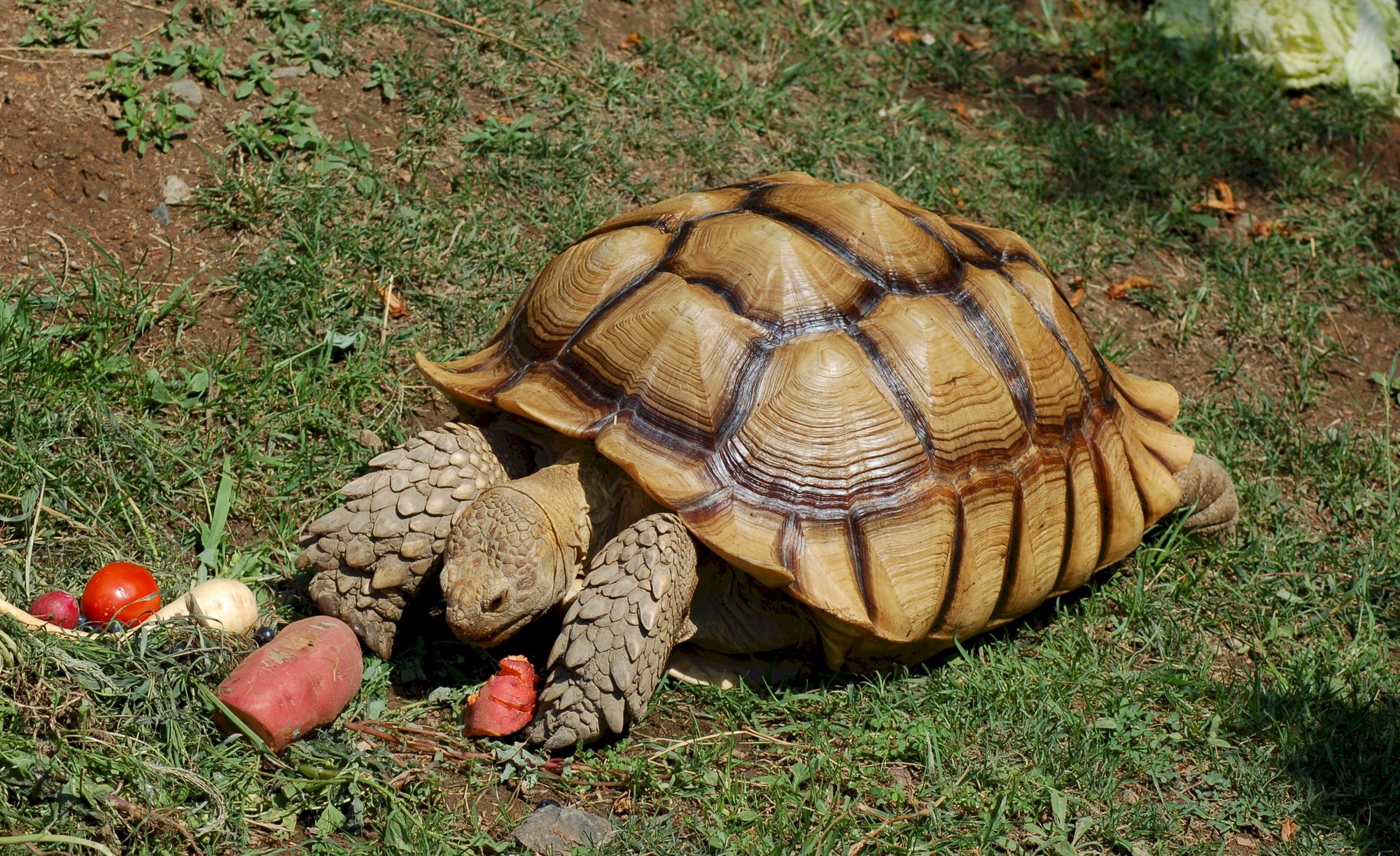
Turtles & tortoises · Difficulty: Intermediate to expert
Key facts and care guidance for African spurred tortoise (Centrochelys sulcata) (origin: The African Sahel (semi-desert and dry savannah)). Adult size around 60–80 cm, individual males up to 86 cm; 40–100 kg (the third largest tortoise). Life expectancy 50–80+ years. The values below are carefully researched guidance.
Short answers
African spurred tortoise: How big does the enclosure need to be?
Adults: a heated outdoor/greenhouse enclosure, with at least 30 m² of open space, better from 100 m², plus a frost-proof heated house; juveniles in an indoor terrarium from 80 × 40 × 50 cm.
African spurred tortoise: What temperature does it need?
Daytime 28–35 °C, basking spot 40–45 °C, at night 18–22 °C.
African spurred tortoise: Does it need UVB lighting?
UVB: Essential (desert and steppe-grade UVB).
African spurred tortoise: How long do they live?
Life expectancy: 50–80+ years.
African spurred tortoise: Is it suitable for beginners?
No – better suited to experienced keepers (difficulty: Intermediate to expert).
Climate
- Daytime temperature
- 28–35 °C
- Night temperature
- 18–22 °C
- Basking spot
- 40–45 °C
- Humidity
- 40–60 % by day, higher in the hide and at night; juveniles more humid (to prevent pyramiding)
- UVB
- Essential (desert and steppe-grade UVB)
Enclosure
- Minimum size
- Adults: a heated outdoor/greenhouse enclosure, with at least 30 m² of open space, better from 100 m², plus a frost-proof heated house; juveniles in an indoor terrarium from 80 × 40 × 50 cm
- Substrate
- A sand, soil and loam mix, deep and diggable
Feeding
- Food
- Herbivorous: grasses, hay, fibre-rich wild herbs; NO fruit or protein
- Feeding interval
- Plant food daily, high in fibre
Key facts
- Adult size
- 60–80 cm, individual males up to 86 cm; 40–100 kg (the third largest tortoise)
- Life expectancy
- 50–80+ years
- Origin
- The African Sahel (semi-desert and dry savannah)
- Protection status
- CITES Appendix II / EU Annex B – registration required
- Brumation
- None
- Cohabitation
- Keeping them singly is the safest option and no disadvantage for the animal; the space requirement is enormous anyway. If you keep several, put one male with several females and plan a way to separate them. The downside: the male harasses the females, and under constant courtship a female visibly loses weight. Two males harass and ram each other and do not belong together.
Notes
It grows huge and digs burrows metres long – keepable only with a lifelong large, escape-proof enclosure. A pure grass eater.
Do you keep this species?
Add your animal to Reptoria – Reptoria reminds you about feeding and shedding. Add your animal for free →
Look for African spurred tortoise (Centrochelys sulcata) in the marketplace →
Related species
- Ploughshare tortoise (Astrochelys yniphora) – Expert
- Speckled padloper (Homopus areolatus) – Expert
- Serrated tent tortoise (Psammobates oculifer) – Expert
- Bell's hinge-back tortoise (Kinixys belliana) – Intermediate
- Speckled padloper tortoise (Chersobius signatus) – Expert
- Angulate tortoise (Chersina angulata) – Intermediate
- Home's hinge-back tortoise (Kinixys homeana) – Expert
- Natal hinge-back tortoise (Kinixys natalensis) – Intermediate
What you need to start
To keep African spurred tortoise (Centrochelys sulcata) you typically need: a suitable enclosure (Adults: a heated outdoor/greenhouse enclosure, with at least 30 m² of open space, better from 100 m², plus a frost-proof heated house; juveniles in an indoor terrarium from 80 × 40 × 50 cm), substrate (A sand, soil and loam mix, deep and diggable), a heat source with a thermostat, UVB lighting, thermometer and hygrometer, a water dish and hides. You will find equipment in the Reptoria marketplace.
The complete, interactive care database is in the Reptoria app.
Last updated: 5 November 2026 · Editor: Reptoria editorial team · Sources include: Wikipedia DE, megazoo-nord.de, reptifiles.com, schildkroeten-schutz.de, Wikipedia: African spurred tortoise – 30–31 °C (86–88 °F), 90–120 Tage – https://en.wikipedia.org/wiki/African_spurred_tortoise
All values are non-binding guidance and do not replace expert advice. Research thoroughly from several sources before acquiring and keeping an animal, and observe the applicable law (species and animal protection in particular).