Alligator snapping turtle (Macrochelys temminckii)
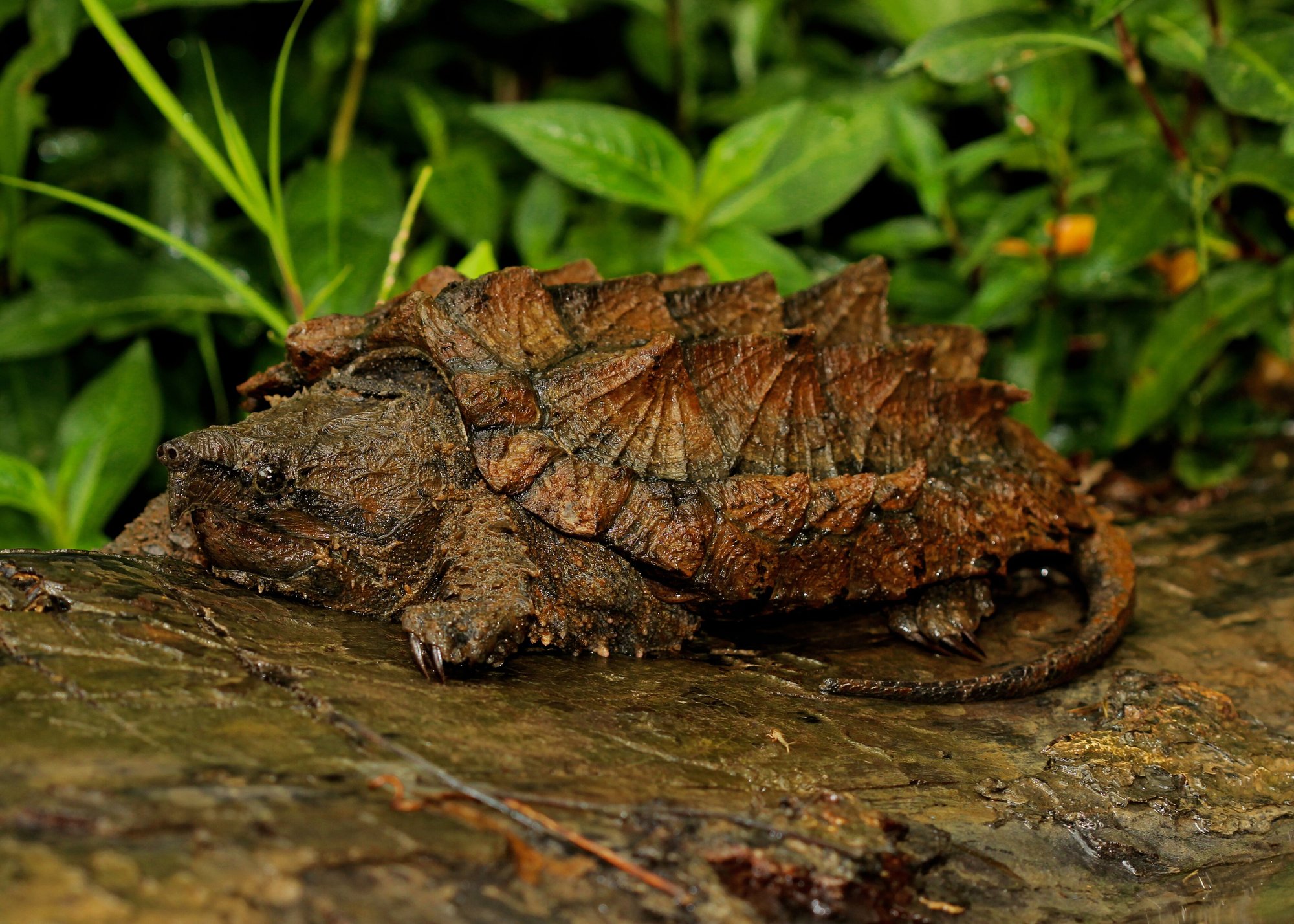
Turtles & tortoises · Difficulty: Expert
Key facts and care guidance for Alligator snapping turtle (Macrochelys temminckii) (origin: The south-eastern USA). Adult size around 40–80 cm carapace length, usually up to 80 kg (individual animals over 100 kg). Life expectancy 70–100 years. The values below are carefully researched guidance.
Short answers
Alligator snapping turtle: How big does the enclosure need to be?
300×120 cm, for adults only a pond or a zoo.
Alligator snapping turtle: What temperature does it need?
Daytime 22–27 °C, basking spot No basking spot needed, at night 18–22 °C.
Alligator snapping turtle: Does it need UVB lighting?
UVB: Essential (UVB 6 %).
Alligator snapping turtle: How long do they live?
Life expectancy: 70–100 years.
Alligator snapping turtle: Is it suitable for beginners?
No – better suited to experienced keepers (difficulty: Expert).
Climate
- Daytime temperature
- 22–27 °C
- Night temperature
- 18–22 °C
- Basking spot
- No basking spot needed
- Humidity
- Aquatic
- UVB
- Essential (UVB 6 %)
Enclosure
- Minimum size
- 300×120 cm, for adults only a pond or a zoo
- Substrate
- Water 50–80 cm deep, sand, roots
Feeding
- Food
- Fish, carrion
- Feeding interval
- 1–2×/week
Key facts
- Adult size
- 40–80 cm carapace length, usually up to 80 kg (individual animals over 100 kg)
- Life expectancy
- 70–100 years
- Origin
- The south-eastern USA
- Protection status
- CITES II; A DANGEROUS ANIMAL – keeping it is prohibited or requires a permit in several German states
- Brumation
- A cooler spell in winter
- Cohabitation
- Keep them singly. This species bites hard and uses that bite on its own kind too — bitten-off toes and tail tips, injured necks and damaged shell margins are the rule rather than the exception when they are kept together. With softshell turtles there is also the sensitive, leathery shell skin: even superficial scratches infect easily. For breeding, put them together only briefly and under supervision.
Notes
North America's largest freshwater turtle, with a worm-shaped lure on its tongue. It reaches sizes that practically rule out private keeping – realistically only for zoos. Bite injuries are severe.
Do you keep this species?
Add your animal to Reptoria – Reptoria reminds you about feeding and shedding. Add your animal for free →
Look for Alligator snapping turtle (Macrochelys temminckii) in the marketplace →
Related species
- Eastern box turtle (Terrapene carolina) – Intermediate
- Flattened musk turtle (Sternotherus depressus) – Intermediate
- Spotted box turtle (Terrapene nelsoni) – Expert
- Loggerhead musk turtle (Sternotherus minor) – Intermediate
- Rough-footed mud turtle (Kinosternon hirtipes) – Intermediate
- Mississippi mud turtle (Kinosternon subrubrum hippocrepis) – Intermediate
- Ornate box turtle (Terrapene ornata) – Intermediate
- Razorback musk turtle (Sternotherus carinatus) – Beginner
What you need to start
To keep Alligator snapping turtle (Macrochelys temminckii) you typically need: a suitable enclosure (300×120 cm, for adults only a pond or a zoo), substrate (Water 50–80 cm deep, sand, roots), a heat source with a thermostat, UVB lighting, thermometer and hygrometer, a water dish and hides. You will find equipment in the Reptoria marketplace.
The complete, interactive care database is in the Reptoria app.
Last updated: 5 November 2026 · Editor: Reptoria editorial team · Sources include: https://de.wikipedia.org/wiki/Geierschildkr%C3%B6te, https://reptile-database.reptarium.cz/species?genus=Macrochelys&species=temminckii, en.wikipedia „Alligator snapping turtle“ (Panzer 35–80,8 cm, meist bis 80 kg, 113 kg Shedd Aquarium); CNAH Kansas Macrochelys temminckii (max. 800 mm Panzer, Powell et al. 2016)
All values are non-binding guidance and do not replace expert advice. Research thoroughly from several sources before acquiring and keeping an animal, and observe the applicable law (species and animal protection in particular).