Bibron's bevel-nosed boa (Candoia bibroni)
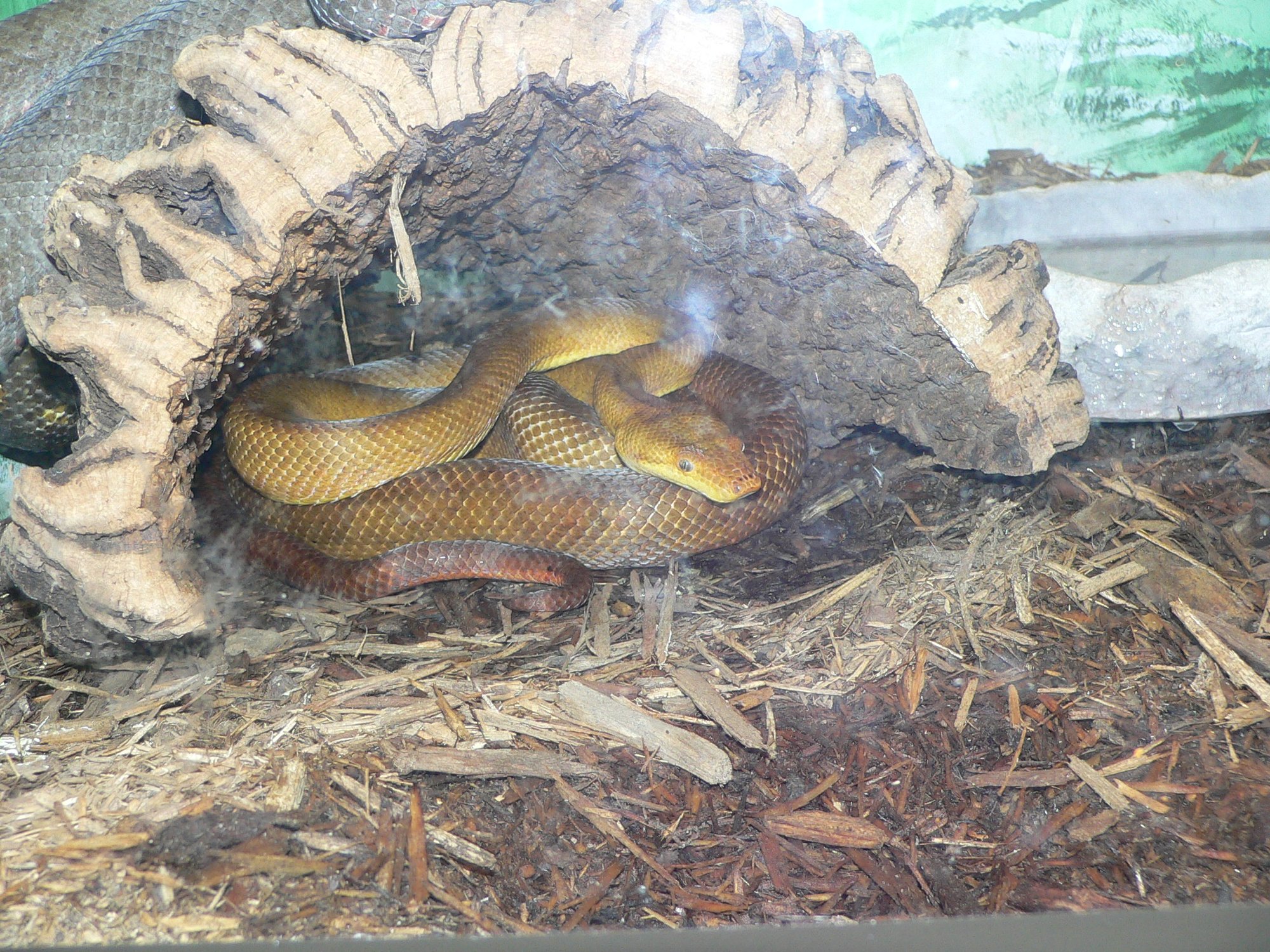
Snakes · Difficulty: Intermediate
Key facts and care guidance for Bibron's bevel-nosed boa (Candoia bibroni) (origin: Fiji, the Solomon Islands, Melanesia (the Pacific islands)). Adult size around males ~90 cm, females ~150 cm (the largest Candoia species). Life expectancy approx. 15–20 years. The values below are carefully researched guidance.
Short answers
Bibron's bevel-nosed boa: How big does the enclosure need to be?
From 150×75×115 cm (minimum size per the 1997 expert report, Pacific boas over 1.5 m); semi-arboreal, height matters.
Bibron's bevel-nosed boa: What temperature does it need?
Daytime 26–30 °C, basking spot 30–32 °C, at night 22–24 °C.
Bibron's bevel-nosed boa: Does it need UVB lighting?
UVB: UVB not essential (nocturnal/crepuscular), weak UVB (Ferguson zone 1) is tolerated.
Bibron's bevel-nosed boa: How long do they live?
Life expectancy: approx. 15–20 years.
Bibron's bevel-nosed boa: Is it suitable for beginners?
Rather not – it is considered an intermediate species (difficulty: Intermediate).
Climate
- Daytime temperature
- 26–30 °C
- Night temperature
- 22–24 °C
- Basking spot
- 30–32 °C
- Humidity
- 60–80 %
- UVB
- UVB not essential (nocturnal/crepuscular), weak UVB (Ferguson zone 1) is tolerated
Enclosure
- Minimum size
- from 150×75×115 cm (minimum size per the 1997 expert report, Pacific boas over 1.5 m); semi-arboreal, height matters
- Substrate
- Coco humus or a peat substitute, moisture-retaining; a large water dish for bathing
Feeding
- Food
- Rodents (mice or chicks); juveniles often prefer frogs, lizards or anoles and need switching to rodents
- Feeding interval
- adults every 1–2 weeks, juveniles weekly
Key facts
- Adult size
- males ~90 cm, females ~150 cm (the largest Candoia species)
- Life expectancy
- approx. 15–20 years
- Origin
- Fiji, the Solomon Islands, Melanesia (the Pacific islands)
- Protection status
- Protected: CITES Appendix II, EU Annex B - proof of origin required at purchase and resale. Predominantly wild-caught animals in the trade - make sure of legal proof of origin.
- Brumation
- None (tropical); at most a slight seasonal drop to stimulate breeding
- Cohabitation
- Keep them singly – a territorial, solitary boa; put them together only briefly for supervised breeding, and never keep males together
Notes
Semi-arboreal, and more arboreal than the other Candoia. Common mistakes: wild-caught animals with parasites and import stress, and food refusal (many take only lizards and frogs at first). A large water dish matters (it bathes and defecates in the water). The taxonomy and terrarium size are partly uncertain vendor figures – treat them as a guide.
Do you keep this species?
Add your animal to Reptoria – Reptoria reminds you about feeding and shedding. Add your animal for free →
Look for Bibron's bevel-nosed boa (Candoia bibroni) in the marketplace →
Related species
- New Guinea ground boa (Candoia aspera) – Intermediate
- Solomon Islands ground boa (Candoia paulsoni) – Intermediate
- Viper boa (Candoia carinata) – Intermediate
- Amazon tree boa (Corallus batesii) – Expert
- Argentine boa (Boa constrictor occidentalis) – Intermediate
- True red-tailed boa – Guyana (Boa constrictor constrictor) – Intermediate
- True red-tailed boa – Peru (Boa constrictor constrictor) – Intermediate
- True red-tailed boa – Suriname (Boa constrictor constrictor) – Intermediate
What you need to start
To keep Bibron's bevel-nosed boa (Candoia bibroni) you typically need: a suitable enclosure (from 150×75×115 cm (minimum size per the 1997 expert report, Pacific boas over 1.5 m); semi-arboreal, height matters), substrate (Coco humus or a peat substitute, moisture-retaining; a large water dish for bathing), a heat source with a thermostat, UVB lighting, thermometer and hygrometer, a water dish and hides. You will find equipment in the Reptoria marketplace.
The complete, interactive care database is in the Reptoria app.
Last updated: 30 October 2026 · Editor: Reptoria editorial team · Sources include: http://www.kingsnake.com/candoia/husbandry.html, https://de.wikipedia.org/wiki/Pazifik-Baumboa, https://reptile-database.reptarium.cz/species?genus=Candoia&species=bibroni
All values are non-binding guidance and do not replace expert advice. Research thoroughly from several sources before acquiring and keeping an animal, and observe the applicable law (species and animal protection in particular).