Solomon Islands ground boa (Candoia paulsoni)
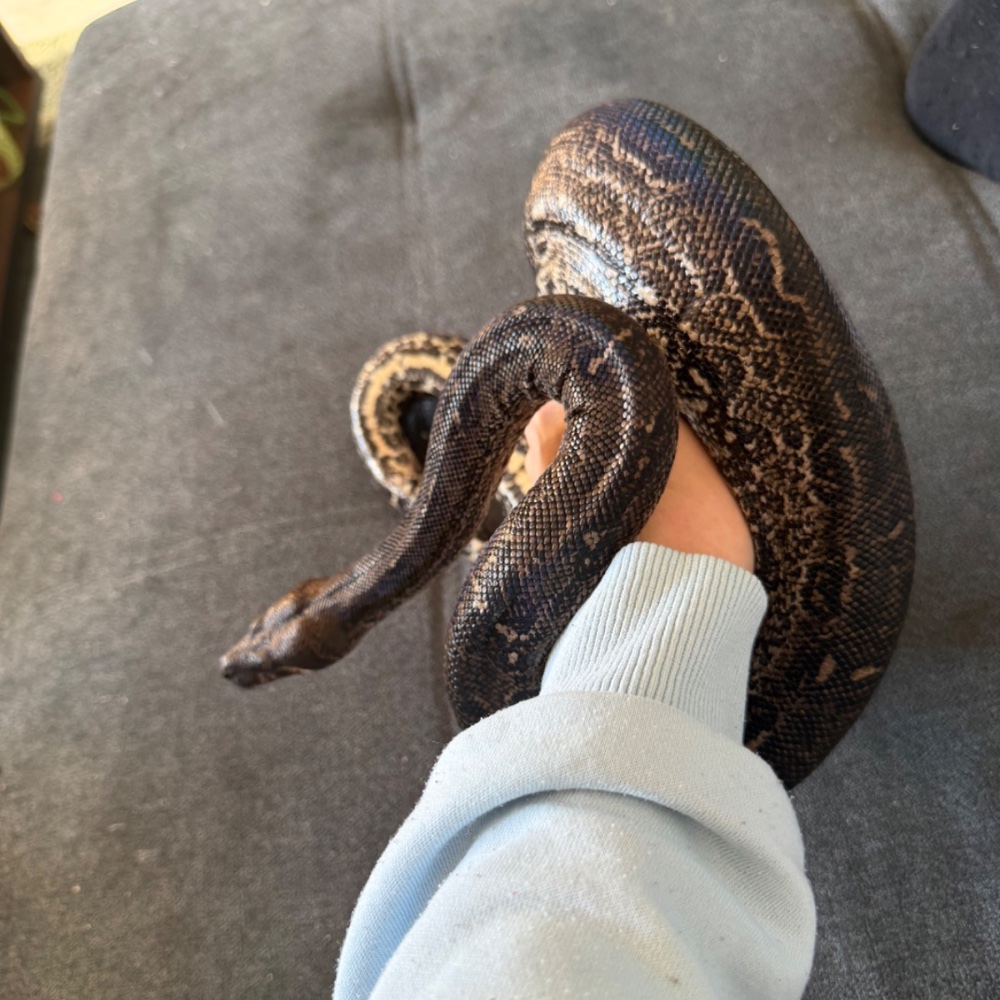
Snakes · Difficulty: Intermediate
Key facts and care guidance for Solomon Islands ground boa (Candoia paulsoni) (origin: The Solomon Islands, the Bismarck Archipelago). Adult size around 90–130 cm (females considerably larger). Life expectancy 15–20 years. The values below are carefully researched guidance.
Short answers
Solomon Islands ground boa: How big does the enclosure need to be?
From 130×65×100 cm (minimum size according to the 1997 expert report, Pacific boas).
Solomon Islands ground boa: What temperature does it need?
Daytime 26–30 °C, basking spot 31–32 °C, at night 22–24 °C.
Solomon Islands ground boa: Does it need UVB lighting?
UVB: Not essential.
Solomon Islands ground boa: How long do they live?
Life expectancy: 15–20 years.
Solomon Islands ground boa: Is it suitable for beginners?
Rather not – it is considered an intermediate species (difficulty: Intermediate).
Climate
- Daytime temperature
- 26–30 °C
- Night temperature
- 22–24 °C
- Basking spot
- 31–32 °C
- Humidity
- 70–85 %
- UVB
- Not essential
Enclosure
- Minimum size
- from 130×65×100 cm (minimum size according to the 1997 expert report, Pacific boas)
- Substrate
- Coco humus or bark mulch, hides on the floor, low climbing branches
Feeding
- Food
- Frozen-thawed mice
- Feeding interval
- adults every 14–21 days
Key facts
- Adult size
- 90–130 cm (females considerably larger)
- Life expectancy
- 15–20 years
- Origin
- The Solomon Islands, the Bismarck Archipelago
- Protection status
- CITES II
- Brumation
- None
- Cohabitation
- Keep them singly. Snakes are solitary and do not seek company — a shared hide is competition for the best spot, not social behaviour. The concrete reason is the feeding accident: if two animals grab the same food item, one can swallow the other along with it. On top of that, once they are kept together you can no longer tell which animal has eaten and which is losing weight. For breeding, put them together under supervision and separate them again afterwards.
Notes
Crepuscular and nocturnal, and rather sluggish. It runs to obesity if fed too often. Wild-caught animals are often heavily parasitised – prefer captive-bred ones.
Do you keep this species?
Add your animal to Reptoria – Reptoria reminds you about feeding and shedding. Add your animal for free →
Look for Solomon Islands ground boa (Candoia paulsoni) in the marketplace →
Related species
- Bibron's bevel-nosed boa (Candoia bibroni) – Intermediate
- New Guinea ground boa (Candoia aspera) – Intermediate
- Viper boa (Candoia carinata) – Intermediate
- Amazon tree boa (Corallus batesii) – Expert
- Argentine boa (Boa constrictor occidentalis) – Intermediate
- True red-tailed boa – Guyana (Boa constrictor constrictor) – Intermediate
- True red-tailed boa – Peru (Boa constrictor constrictor) – Intermediate
- True red-tailed boa – Suriname (Boa constrictor constrictor) – Intermediate
What you need to start
To keep Solomon Islands ground boa (Candoia paulsoni) you typically need: a suitable enclosure (from 130×65×100 cm (minimum size according to the 1997 expert report, Pacific boas)), substrate (Coco humus or bark mulch, hides on the floor, low climbing branches), a heat source with a thermostat, UVB lighting, thermometer and hygrometer, a water dish and hides. You will find equipment in the Reptoria marketplace.
The complete, interactive care database is in the Reptoria app.
Last updated: 25 September 2026 · Editor: Reptoria editorial team · Sources include: http://www.kingsnake.com/candoia/husbandry.html, https://en.wikipedia.org/wiki/Candoia_paulsoni, https://reptile-database.reptarium.cz/species?genus=Candoia&species=paulsoni
All values are non-binding guidance and do not replace expert advice. Research thoroughly from several sources before acquiring and keeping an animal, and observe the applicable law (species and animal protection in particular).