Brown recluse spider (Loxosceles reclusa)
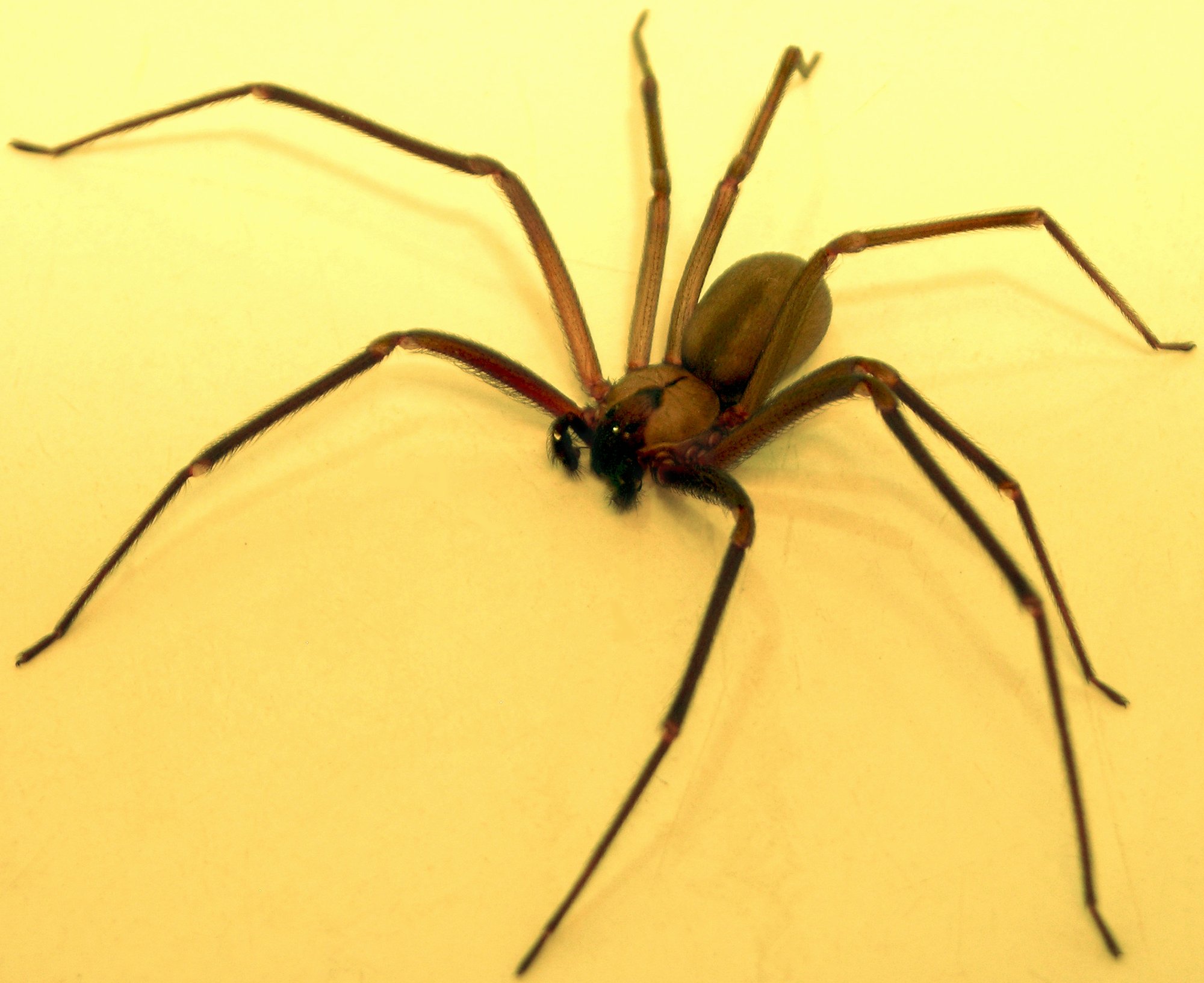
Invertebrates · Difficulty: Expert
Key facts and care guidance for Brown recluse spider (Loxosceles reclusa) (origin: The south-central USA (brown recluse / fiddleback)). Adult size around body ~6–11 mm, leg span ~2–3 cm (a violin-shaped marking on the forebody). Life expectancy approx. 2–4 years (sometimes longer in captivity). The values below are carefully researched guidance.
Short answers
Brown recluse spider: How big does the enclosure need to be?
A small, absolutely escape-proof box ~20×20×20 cm with plenty of flat hides.
Brown recluse spider: What temperature does it need?
Daytime 21–29 °C, at night 18–21 °C.
Brown recluse spider: Does it need UVB lighting?
UVB: No UVB needed (nocturnal, extremely light-shy).
Brown recluse spider: How long do they live?
Life expectancy: approx. 2–4 years (sometimes longer in captivity).
Brown recluse spider: Is it suitable for beginners?
No – better suited to experienced keepers (difficulty: Expert).
Climate
- Daytime temperature
- 21–29 °C
- Night temperature
- 18–21 °C
- Basking spot
- —
- Humidity
- rather dry, 30–50 %, a small water dish or one humid corner
- UVB
- No UVB needed (nocturnal, extremely light-shy)
Enclosure
- Minimum size
- a small, absolutely escape-proof box ~20×20×20 cm with plenty of flat hides
- Substrate
- Dry substrate (coco or vermiculite), cork and bark hides
Feeding
- Food
- Small insects (house crickets, flies, small roaches)
- Feeding interval
- every 3–7 days; can fast for long periods
Key facts
- Adult size
- body ~6–11 mm, leg span ~2–3 cm (a violin-shaped marking on the forebody)
- Life expectancy
- approx. 2–4 years (sometimes longer in captivity)
- Origin
- The south-central USA (brown recluse / fiddleback)
- Protection status
- No species protection, BUT keeping venomous spiders is regulated state by state: North Rhine-Westphalia, for example, bans Loxosceles, and Hamburg requires a permit (with proof of expertise and liability insurance) – check your state law before acquiring one.
- Brumation
- None
- Cohabitation
- Keep them singly. Recluse spiders naturally live solitary in their retreat web, and when food is scarce one spider eats the other. Every extra spider also means an extra escape risk with this venomous species. Separate spiderlings individually as soon as they leave the egg sac; for breeding, put the male in only briefly and under observation.
Notes
DANGEROUS – a dermonecrotic venom (loxoscelism); the bite can cause skin necrosis. Only for experienced keepers, escape-proof, and no handling; check the legal position in your state.
Do you keep this species?
Add your animal to Reptoria – Reptoria reminds you about feeding and shedding. Add your animal for free →
Look for Brown recluse spider (Loxosceles reclusa) in the marketplace →
Related species
- Woodlouse spider (Dysdera crocata) – Intermediate
- Huntsman spider (Heteropoda venatoria) – Beginner
- David Bowie huntsman spider (Heteropoda davidbowie) – Intermediate
- Tube-web spider (Segestria florentina) – Intermediate
- Raft spider (Dolomedes fimbriatus) – Expert
- Segmented spider (Liphistius sp.) – Expert
- Great raft spider (Dolomedes plantarius) – Expert
- Domestic house spider (Tegenaria domestica) – Beginner
What you need to start
To keep Brown recluse spider (Loxosceles reclusa) you typically need: a suitable enclosure (a small, absolutely escape-proof box ~20×20×20 cm with plenty of flat hides), substrate (Dry substrate (coco or vermiculite), cork and bark hides), a heat source with a thermostat, UVB lighting, thermometer and hygrometer, a water dish and hides. You will find equipment in the Reptoria marketplace.
The complete, interactive care database is in the Reptoria app.
Last updated: 8 November 2026 · Editor: Reptoria editorial team · Sources include: https://animaldiversity.org/accounts/Loxosceles_reclusa/, https://de.wikipedia.org/wiki/Braune_Einsiedlerspinne, https://en.wikipedia.org/wiki/Loxosceles, https://en.wikipedia.org/wiki/Loxosceles_reclusa
All values are non-binding guidance and do not replace expert advice. Research thoroughly from several sources before acquiring and keeping an animal, and observe the applicable law (species and animal protection in particular).