Domestic house spider (Tegenaria domestica)
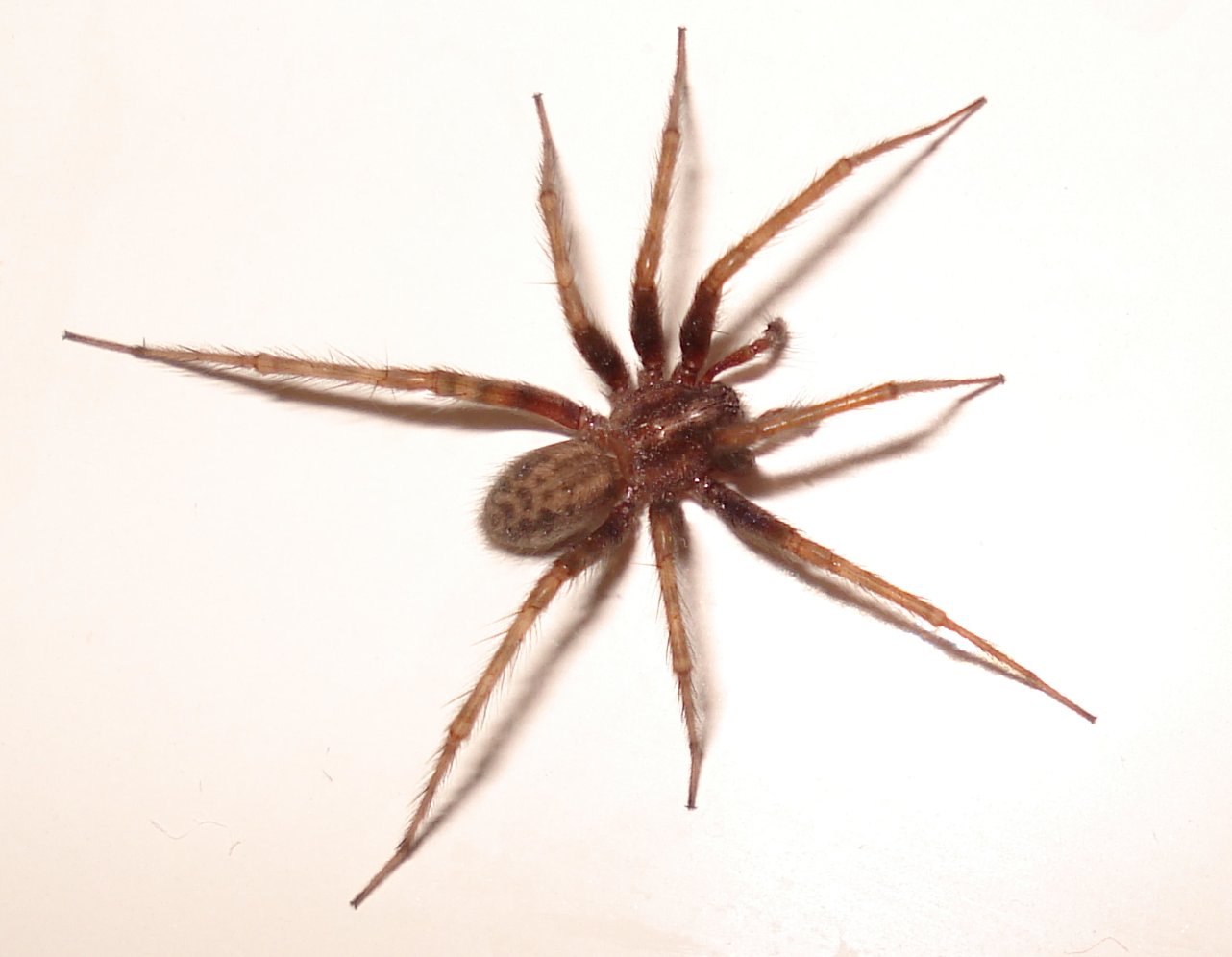
Invertebrates · Difficulty: Beginner
Key facts and care guidance for Domestic house spider (Tegenaria domestica) (origin: Originally Europe, introduced worldwide (houses, barns, cellars)). Adult size around females up to ~11.5 mm, males up to ~9 mm body; leg span up to ~8 cm (males). Life expectancy females live several years (approx. 2–4 years), males only a few months after maturity. The values below are carefully researched guidance.
Short answers
Domestic house spider: How big does the enclosure need to be?
A small box ~20×20×20 cm with a corner or hide for the funnel web.
Domestic house spider: What temperature does it need?
Daytime 18–24 °C (room temperature), at night 12–18 °C.
Domestic house spider: Does it need UVB lighting?
UVB: No UVB needed (nocturnal).
Domestic house spider: How long do they live?
Life expectancy: females live several years (approx. 2–4 years), males only a few months after maturity.
Domestic house spider: Is it suitable for beginners?
Yes – it is considered suitable for beginners (difficulty: Beginner).
Climate
- Daytime temperature
- 18–24 °C (room temperature)
- Night temperature
- 12–18 °C
- Basking spot
- —
- Humidity
- 50–70 %
- UVB
- No UVB needed (nocturnal)
Enclosure
- Minimum size
- a small box ~20×20×20 cm with a corner or hide for the funnel web
- Substrate
- Soil or coco with structure (bark, corners) for a funnel web; a small water dish
Feeding
- Food
- Flies, small crickets or house crickets, insects
- Feeding interval
- 1–2×/week
Key facts
- Adult size
- females up to ~11.5 mm, males up to ~9 mm body; leg span up to ~8 cm (males)
- Life expectancy
- females live several years (approx. 2–4 years), males only a few months after maturity
- Origin
- Originally Europe, introduced worldwide (houses, barns, cellars)
- Protection status
- Not protected; harmless to people
- Brumation
- An optional cool overwintering (10–15 °C); as a synanthropic species it is often active all year
- Cohabitation
- Keep them singly – solitary, with cannibalism when food is scarce; keeping them singly is the safe option
Notes
An undemanding native funnel-web spider, a good way into keeping true web spiders; nocturnal; harmless to humans.
Do you keep this species?
Add your animal to Reptoria – Reptoria reminds you about feeding and shedding. Add your animal for free →
Look for Domestic house spider (Tegenaria domestica) in the marketplace →
Related species
- Woodlouse spider (Dysdera crocata) – Intermediate
- Huntsman spider (Heteropoda venatoria) – Beginner
- Brown recluse spider (Loxosceles reclusa) – Expert
- David Bowie huntsman spider (Heteropoda davidbowie) – Intermediate
- Tube-web spider (Segestria florentina) – Intermediate
- Raft spider (Dolomedes fimbriatus) – Expert
- Segmented spider (Liphistius sp.) – Expert
- Great raft spider (Dolomedes plantarius) – Expert
What you need to start
To keep Domestic house spider (Tegenaria domestica) you typically need: a suitable enclosure (a small box ~20×20×20 cm with a corner or hide for the funnel web), substrate (Soil or coco with structure (bark, corners) for a funnel web; a small water dish), a heat source with a thermostat, UVB lighting, thermometer and hygrometer, a water dish and hides. You will find equipment in the Reptoria marketplace.
The complete, interactive care database is in the Reptoria app.
Last updated: 9 October 2026 · Editor: Reptoria editorial team · Sources include: https://de.wikipedia.org/wiki/Hauswinkelspinne, https://en.wikipedia.org/wiki/Tegenaria_domestica
All values are non-binding guidance and do not replace expert advice. Research thoroughly from several sources before acquiring and keeping an animal, and observe the applicable law (species and animal protection in particular).