Tube-web spider (Segestria florentina)
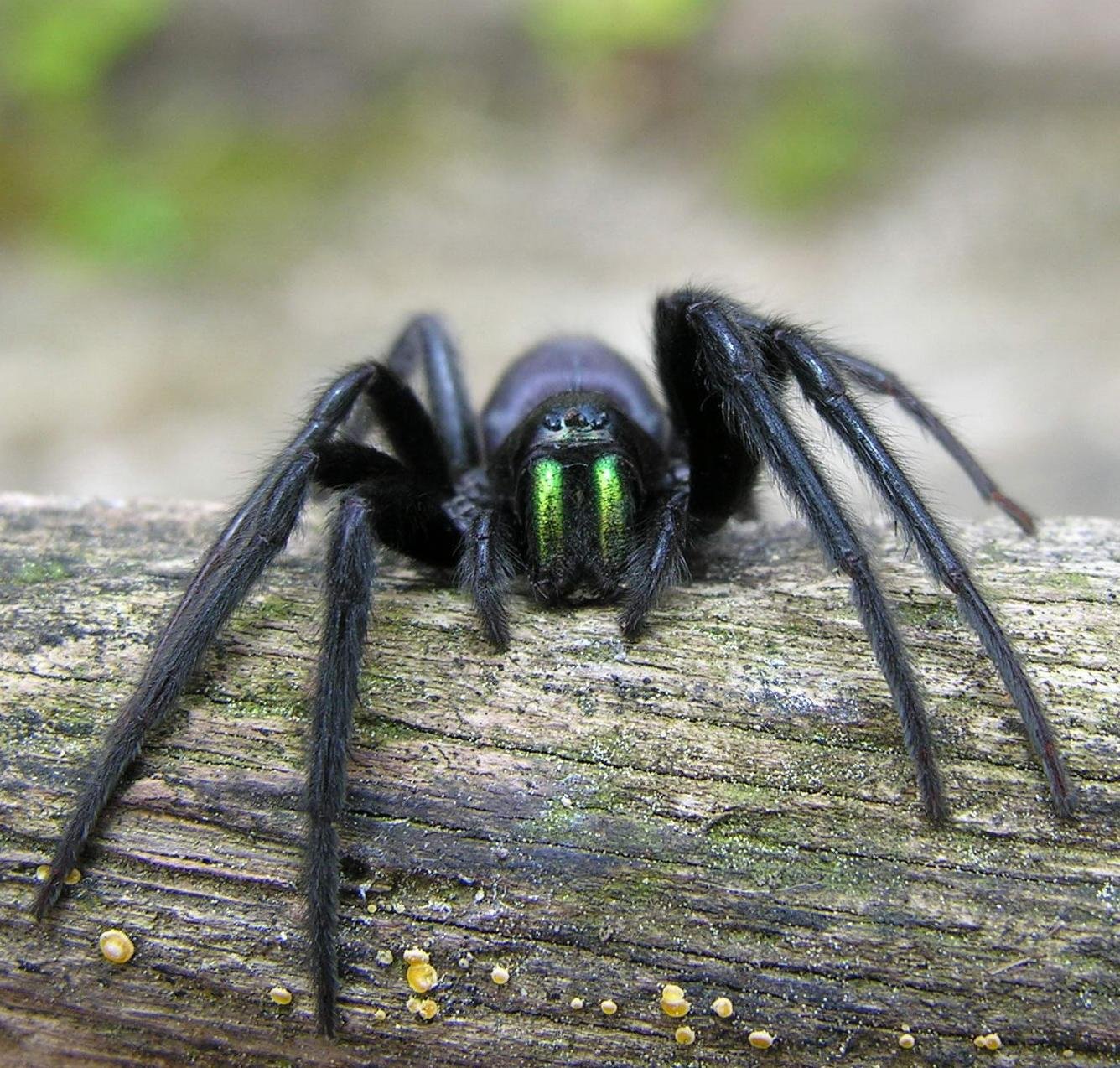
Invertebrates · Difficulty: Intermediate
Key facts and care guidance for Tube-web spider (Segestria florentina) (origin: The Mediterranean and Europe (carried overseas)). Adult size around females 13–22 mm, males 10–15 mm body length (long legs). Life expectancy lives several years, females approx. 3–4 years. The values below are carefully researched guidance.
Short answers
Tube-web spider: How big does the enclosure need to be?
~20×20×25 cm with vertical structure (bark or rock crevices) for the burrow tube.
Tube-web spider: What temperature does it need?
Daytime 20–26 °C, at night 14–18 °C.
Tube-web spider: Does it need UVB lighting?
UVB: No UVB needed (nocturnal).
Tube-web spider: How long do they live?
Life expectancy: lives several years, females approx. 3–4 years.
Tube-web spider: Is it suitable for beginners?
Rather not – it is considered an intermediate species (difficulty: Intermediate).
Climate
- Daytime temperature
- 20–26 °C
- Night temperature
- 14–18 °C
- Basking spot
- —
- Humidity
- 55–70 %
- UVB
- No UVB needed (nocturnal)
Enclosure
- Minimum size
- ~20×20×25 cm with vertical structure (bark or rock crevices) for the burrow tube
- Substrate
- Soil or coco with bark, stones and crevices for a burrow with signal threads
Feeding
- Food
- Insects (crickets, beetles, roaches, house crickets)
- Feeding interval
- adults 1×/week
Key facts
- Adult size
- females 13–22 mm, males 10–15 mm body length (long legs)
- Life expectancy
- lives several years, females approx. 3–4 years
- Origin
- The Mediterranean and Europe (carried overseas)
- Protection status
- Not protected; the bite is painful (green-shimmering chelicerae), with possible local and mild systemic symptoms, but it is not a medical emergency
- Brumation
- A cool overwintering (8–14 °C) is advisable for animals of Mediterranean origin
- Cohabitation
- Keep them singly – a territorial burrow dweller, solitary and cannibalistic. The reason is not fighting but feeding: these animals take anything that fits in the mouth, and a second animal in the enclosure counts.
Notes
It builds a burrow with radiating signal threads; strikingly green-shimmering chelicerae; nocturnal; defensive, and it can bite painfully. The source name ("Florentine") is a German trade name; the technical name is the "great / common fisher-net spider".
Do you keep this species?
Add your animal to Reptoria – Reptoria reminds you about feeding and shedding. Add your animal for free →
Look for Tube-web spider (Segestria florentina) in the marketplace →
Related species
- Woodlouse spider (Dysdera crocata) – Intermediate
- Huntsman spider (Heteropoda venatoria) – Beginner
- Brown recluse spider (Loxosceles reclusa) – Expert
- David Bowie huntsman spider (Heteropoda davidbowie) – Intermediate
- Raft spider (Dolomedes fimbriatus) – Expert
- Segmented spider (Liphistius sp.) – Expert
- Great raft spider (Dolomedes plantarius) – Expert
- Domestic house spider (Tegenaria domestica) – Beginner
What you need to start
To keep Tube-web spider (Segestria florentina) you typically need: a suitable enclosure (~20×20×25 cm with vertical structure (bark or rock crevices) for the burrow tube), substrate (Soil or coco with bark, stones and crevices for a burrow with signal threads), a heat source with a thermostat, UVB lighting, thermometer and hygrometer, a water dish and hides. You will find equipment in the Reptoria marketplace.
The complete, interactive care database is in the Reptoria app.
Last updated: 30 October 2026 · Editor: Reptoria editorial team · Sources include: https://araneae.nmbe.ch/data/420/Segestria_florentina, https://en.wikipedia.org/wiki/Segestria_florentina
All values are non-binding guidance and do not replace expert advice. Research thoroughly from several sources before acquiring and keeping an animal, and observe the applicable law (species and animal protection in particular).